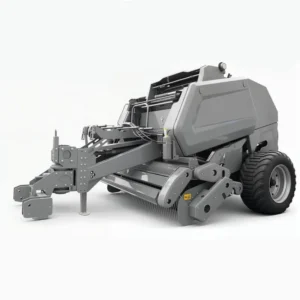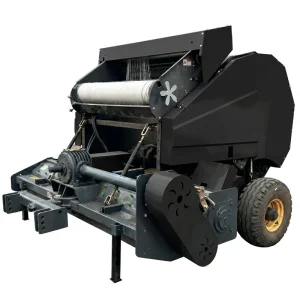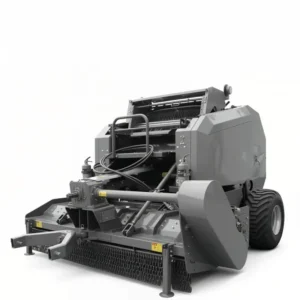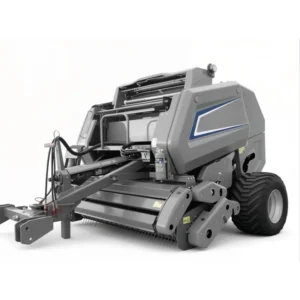
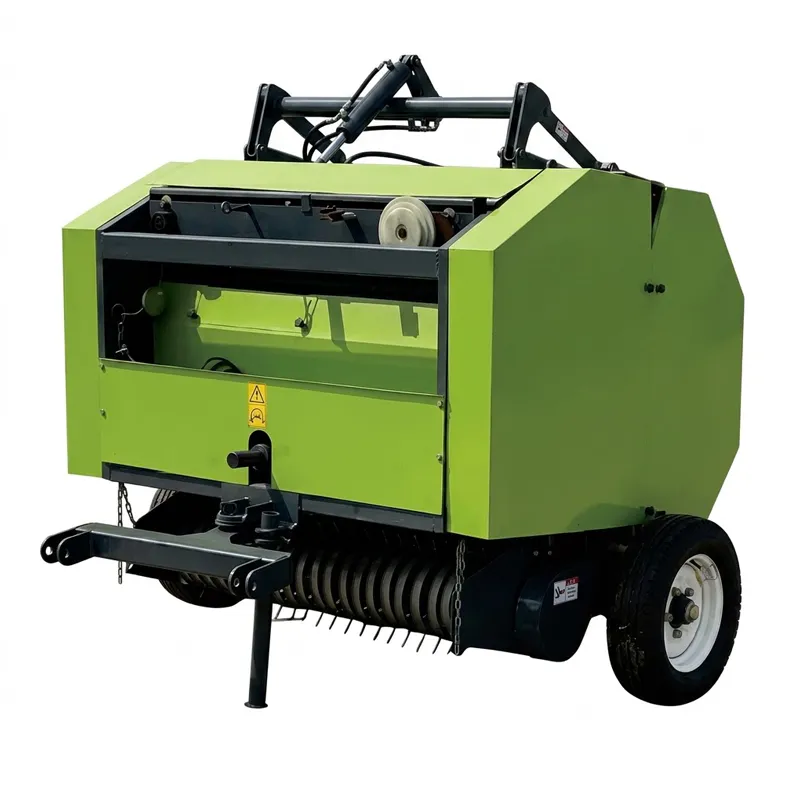
EP-9YQ-1250MM PICKUP · 40–60 KW · COMPACT Round Baler
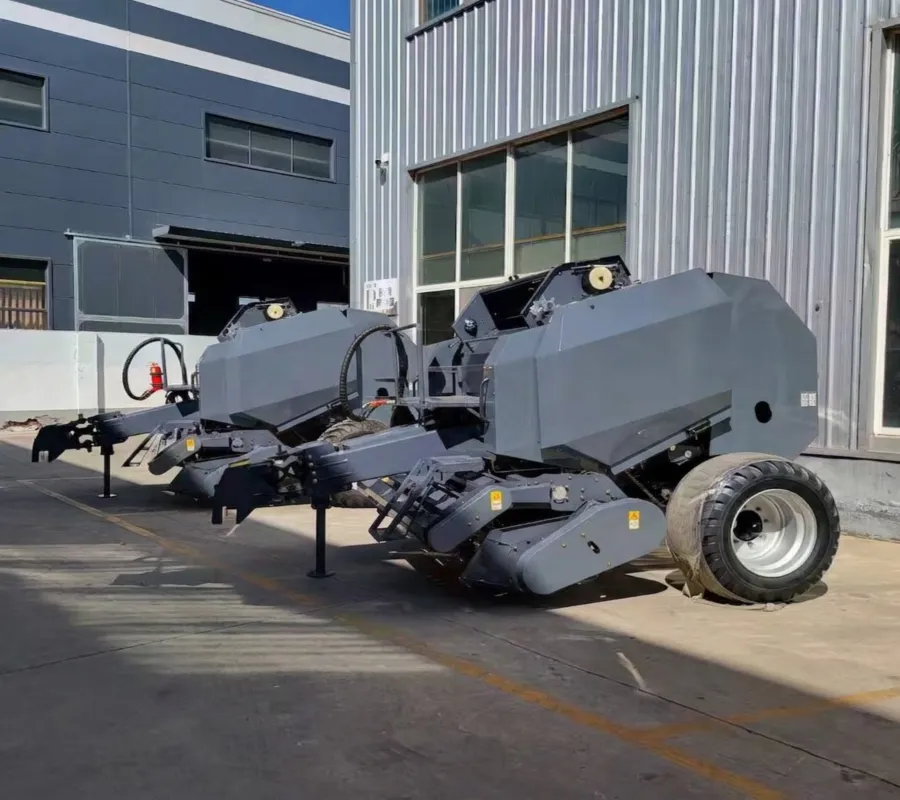
The EP-9YQ-1250 is a compact, trailed round baler designed for efficient forage collection in smaller fields. Featuring a 1250mm spring-tooth pickup and direct feed mechanism, it ensures smooth crop intake into the roll drum compression chamber. The machine produces dense bales with a width of 1250mm and a diameter of Φ800mm, utilizing 16 pressing rollers for consistent density. Equipped with reliable rope wrapping technology, it simplifies handling and storage. Compatible with tractors in the 40.4–60 kW range, this lightweight unit (1000kg) measures 2050×2250×1580mm, offering excellent maneuverability and fuel efficiency for small-to-medium scale farming operations seeking a cost-effective baling solution.
EP-9YQ-1250 · 1250mm Pickup · 40.4–60 kW · Compact
Empacadora redonda
Compact trailed roll-drum empacadora redonda with spring-tooth direct feeding and rope wrapping — purpose-built for small farms, compact tractors, and mixed-crop operations across South Korea, New Zealand, Australia, and worldwide markets.
1. Technical Specifications
The table below covers the complete parameter set for the EP-9YQ-1250 compact empacadora redonda. Dimensions follow the L×W×H convention in millimeters. Diameter values are prefixed with Φ per standard engineering convention.
| # | Artículo | Unidad | Especificación |
|---|---|---|---|
| 1 | Nombre del modelo | — | EP-9YQ-1250 Round Baler |
| 2 | Hitching Method | — | Arrastrado |
| 3 | Picking Width | mm | 1250 |
| 4 | Feed Inlet Width | mm | — |
| 5 | Picker Structure | — | Spring Tooth Type |
| 6 | Feeder Structure | — | Directly Feed by Spring Tooth |
| 7 | Type of Compressing Bale Chamber | — | Roll Drum Type |
| 8 | Width of Compressing Room | mm | 1250 |
| 9 | Diameter of Compression | mm | Φ800 |
| 10 | Quantity of Roll-Pressing Working Components | pc | 16 (Roller) |
| 11 | Diameter of Roll-Pressing Roller | mm | Φ152 |
| 12 | Bundling Type | — | Rope Wrapping |
| 13 | Matching Power Range | kW | 40.4 – 60 |
| 14 | Overall Dimension (L×W×H) | mm | 2050 × 2250 × 1580 |
| 15 | Machine Weight | kilogramo | 1000 |
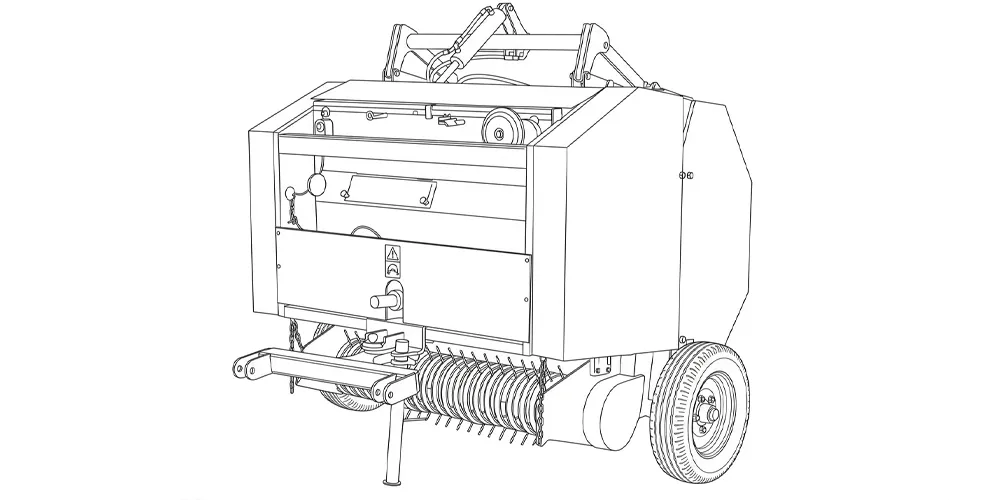
2. EP-9YQ-1250 Round Baler — Compact Power for Small Farms and Mixed-Crop Operations
The EP-9YQ-1250 is a compact trailed-type empacadora redonda designed for farms and contractors operating in the 40–60 kW tractor power range. Where larger agricultural round baler models require substantial tractor horsepower and generate transport dimensions that complicate road movement between paddocks, this machine occupies a practical middle ground: capable enough to handle a full range of grass hay, rice straw, and leguminous forage crops, yet light and compact enough to pair with tractors already working on smaller properties. At 1,000 kg operating weight and overall dimensions of 2,050 × 2,250 × 1,580 mm (L×W×H), it is one of the most transport-friendly commercial round baler machine options in its output class — easy to move between fields on a standard farm trailer without special permits in most jurisdictions.
The 1,250 mm pickup width and spring-tooth direct feeding structure work together to lift material cleanly from windrows and transfer it directly into the 16-roller roll-drum compression chamber. The spring-tooth direct feed design is simpler than a multi-stage feeder system — fewer moving parts in the feed channel means fewer maintenance points and a more predictable material flow rate across varying windrow densities. For operators running this machine in the time-pressured harvest windows common in South Korea's seasonal farming calendar, a simpler mechanical setup is a genuine operational advantage. Less time diagnosing feed blockages during the season translates directly into more bales per day.
The Φ800 mm bale diameter and 1,250 mm bale width produce round hay bales that are lighter and easier to handle than the 1,000 mm+ bales from larger commercial machines — a meaningful advantage on farms without a front loader or bale-handling tractor. The rope wrapping bundling system is proven, economical, and compatible with standard agricultural baler twine available from rural supply retailers in Korea, Australia, New Zealand, and Canada. For buyers comparing a mini round baler with a full-size machine, the EP-9YQ-1250 sits at the practical upper end of the compact category — not a toy-scale unit, but a genuinely productive machine that handles commercial quantities of material without requiring commercial-scale infrastructure around it.
3. Five Key Advantages of the EP-9YQ-1250
① Compact Tractor Compatibility — 40.4–60 kW
The power requirement window of 40.4–60 kW covers the most common compact and utility tractor segment globally — approximately 55–82 HP at the engine. This is the tractor category that dominates South Korean small-farm fleets, family-scale New Zealand sheep and beef farms, and hobby livestock properties in Australia and Canada. Unlike larger empacadora redonda models that demand 80–100+ HP, this machine works with the equipment operators already own, removing the most common financial barrier to first-time round baler adoption.
② Lightweight and Easy to Transport
At 1,000 kg and with a transport footprint of 2,050 × 2,250 × 1,580 mm (L×W×H), this small round baler can be loaded onto a standard single-axle farm trailer and moved between properties without an oversize vehicle permit in most markets. For South Korean contractors who move between client farms frequently, and for Australian farmers crossing public roads between paddocks on properties split by road reserves, this transport convenience reduces the logistics overhead that makes larger round balers impractical on fragmented landholdings.
③ Spring-Tooth Direct Feed — Simple, Reliable, Low-Maintenance
The spring-tooth direct feeding structure transfers crop material from the pickup into the compression chamber in a single stage — there is no intermediate fork-and-screw mechanism between the pickup and the chamber inlet. This simplicity is a maintenance advantage: fewer moving components in the feed channel means fewer wear items, fewer potential blockage points, and a more predictable performance across different crop moisture levels. Operators who maintain their own equipment on-farm particularly benefit from a machine that is straightforward to service between baling runs.
④ Manageable Bale Size — Lighter & Easier to Handle
The Φ800 mm bale diameter from the EP-9YQ-1250 produces round hay bales that typically weigh 120–200 kg depending on crop density and moisture content. This weight range sits within what many farms can move with a compact front-loader tractor rated at 1,500–2,000 kg lift capacity, without needing a dedicated bale-handling machine. For operations without specialized bale-handling equipment — common on small Korean farms and family-scale New Zealand properties — this lighter bale format reduces the physical and equipment demands of moving bales from field to storage or feeding site.
⑤ Rope Wrapping — Economical and Widely Available
Rope wrapping uses standard agricultural baler twine — among the most widely stocked consumable in rural supply stores globally. Unlike net wrap, which requires a specific roll width and product type, baler twine in the compatible specification is available from local suppliers in rural South Korea, regional Australia, New Zealand, and Canadian farm supply stores with no special ordering required. For farms in locations where agricultural supply logistics can be challenging, this local consumable sourcing capability is a practical advantage over net-wrap-only machine designs.
4. How This Round Baler Works
As the tractor pulls this compact empacadora redonda forward along a windrow, the 1,250 mm spring-tooth pickup reel rotates continuously, engaging crop material from the ground surface and moving it rearward into the feed channel. The spring-tooth direct feeding design transfers material from the pickup into the compression chamber in one step — there is no intermediate feeder stage between pickup tines and chamber rollers. This direct path reduces the distance the crop material travels before compression begins, which has a stabilizing effect on feed rate consistency when the windrow density varies within a single field pass.
Inside the roll-drum compression chamber, 16 rollers of Φ152 mm diameter are arranged around the Φ800 mm bale-forming zone. As material enters the chamber, the rollers rotate to draw it inward, building the bale from the center outward in a progressive radial compression pattern. The roll-drum design applies compression force to the bale circumference continuously as material accumulates — unlike a belt-type chamber where the pressing surface is flexible, the roller arrangement provides a stiffer, more defined pressing geometry that tends to produce bales with a rounder, more regular cross-section. This shape consistency matters when bales are stacked on a trailer or stored side-by-side in a shed, as uniformly shaped bales use floor space more predictably than irregularly formed ones.
When the bale diameter reaches the preset Φ800 mm target, a signal prompts the operator to initiate the rope-wrapping cycle. The twine wrapping mechanism draws baler twine across the bale face in a traversing pattern, securing the bale with the set number of twine wraps before the drive mechanism cuts the twine. The rear gate then opens, and the wrapped bale rolls out of the chamber onto the field behind the machine. The gate closes, and the machine is ready to begin the next bale cycle. Total wrap-and-eject time on this compact machine is shorter than on larger roll-drum models due to the smaller bale circumference — a practical throughput advantage on fields with high windrow density where bale-cycle time can limit daily output. The entire sequence from full-bale signal to gate-close-and-go is managed without leaving the tractor cab on suitably equipped tractor-baler setups.
5. Materials & Build Quality
The structural frame of the EP-9YQ-1250 is fabricated from high-tensile low-alloy steel, welded under controlled production conditions and finished with a shot-blasted and powder-coated surface treatment for corrosion resistance in outdoor agricultural field conditions. Despite the machine's compact size, the frame section geometry is designed to handle the cyclic loads generated by the roll-drum compression system across a full seasonal operating period without fatigue cracking at the primary stress points. The compact frame also contributes directly to the 1,000 kg total weight that makes this machine practical to transport on standard farm trailers.
The 16 roll-pressing rollers are fabricated from structural steel tube with machined shaft ends for bearing-fit accuracy. Each Φ152 mm roller is mounted on sealed, grease-packed bearings with accessible zerks for periodic replenishment during the baling season. Roller surface condition directly affects bale shape consistency — even minor surface damage from ingested stones or hard debris can alter the compression pattern on one side of the chamber, producing off-round bales. For this reason, a post-season roller inspection is part of the recommended annual maintenance procedure for any roll-drum empacadora redonda. Individual rollers are replaceable as separate items.
The spring-tooth pickup tines are manufactured from spring steel, heat-treated to a hardness-flexibility balance that allows tine tips to deflect over small surface irregularities and return to their operating position without permanent deformation. Individual tines are replaceable without removing the full pickup bar — a practical maintenance consideration during the season. The rope wrapping mechanism components are precision-machined to the dimensional accuracy required for consistent twine traverse across the 1,250 mm bale width. Twine cut-and-hold components are replaceable service items available as individual parts from our spare parts catalog. All external fasteners are Grade 8.8 metric specification, consistent with the hardware standards expected in Korean, Australian, and European agricultural equipment markets.
6. Escenarios de aplicación
The EP-9YQ-1250 is sized and powered for the real-world conditions of small-to-mid-scale farming operations. Its compact footprint, low tractor power requirement, and manageable bale output format make it a practical first empacadora redonda for farm operations moving from manual hay handling to mechanized baling, and a logical equipment choice for contractors serving fragmented farm plots in regions like South Korea where average field size is small.
🌿 Small Pasture Hay — Korean Family Farms & Hobby Livestock
On Korean family farms — particularly in highland areas of Gangwon and northern Gyeonggi provinces where small paddocks of ryegrass and mixed-species pasture are cut for beef cattle and goat fodder — this small round baler fits the scale of operation precisely. The Φ800 mm bale size is manageable without a large front loader, the machine pairs with 60–80 HP tractors common on these properties, and the rope-wrapped bale format is practical for the short-term shed storage typical of small-farm hay management.
🌾 Rice Straw Recovery — Paddy Regions
Post-harvest rice straw baling on paddy fields is one of the most important applications for compact empacadora redonda machines in East Asia. The EP-9YQ-1250's spring-tooth pickup handles the fine, short-stemmed nature of rice straw cleanly on flat paddy terrain, and the 1,250 mm pickup width sweeps efficiently across paddy row spacings. Baled rice straw from this machine is used for mushroom cultivation, livestock bedding, traditional thatching, bioenergy pellets, and as an organic soil amendment — providing multiple end-market options for farmers selling their straw rather than leaving it in the field.
🐑 Sheep & Goat Feed — New Zealand and Australian Small Holdings
On New Zealand and Australian small holdings where sheep, goats, and alpacas are kept at paddock scale, the ability to bale one's own hay rather than purchasing bales removes a significant annual feed cost. The EP-9YQ-1250's compact size and tractor compatibility make it accessible for operations where a full-size 80+ HP tractor is not part of the equipment fleet. Φ800 mm bales from this machine are physically manageable for one-person feeding operations — an important consideration for small-holdings often run by a single operator or a small family team.
🌱 Alfalfa & Legume Hay — Small Commercial Producers
Small commercial alfalfa producers supplying local feed markets — directly to equestrian stables, small dairy units, or goat farms — can use this mini round baler to convert their own crop into a marketable baled product without the capital investment of a full-size commercial machine. The rope-wrapped Φ800 mm bale format is accepted by most local hay buyers, and the machine's output rate of several hundred bales per day in suitable conditions is adequate for supplying a local market without the complexity of managing a large-format baler across a small production area.
🚜 Agricultural Contracting — Fragmented Small Plots
For agricultural contractors in South Korea, Japan, and parts of Southeast Asia where farm plots are small and scattered across a valley or hillside, this compact empacadora redonda is easier to position in and out of tight field accesses and narrower laneways than a full-size round baler. Its lighter weight reduces the risk of soil compaction on small paddocks visited repeatedly, and its fast set-up and packdown between client sites keeps daily client throughput higher than a larger machine would allow in the same geographic setting. The rope-wrapping consumable cost per bale is also lower than net wrap, which helps contractors keep their per-bale service fee competitive in price-sensitive markets.
7. Regulatory Compliance by Market
Compact empacadora redonda machines are subject to the same safety and import regulations as larger equipment — the machine size does not reduce compliance obligations. The following outlines the key regulatory frameworks applicable to the EP-9YQ-1250's primary markets.
Corea del Sur
The Agricultural Mechanization Promotion Act governs imported agricultural implements. The Rural Development Administration (RDA) administers performance and safety standards for equipment operating in Korean farm conditions. PTO shaft guarding and round baler gearbox shielding must meet KS-standard requirements. The machine's 2,250 mm transport width falls within Korean agricultural vehicle road movement allowances for most public roads without special permits. Open-burning restrictions in rice straw regions make mechanical baling a compliance requirement in addition to an economic choice in municipal areas with burning bans.
unión Europea
CE marking under EU Machinery Directive 2006/42/EC (transitioning to Machinery Regulation (EU) 2023/1230) is required. EN ISO 4254-7 covers agricultural baler safety requirements, and EN ISO 5673-1 applies to PTO driveline shielding. For compact balers sold in Germany, France, and the Netherlands, BG Agrar (German agricultural safety association) advisory guidelines also apply in practice. The machine's rope-wrapping twine material (typically polypropylene) is subject to EU agricultural plastic waste regulations in some member states — buyers should check local requirements for used twine disposal or recycling.
Australia & New Zealand
The Work Health and Safety (WHS) Act and state farm safety regulations govern agricultural machinery operation in Australia. AS/NZS 4024 and AS 2671 cover machinery guarding and PTO shielding requirements. In New Zealand, the Health and Safety at Work Act 2015 and WorkSafe NZ guidelines apply. The EP-9YQ-1250's transport dimensions (2,050 × 2,250 × 1,580 mm) fall within standard agricultural vehicle limits across all Australian states and New Zealand without oversize movement permits — a practical advantage confirmed by its compact dimensions.
Canadá
Canadian import and operation of agricultural machinery is regulated federally under the Canada Agricultural Products Act, with provincial occupational health codes applying on-farm. ASABE standard S361 provides the North American benchmark for round baler performance and safety. Polypropylene baler twine — the standard consumable for this machine — is subject to provincial agricultural plastic recycling programs in British Columbia, Ontario, and Manitoba; buyers should check local recycling options before purchase. The machine's road transport dimensions are within standard agricultural vehicle limits in all major agricultural provinces.
Japan
Japan's Agricultural Machinery Safety Standard governs the operation of trailed PTO-powered implements. The Japan Agricultural Machinery Manufacturers Association (JAMA) oversees certification of agricultural machinery models. For compact round balers deployed on small paddy and upland fields common in Japanese agricultural regions, machine width and turning radius compatibility with narrow field access lanes is a practical specification consideration. The EP-9YQ-1250's 2,250 mm width should be confirmed against the specific field access widths on the intended operation site before purchase for Japanese buyers.
8. Compatible Components — Complete System from One Supplier
We supply the full drivetrain system for this empacadora redonda — and for any square baler in your fleet — from a single source. Matching components to machine specifications removes compatibility guesswork and simplifies post-purchase technical support.
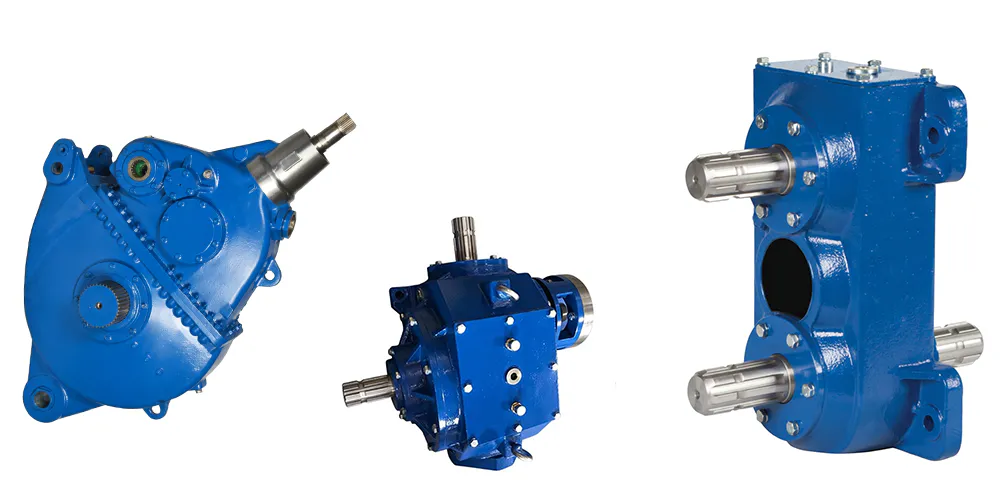
Square Baler Gearbox
For farms operating both this compact empacadora redonda and a square baler in their equipment fleet, sourcing the square baler gearbox from the same supplier as the baler simplifies spare parts management and maintenance scheduling. Our square baler gearbox range covers models compatible with the full power spectrum from compact 50 HP tractors through to large 150 HP machines. Each gearbox unit is supplied with its oil specification, fill procedure, and seasonal servicing schedule — information that is often absent when gearboxes are sourced as aftermarket replacements from non-specialist distributors.
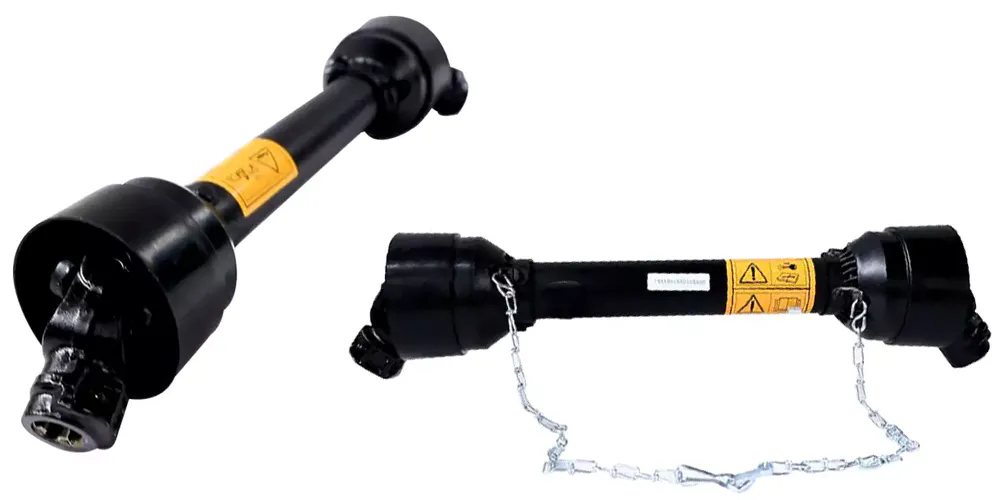
PTO Drive Shaft
The PTO shaft on a compact empacadora redonda working in the 40.4–60 kW range still experiences significant peak torque events — particularly during chamber start-up when the first material charge enters the rollers. Our Eje de toma de fuerza range for this machine includes shafts with friction-clutch or overrunning protection appropriate to this power class, preventing shock loads from reaching the tractor transmission during sudden chamber fill events. All shafts are supplied with full-length safety guards meeting EN ISO 5673-1 requirements — mandatory for EU and UK market operation. Shaft length is specified to the tractor-to-baler hitch distance for the EP-9YQ-1250's trailed configuration, ensuring a direct fit without field modification.
9. About Us
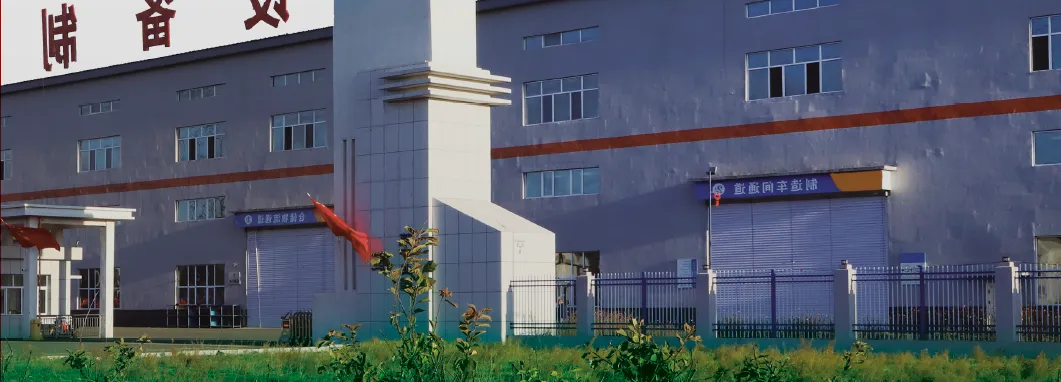
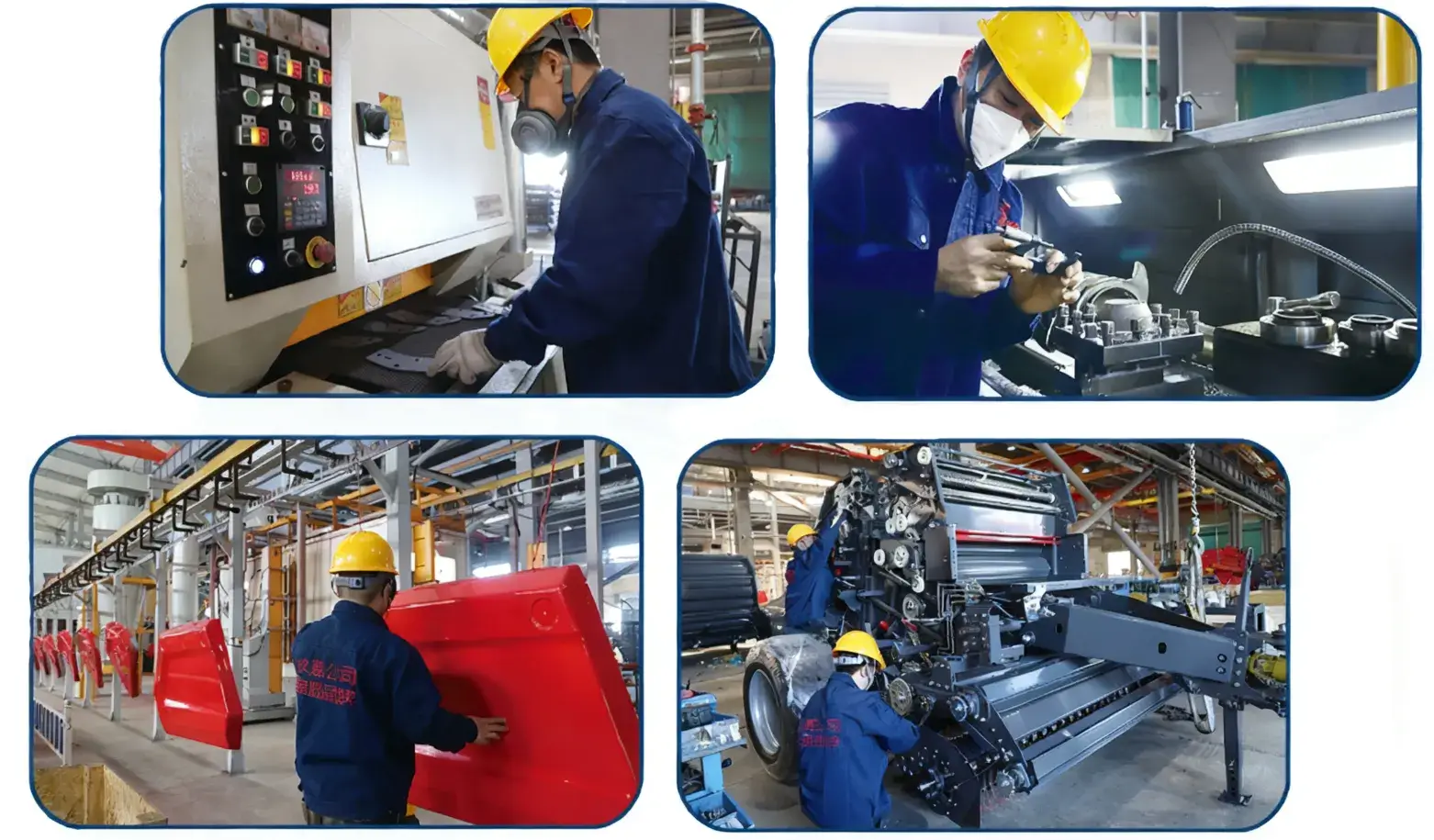
We manufacture and export agricultural baling equipment spanning the full product range — from compact machines like the EP-9YQ-1250 suited to small-farm and light-contracting use, through to large-format high-output round and square balers for commercial operations. Our product development focuses specifically on baling machinery, which means all engineering effort — frame design, chamber geometry, feeder mechanism, and wrap system — is dedicated to machines that perform reliably in real field conditions rather than showroom demonstrations. We understand how a mini round baler performs differently from a large commercial unit in terms of field throughput, bale handling logistics, and total cost of ownership, and we factor those differences into our product design and buyer consultation process.
WorkShop

Frequently Asked Questions
Q1. What is a round baler, and how is a compact model like this different from a large agricultural round baler for a Korean small farm?
A empacadora redonda is a machine that compresses loose crop material into a cylindrical bale inside a rotating drum-roller or belt chamber, then wraps the completed bale with twine or net before ejecting it onto the field. The key differences between a compact model like the EP-9YQ-1250 and a large agricultural empacadora redonda are scale and power requirement: this machine produces Φ800 mm bales weighing 120–200 kg, requires only 40.4–60 kW of tractor PTO power, and weighs 1,000 kg — making it accessible for Korean small farms running 55–80 HP tractors. Large commercial machines produce 1,200–1,500 mm diameter bales weighing 400–700 kg and require 100+ HP tractors. For small Korean farms in Gangwon or Gyeonggi provinces, the compact format is the practical choice.
Q2. What is the purpose of a round baler on a rice farming operation in South Korea, and does it handle paddy straw effectively?
The primary purpose of a empacadora redonda on a Korean rice farm is to convert post-harvest paddy straw into a manageable baled product rather than leaving it in the field to decompose or burning it — which is increasingly restricted under Korean municipal air quality regulations. The EP-9YQ-1250's spring-tooth pickup handles rice straw effectively on flat paddy terrain. The straw's short-stem character and relatively light bulk density are well-suited to this machine's direct spring-tooth feeding design. The resulting bales have commercial value as mushroom substrate, livestock bedding, biomass fuel, and traditional craft material.
Q3. How many HP do you need to run this mini round baler, and which compact tractor models in Australia are typically compatible?
The EP-9YQ-1250 requires 40.4–60 kW at the PTO, equivalent to approximately 55–82 HP at the tractor engine. In Australia, this is compatible with compact and utility tractors from brands including Kubota MX and M series (60–75 HP), New Holland Workmaster and Boomer series (55–75 HP), John Deere 5M series (65–80 HP), and Case IH Farmall series (55–75 HP) — all commonly available from Australian rural dealers. For heavy windrows of dense hay at the upper end of seasonal moisture, operating the machine at 70–80 HP provides comfortable headroom to prevent PTO torque limiting mid-field.
Q4. How much does a round bale of hay weigh when produced by the EP-9YQ-1250, and how does this affect handling without a large front loader?
At the Φ800 mm diameter and 1,250 mm bale width, dry grass hay bales from this machine typically weigh 130–190 kg. Alfalfa at standard harvest moisture runs 150–210 kg per bale, and rice straw bales are lighter at 80–130 kg. These weights are within the handling capacity of compact front-loader tractors rated at 1,200–1,800 kg lift capacity — the type of loader commonly fitted to 60–80 HP tractors in the target market. Single-person handling of these bales with a loader bucket or bale spike is straightforward, making this machine practical for one-operator farms without a dedicated bale-handling attachment.
Q5. How many square bales are in a round bale from this compact round baler, and how does the format comparison work for a New Zealand sheep farm?
A Φ800 mm round bale of dry grass hay at approximately 160 kg is roughly equivalent to 5–8 conventional small square bales at 20–32 kg each. For a New Zealand sheep farm, the relevant comparison is practical handling: round bales from this machine can be moved with a compact tractor loader, stored outdoors in a paddock, and rolled out for ring-feeder access. Square bales require individual manual handling or a bale feeder but are easier to portion for small daily feed allocations to individual animals. For New Zealand operations with shed storage and manual feeding, a mix of round and square baling equipment may serve different feed management purposes across the same property.
Q6. What type of rope or twine should I use with the EP-9YQ-1250 round baler, and where can I source it in Canada?
The EP-9YQ-1250 uses standard agricultural baler twine for rope wrapping — polypropylene (PP) or sisal in the 200–250 tex range that is compatible with this chamber size. In Canada, compatible baler twine is stocked by major rural supply chains including TSC Stores, UFA Farm Centre, and Otter Co-op in Western Canada, as well as regional agricultural co-operatives in Ontario, Quebec, and the Maritime provinces. PP twine is the standard choice for durability and resistance to moisture degradation during outdoor paddock storage of bales. Natural sisal twine is preferred where environmental or regulatory considerations favor biodegradable materials.
Q7. What are the round baler parts that need to be checked and replaced most frequently on the EP-9YQ-1250 during a busy baling season?
The highest-wear round baler parts during an active baling season are the pickup spring tines (check for bent or broken tines every 50 hours), the twine cutter blade (inspect every 100 bales for edge wear that causes incomplete cuts), the twine guide components in the traversing wrapping mechanism (check for groove wear every 50 hours), and the roller bearing grease level (top up every 50 hours at the accessible zerks). Additionally, check the drive chain tension and lubrication every 50 hours if the machine is chain-driven between the gearbox and the roll-pressing assembly. These are all accessible without specialized tools.
Q8. How does a round baler gearbox work on a compact machine, and what oil specification should I use for the EP-9YQ-1250 in cold Korean winter storage?
The round baler gearbox on this machine transfers PTO input rotation to the roll-drum drive shaft and feed mechanism through a set of bevel and spur gear stages. For Korean winter storage where temperatures can drop to -10°C to -15°C in northern regions, drain the gearbox oil while warm at end of season to remove suspended wear particles, then refill with fresh GL-4 80W-90 gear oil — a viscosity grade that remains pumpable at startup in sub-zero conditions better than straight GL-5 90W. At end-of-season storage, leave the gearbox full of fresh oil with the fill plug secure. Check the breather vent for ice blockage before the first spring start-up.
Editor: PXY