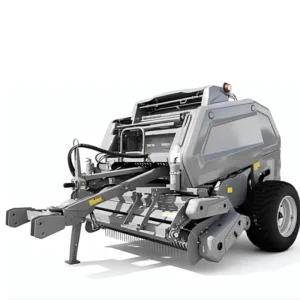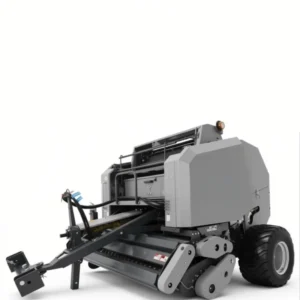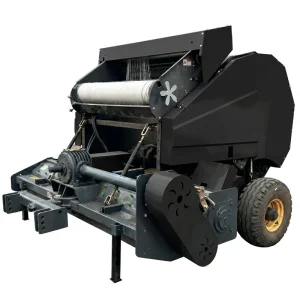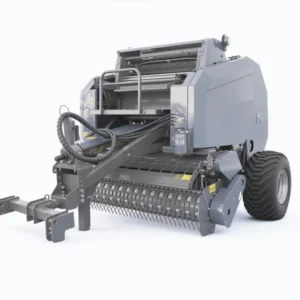
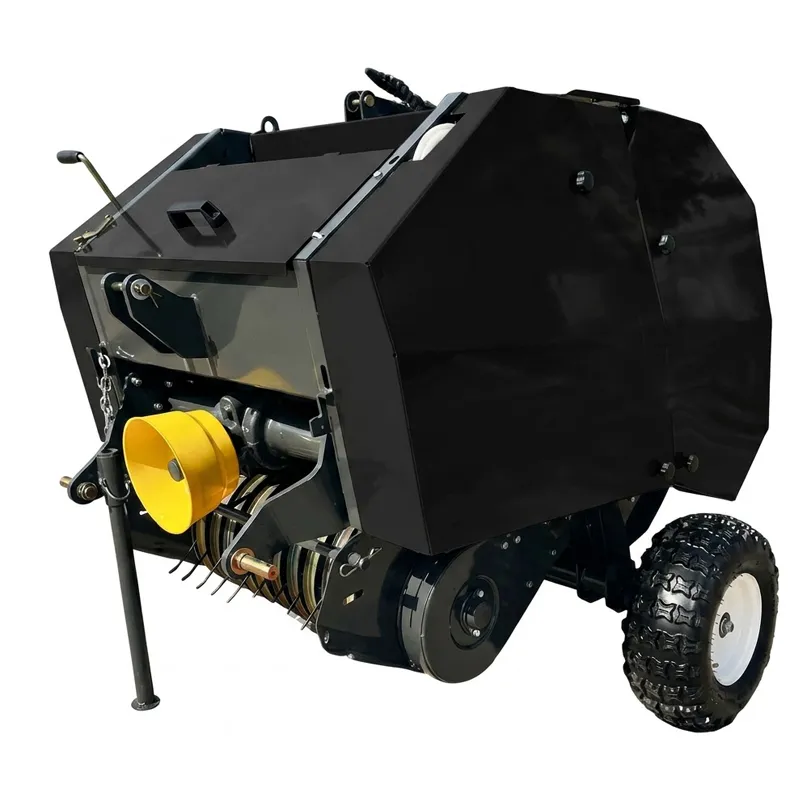
EP-870-800mm Pickup 25–50 kW Compact Round Baler
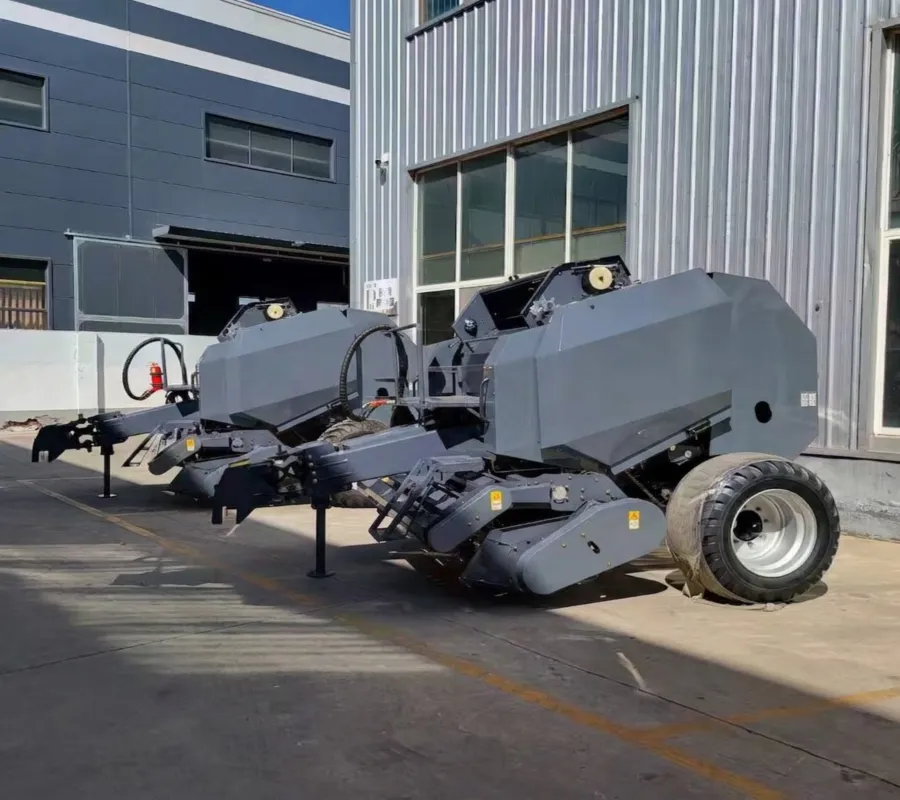
The EP-870 Compact Round Baler is a trailed agricultural machine designed for efficient hay and straw collection. It features an 800mm spring-tooth pickup width and a roll drum compression chamber (Φ630×700mm) to produce dense round bales wrapped in rope. Operating at speeds of 2–5 km/h, this unit requires a matching power range of 25–50 hp and a PTO speed of 540 rpm. Weighing 440 kg with overall dimensions of 1300×1300×1350 mm, it offers a compact yet robust solution for small to medium-sized farms requiring reliable baling performance.
EP-9YK-870 · 800mm Pickup · 25–50 kW · Ultra-Compact
Empacadora redonda
Ultra-compact trailed empacadora redonda with belt-type compression chamber — purpose-built for micro-scale farms, hobby livestock operations, orchard and vineyard strip management, and compact tractor users across South Korea, Japan, New Zealand, and worldwide markets.
1. Technical Specifications
The table below presents the complete parameter set for the EP-9YK-870 compact empacadora redonda. Dimensions follow the L×W×H convention in millimeters. Diameter values are prefixed with Φ per standard engineering convention.
| Serial Number | Artículo | Unidad | Especificación |
|---|---|---|---|
| 1 | Nombre del modelo | / | 9YK-870 Round Baler Model 870 Round Baler |
| 2 | Hitching Method | / | Arrastrado |
| 3 | Picking Width | mm | 800 |
| 4 | Picker Structure | / | Spring tooth type |
| 5 | Feeder Structure | / | Directly feed by spring tooth |
| 6 | Velocidad de operación | kilómetros por hora | 2 ~ 5 |
| 7 | Type of compressing bale chamber | / | Roll drum type |
| 8 | Width of compressing room | mm | 700 |
| 9 | Diameter of compression | mm | Φ630 |
| 10 | Bundling type | / | Rope wrapping |
| 11 | Bale Size (Diameter×Width) | mm | Φ630×700 |
| 12 | Overall Dimensions (Length × Width × Height) | mm | 1300×1300×1350 |
| 13 | Tire Size | / | 18×6.50-8-4PR |
| 14 | Peso | kilogramo | 440 |
| 15 | Matching power range | hp | 25 ~ 50 |
| 16 | Match the PTO Speed | rpm | 540 |
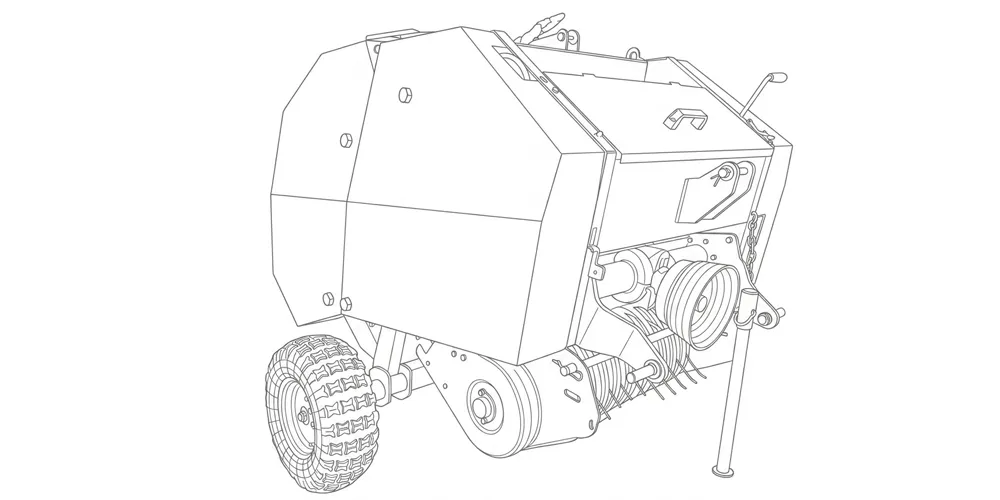
2. EP-9YK-870 Round Baler — The Compact Baling Solution for Small Farms and Tight Spaces
The EP-9YK-870 is an ultra-compact trailed empacadora redonda engineered specifically for operations where full-size commercial baling equipment is simply impractical. With a machine footprint of just 1,300 × 1,300 × 1,350 mm (L×W×H) and an operating weight of 500 kg, this is the machine that fits through narrow farm gates, works in tight orchard rows, loads onto a small trailer without a crane, and pairs with sub-50 HP compact tractors that most small farms already own. The 800 mm picking width is matched to narrow windrow conditions — grass alley strips between orchard trees, roadside verge cuttings, small paddock hay rows, and paddy straw laid in narrow combine swaths — where a 1,250–2,200 mm pickup would be physically obstructive or simply unnecessary.
The machine's power requirement of 25–50 kW covers approximately 34–68 HP at the tractor engine, placing it firmly in the sub-compact and compact tractor category. In South Korea, where a significant share of farm tractors operate below 60 HP — particularly on highland vegetable farms, orchard properties, and small paddy operations in Gangwon, Gyeongbuk, and Jeonnam provinces — this mini round baler enables mechanical baling that was previously impractical at the tractor power available. The same dynamic applies to hobby farms in New Zealand and Australia, smallholdings in the Netherlands and Germany, and micro-scale livestock operations in Japan where sub-50 HP compact tractors are the norm rather than the exception.
Bales from the EP-9YK-870 are produced at a Φ870 mm diameter and 800 mm width — small enough that a single operator can roll them by hand on flat ground, or lift them with a compact front-loader rated at 500–800 kg. When comparing a mini round baler against a standard round baler machine, the tradeoff is output scale versus operational flexibility: this machine produces fewer bales per hour than a 1,950 mm wide commercial model, but it operates in environments where the larger machine cannot go at all. For its intended users, that access capability is not a compromise — it is the primary reason to choose this machine.
3. Five Key Advantages of the EP-9YK-870
① Truly Ultra-Compact — Fits Where Others Cannot
At 1,300 × 1,300 × 1,350 mm overall and 500 kg, this mini round baler is in a different physical category from any other machine in this product series. It passes through standard farm gates (typically 2,400–3,000 mm wide), navigates orchard row spacings of 3–4 meters, and handles vineyard alley dimensions that exclude all larger baling equipment. For operations where crop residue removal has historically been done entirely by hand because no machine could reach the material, this baler changes the economics of the whole harvesting process.
② Lowest Power Requirement in the Range — 25–50 kW
A lower bound of 25 kW (34 HP) at the PTO is genuinely accessible to the smallest tractors used on commercial agricultural properties. Sub-compact tractors in this power range — including Kubota BX and B series, John Deere 1 and 2 series, and Korean-brand compact models from LS, TYM, and Daedong — are widely used on Korean highland farms and hobby properties globally. This machine requires no tractor upgrade to operate, removing the most significant capital barrier that prevents small operations from adopting mechanized baling.
③ Lightweight Bales — Manageable Without Specialist Equipment
At Φ870 mm × 800 mm, bales from this small round baler in dry grass or straw typically weigh 80–140 kg — within the manual-roll range on flat ground for one person, and easily lifted with any compact front-loader. Farms that do not own a bale spike or specialized bale-handling attachment can still move these bales with a standard loader bucket. This reduces the total equipment investment threshold and makes the machine practical for operations that are mechanizing baling for the first time.
④ Orchard, Vineyard & Narrow-Strip Application
The 800 mm pickup width and the machine's overall 1,300 mm working width open up baling applications that are simply impossible with standard agricultural round baler equipment. Grass management between orchard rows, vine row grass cutting, roadside verge maintenance, and narrow paddock strips adjacent to fences or waterways are all practical round baler application scenarios for this machine. In Korean apple orchards in North Gyeongsang, Japanese citrus groves, and New Zealand vineyard operations, this baler addresses a residue-management need that no other baling equipment in the range can meet.
⑤ Lowest Transport and Storage Footprint
This machine stores in a space comparable to a garden tractor — 1,300 × 1,300 × 1,350 mm fits in a standard farm shed bay without modification. Transport is possible on a single-axle box trailer or the back of a pickup truck in markets where vehicle loading regulations permit it. For operations in Korea, Japan, or the Netherlands where farm buildings are sized for small-scale equipment and road movement between plots is frequent, the ability to move and store this machine without dedicated agricultural transport logistics is a practical advantage that directly saves time and cost each working day.
4. How This Mini Round Baler Works
The EP-9YK-870 operates on the same fundamental principle as all empacadora redonda designs — but scaled to a compact footprint that changes where the machine can be deployed. As the tractor moves forward at field working speed, the 800 mm spring-tooth pickup engages cut material from the ground. The spring-tooth tines rotate through the windrow, lifting material and moving it rearward into the feed inlet — which, at 800 mm, matches the pickup width exactly, allowing a direct, unrestricted material path into the belt-type compression chamber without a separate feed channel transition.
The belt-type bale-forming chamber uses a continuous belt arrangement rather than individual compression rollers. As material enters the chamber, the belt wraps around the growing bale, applying compression force across the full bale surface. This belt-contact design is well-suited to a compact machine: it imposes lower peak torque events on the PTO driveline than a roller-drum system does during chamber start-up, which is relevant when the driving tractor is operating near the lower end of the 25 kW power window. The belt-type design also tends to produce bales with a softer outer surface — slightly more compliant than roller-drum compressed bales — which reduces bale surface cracking during the ejection and rolling process on harder ground.
When the bale body reaches the preset Φ870 mm diameter, the operator initiates the rope wrapping cycle. Baler twine is drawn across the bale face by the traversing wrapping mechanism, applying the set number of wrapping passes before the twine is cut. The rear gate then opens, the bale rolls out onto the ground behind the machine, and the gate closes to begin the next bale cycle. In an orchard or vineyard row setting, the operator positions the ejected bale to the side of the working row before moving forward again — a short additional step compared to open-field baling, but one that fits naturally into the rhythm of slow-speed row crop baling in these tight-space environments. The entire bale-eject-and-close cycle is completed quickly given the small bale diameter, and experienced operators can achieve consistent bale output rates that surprise those who underestimate a mini hay baler of this class.
5. Materials & Construction
Achieving a 500 kg operating weight without compromising structural integrity requires careful material selection and frame geometry engineering. The EP-9YK-870 uses high-tensile structural steel for the main frame members — the same material class used in larger machines in this range, but with section sizes optimized for the lower load profile of a 25–50 kW machine. Welded joints are inspected before surface finishing, and the full frame receives shot-blasting followed by a weather-resistant powder coat finish that protects against the outdoor storage and field-dew exposure that agricultural equipment routinely experiences across Korean winters and Australian summers.
The belt compression chamber is the central mechanical element that distinguishes this model from the roller-type machines in this product range. The baling belt is manufactured from reinforced rubber composite — the same material class used in combine harvester threshing belts and bagging conveyor belts in agricultural environments. Belt tension is maintained by an adjustable tensioning system that compensates for belt stretch over time. The belt is a service-replacement item available from our spare parts catalog in the correct specification, and replacement can be performed in the field with standard tools and one operator in approximately two to four hours depending on experience level.
The spring-tooth pickup tines are heat-treated spring steel in the standard agricultural specification, individually replaceable from the front of the tine bar without full bar removal. The rope wrapping components are precision-machined from alloy steel for the twine guide, tension brake, and cutter elements. All external hardware is Grade 8.8 metric specification, consistent with the fastener standard expected in Korean, Japanese, Australian, and European agricultural equipment markets. The gearbox housing is cast iron, filled with GL-4 80W-90 gear oil at production and equipped with a breather vent and drain plug accessible from the machine exterior for seasonal oil changes.
6. Escenarios de aplicación
The EP-9YK-870 is not a scaled-down version of a commercial empacadora redonda — it is a machine designed specifically for contexts where larger baling equipment cannot effectively operate. The following application scenarios highlight where this machine's compact footprint and low power requirement create value that no other model in this range provides.
🍎 Orchard Grass Management — Korea & Japan
Korean apple, pear, and persimmon orchards in North Gyeongsang and South Gyeonggi, as well as Japanese citrus and apple growing regions, maintain ground cover grass between tree rows for soil moisture retention and erosion management. When this grass is cut, removing it mechanically is necessary to prevent disease harboring and excessive moisture competition. The EP-9YK-870's 1,300 mm working width fits between standard orchard row spacings of 3–5 meters, and the 800 mm pickup sweeps the alley strip cleanly. The resulting bales are useful as composting material or livestock bedding.
🍇 Vineyard Alley Strip Baling — Netherlands & New Zealand
Vineyard alley management in New Zealand's Marlborough wine region and the Netherlands' emerging viticulture zones involves periodic cutting of grass cover between vine rows. The accumulated cut material must be removed or incorporated to avoid disease pressure. This mini round baler navigates between vine rows spaced at 2.5–3.5 meters, picking up and baling the cut grass in a single pass. Baled vineyard grass is valued as a low-contamination mulching material, goat and sheep fodder supplement, or composting input — providing a commercial use case for the recovered material rather than requiring disposal.
🌾 Small Paddy Straw — Korean Micro-Scale Rice Farms
Many rice farms in South Korea operate on total cultivated areas of 0.3–1.0 ha — too small to justify a full-width commercial agricultural round baler rental or purchase, but large enough to generate several tonnes of straw per season. The EP-9YK-870 enables these operations to bale their own paddy straw economically with a sub-50 HP tractor, converting straw into a saleable commodity (mushroom substrate, bedding, or biomass) rather than managing it as a disposal problem. In regions where straw burning is restricted, this machine provides a legally compliant alternative at a scale that matches the operation.
🐐 Hobby Farm & Micro-Livestock — Australia & New Zealand
Hobby farms keeping goats, alpacas, sheep, and small cattle herds in Australia and New Zealand often have paddock areas under 5 ha and access to sub-50 HP compact tractors. Purchasing hay rather than baling their own is the default for these operations — not by preference but because no affordable, compact baling solution has been available. This small round baler changes that calculus. At its output scale, baling one's own grass hay from a 2–4 ha paddock becomes economically viable, and the machine's storage and transport dimensions mean it does not impose the infrastructure overhead of a commercial baling setup on a hobby property.
🌿 Roadside Verge & Public Green Space Management
Municipal and road authority grass maintenance programs in Korea, Japan, and parts of Europe generate large volumes of cut roadside grass material that is typically left to dry and blow onto road surfaces — a traffic safety hazard. The EP-9YK-870's compact working width allows it to bale roadside verge strips alongside guardrails, drainage channels, and traffic barriers where larger equipment cannot access. The baled material can be composted or used as a soil amendment, converting a disposal cost into a recycled product. This non-agricultural round baler application is an underserved market segment that the machine's unique physical proportions specifically enable.
7. Regulatory & Compliance Context by Market
Even compact agricultural machinery must meet safety, import, and operational standards in its target markets. The following covers the key frameworks applicable to the EP-9YK-870 and its primary market regions.
Corea del Sur
The Agricultural Mechanization Promotion Act governs all imported agricultural implements, including compact trailed empacadora redonda machines. The Rural Development Administration (RDA) administers certification and safety standards. Even at this compact scale, PTO shaft guarding must meet KS-standard shielding requirements, and the belt-type baling chamber must have appropriate access guards. At 1,300 mm overall width, this machine is well within Korean agricultural vehicle road movement allowances. Straw burning restriction ordinances in specific Korean municipalities create regulatory compliance motivation for purchasing this machine in affected rural areas.
unión Europea
CE marking under EU Machinery Directive 2006/42/EC is required, with the transition to Machinery Regulation (EU) 2023/1230 ongoing. EN ISO 4254-7 covers baler safety requirements at all scales, and EN ISO 5673-1 applies to PTO driveline shielding — including on compact machines like this. For vineyard and orchard applications in France, Germany, Italy, and the Netherlands, regional agricultural safety associations may have additional advisory guidelines for compact machinery used in enclosed canopy environments. Polypropylene baler twine disposal is subject to agricultural plastic recycling regulations in several EU member states.
Australia & New Zealand
The Work Health and Safety Act and state-level farm safety codes apply in Australia. AS/NZS 4024 machinery guarding standards and AS 2671 PTO shielding requirements cover compact machines equally. In New Zealand, WorkSafe NZ guidelines under the Health and Safety at Work Act 2015 apply. At 1,300 × 1,300 × 1,350 mm, this machine's transport dimensions are within all state and national agricultural vehicle limits in both countries without any permits. For hobby farm buyers in both countries, confirming local council or state agricultural machinery registration requirements is recommended before operating on public roads between paddocks.
Japan
Japan's Agricultural Machinery Safety Standard (農業機械安全基準) and the Japan Agricultural Machinery Manufacturers Association (JAMA) govern agricultural machinery operation and certification in Japan. For compact orchard and paddy-field machinery in the 25–50 kW range, specific guidelines on PTO connection safety and machine guarding for operator proximity in confined-row environments apply. Japanese importers should confirm JAMA compatibility status before purchase. The 1,300 mm working width is directly compatible with the standard Japanese orchard and vegetable-field machinery access lane dimensions widely used in Aomori, Nagano, and Ehime prefectures.
Canadá
Canadian provincial occupational health and safety codes and the ASABE S361 standard for round baler performance and safety apply to compact machines operating in Canada. Provincial agricultural plastic recycling programs (in British Columbia, Ontario, and Manitoba) govern baler twine disposal — PP twine should be collected for program recycling rather than field disposal in these provinces. The machine's road transport dimensions fall well within Canadian agricultural vehicle limits across all provinces, and its light weight allows transport on a standard 1-tonne pickup truck bed with appropriate tie-downs in most provinces.
8. Compatible Components
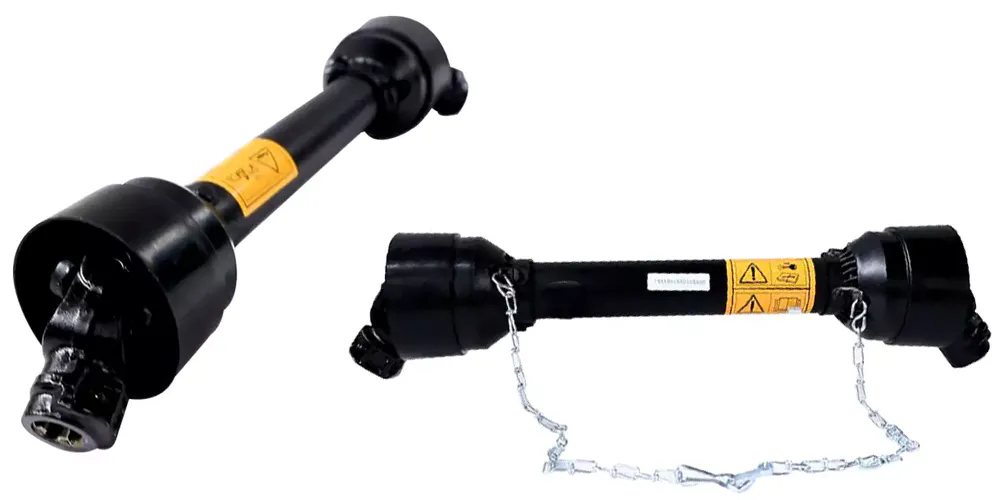
We manufacture the full system — empacadora redonda, gearbox, and PTO shaft — from a single source. For farms running both round and square baling equipment across different seasons, sourcing compatible drivetrain components from the same supplier simplifies maintenance and spare parts management.
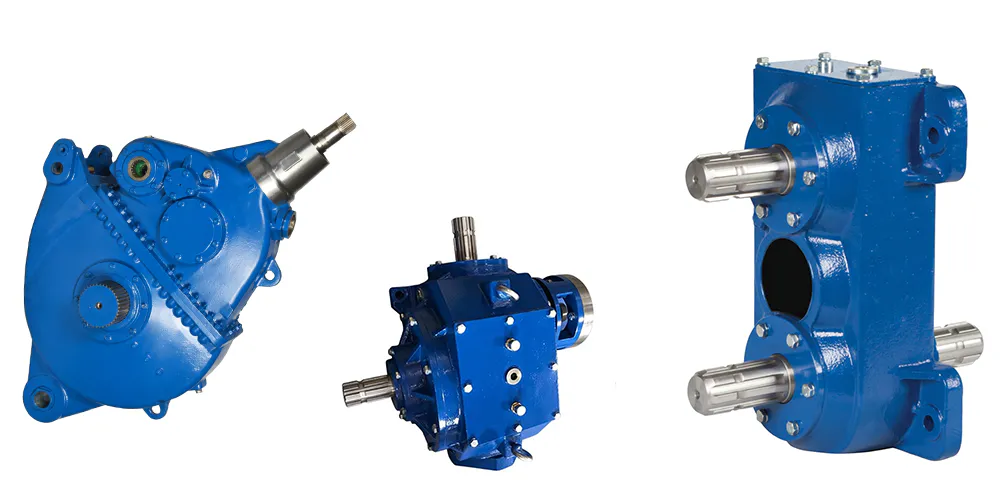
Square Baler Gearbox
Farms operating this compact empacadora redonda alongside a square baler in their equipment fleet can source the square baler gearbox from us as part of a complete system supply arrangement. Our gearbox range covers the full spectrum from the compact 25–50 kW power range applicable to this machine through to large 100+ kW commercial baler applications. Having a single supplier for both baler gearboxes means one maintenance manual format, one lubricant specification, and one spare parts source — simplifying the operational overhead for small farm operators who already carry full responsibility for equipment maintenance themselves.
PTO Drive Shaft
Even in the 25–50 kW power range, the Eje de toma de fuerza connecting the tractor to this compact empacadora redonda must be rated for the torque demands of belt-chamber start-up and the compression cycle. Our PTO shaft range for this machine includes appropriate overload protection devices — friction-clutch or shear-bolt protection — that prevent tractor transmission damage during chamber blockage events. All shafts are supplied with full-length plastic tube guards compliant with EN ISO 5673-1 shielding requirements. For the EP-9YK-870's trailed hitch configuration, shaft length is specified to the tractor-to-baler input distance for a direct, no-modification installation.
9. About Us
Our agricultural baling equipment range spans from ultra-compact machines like the EP-9YK-870 — designed for micro-scale farm applications where no standard commercial baler can operate — to large-format high-output round and square balers for commercial-scale crop residue management and hay production. This breadth of range reflects our commitment to serving farmers at every operational scale, not just the large commercial segment where most equipment manufacturers focus their product development. We understand that small farms have real mechanical needs, and those needs are not met by scaling down the specifications of machines designed for 100+ HP commercial operations.
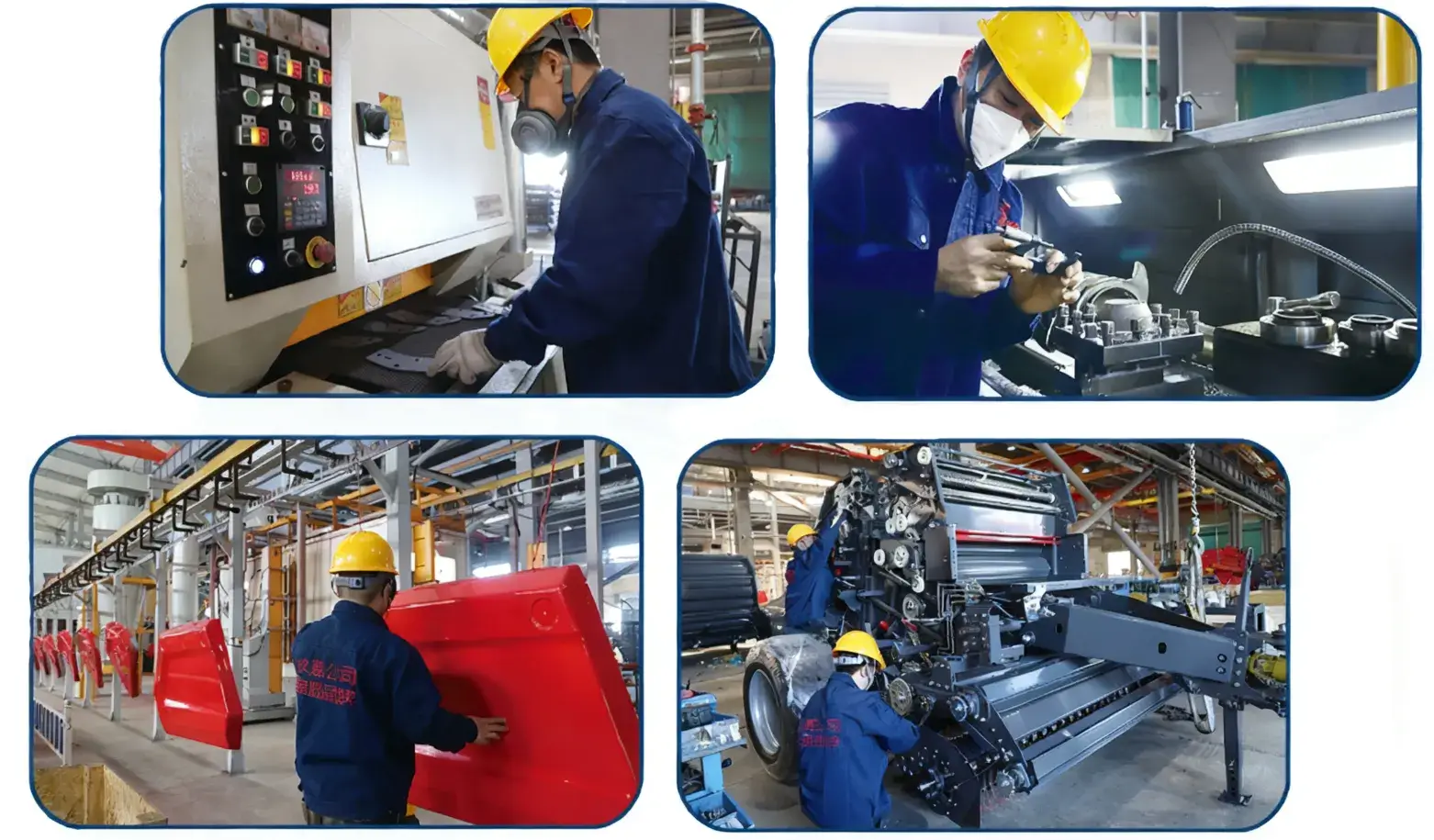
WorkShop


Frequently Asked Questions
Q1. What is a mini round baler, and how does the EP-9YK-870 differ from standard agricultural round baler models for a Korean orchard farm?
A mini round baler is a compact version of a standard round baler, specifically designed for low-power tractors and tight-space applications where full-size commercial machines cannot operate. The EP-9YK-870 differs from standard agricultural round baler models primarily in three dimensions: its 1,300 mm overall working width fits between orchard rows of 2.5–4 meters; its 25–50 kW power requirement works with sub-compact tractors common on Korean orchard farms; and its 500 kg weight allows transport on a standard farm trailer or pickup truck. For Korean orchard farmers in North Gyeongsang or Gyeonggi who have never been able to mechanically bale their alley-strip grass before, this machine is a category-defining change.
Q2. What is the purpose of a mini round baler on a small paddy rice farm in South Korea where straw burning is restricted?
The purpose of a mini round baler on a small Korean paddy farm is to convert post-harvest rice straw into a manageable baled product as an alternative to open-field burning — which is increasingly restricted under Korean municipal air quality regulations. By baling the straw, the farmer converts a disposal problem into a sellable product: rice straw bales have active buyers in the mushroom cultivation sector, the bioenergy sector, and the organic mulch market. At the small paddy areas typical of Korean family-scale rice farming (0.3–1.0 ha), the EP-9YK-870's output scale and sub-50 HP power requirement are a proportional fit for the job.
Q3. How many HP do you need to run the EP-9YK-870 mini round baler, and which compact tractor models in Australia are compatible?
This empacadora redonda requires 25–50 kW at the PTO, equivalent to approximately 34–68 HP at the tractor engine. In Australia, compatible compact tractors include Kubota BX series (25–35 HP), Kubota B series (25–50 HP), John Deere 1023E and 1025R (23–25 HP — confirm PTO output), Mahindra eMax and Max series (22–40 HP), and Iseki TG series (30–45 HP) — all available through Australian rural dealers. For hobby farms in Victoria, Queensland, and New South Wales running these compact machines, the EP-9YK-870 is the only purpose-designed baling solution in this power class that operates at the required working widths.
Q4. How much does a round bale of hay weigh from the EP-9YK-870 mini round baler, and can it be moved without a front loader on a small New Zealand sheep farm?
At Φ870 mm × 800 mm, dry grass bales from this small round baler typically weigh 80–130 kg. Rice straw bales run lighter at 55–90 kg; alfalfa bales are heavier at 100–150 kg. The 80–130 kg weight range is within the manual-roll capability of one or two adults on flat ground — a meaningful practical characteristic for small New Zealand sheep farms operating without a front-loader tractor. A standard pallet jack or a simple A-frame bale roller is sufficient to move these bales in a shed or loading dock setting without any specialized agricultural equipment. This weight range is why this machine is genuinely accessible to hobby farm and micro-livestock operators who have not invested in bale-handling equipment.
Q5. How many square bales are in a round bale from this mini round baler, and how does the format compare for a Netherlands vineyard operation?
A round bale from the EP-9YK-870 at approximately 100 kg dry grass weight is equivalent to 3–5 conventional small square bales at 20–35 kg each. For a Netherlands vineyard operation, the round bale format from this machine is well-suited to composting processing (where bale size matters less than material cleanliness) and direct sale to local goat or sheep farmers who collect bales from the vineyard. Square bales from a square baler would require a different machine category entirely for vineyard alley strips — the EP-9YK-870's working width is the reason round baling, not square baling, is the practical choice in this application context.
Q6. Where can I find a mini round hay baler for sale with export shipping to Japan and spare parts availability?
We export the EP-9YK-870 compact empacadora redonda to Japan with sea freight to Yokohama, Osaka, and Kobe ports. The machine's compact dimensions allow shipping in a standard 20-foot container alongside other farm equipment orders, reducing per-unit freight cost. Spare parts — including the baling belt, pickup tines, twine cutter blade, and gearbox service kit — are maintained in stock and can be dispatched by air freight to Japanese delivery addresses for urgent in-season requirements. Submit your inquiry through the contact form on this product page for a formal quotation with CIF or FOB pricing to your preferred Japanese port.
Q7. What type of round bale net wrap or twine is compatible with this mini round baler, and where can I source it in Canada?
The EP-9YK-870 uses rope wrapping — standard agricultural baler twine compatible with the rope-wrapping mechanism. The machine does not use net wrap; it uses polypropylene (PP) twine in the 200–250 tex range that is standard in the market. In Canada, compatible baler twine is available from TSC Stores (Ontario), UFA Co-operative (Alberta and British Columbia), and regional agricultural supply retailers across Saskatchewan and Manitoba. PP twine is the standard choice; natural sisal twine is available for buyers in provinces with agricultural plastic regulations requiring biodegradable alternatives. Confirm twine spool diameter compatibility with the EP-9YK-870's twine holder before purchasing non-standard reel sizes.
Q8. Which mini round baler supplier offers both the machine and matching PTO shaft as a complete system for a Japanese citrus orchard operation?
We supply the EP-9YK-870 compact empacadora redonda together with a compatible PTO shaft as a complete drivetrain package, shipped to Japanese ports as a single consignment. The PTO shaft is specified to the tractor-to-baler hitch distance for this machine's trailed configuration and comes with a full-length safety guard compliant with EN ISO 5673-1 — required for EU-standard machinery certification and considered best practice for compact machinery used in confined orchard environments where operator proximity to the PTO line is greater than in open-field conditions.
Editor: PXY