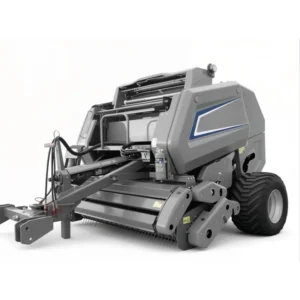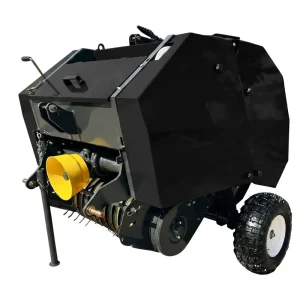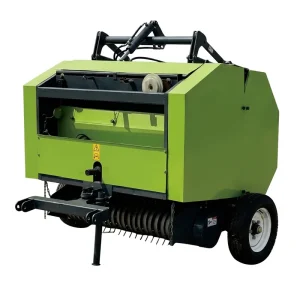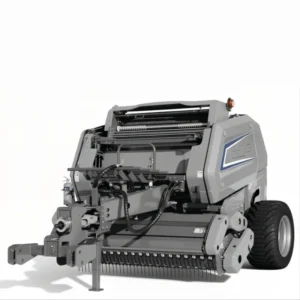
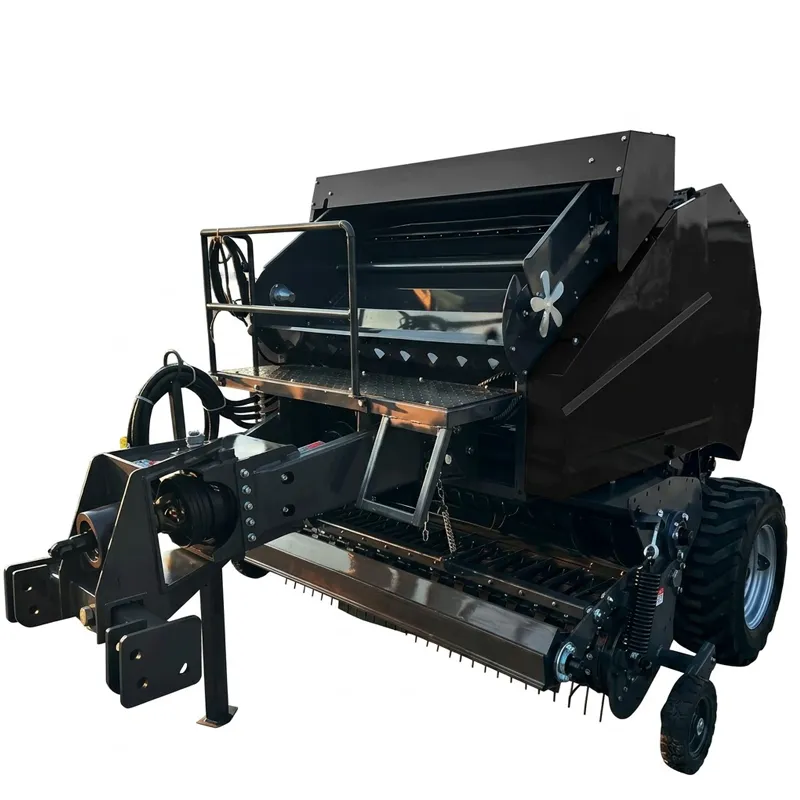
EP-9YQ· 1950MM PICKUP · 36.7–110.3 KW Round Baler
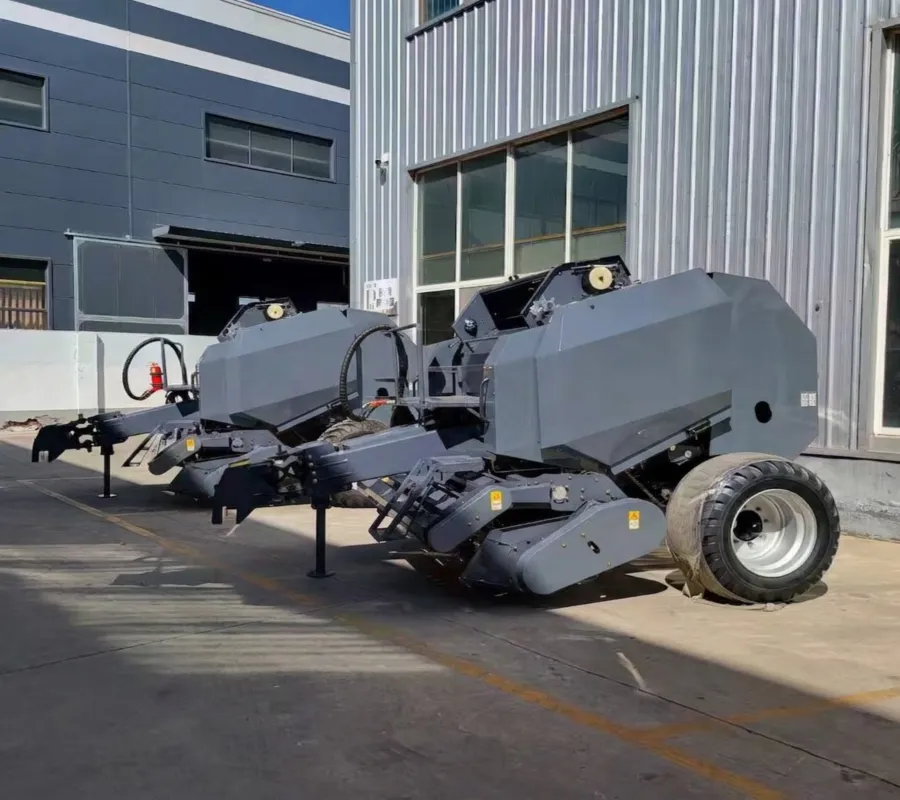
The EP-9YQ-1950 is a trailed round baler engineered for efficient forage harvesting. Featuring a 1950mm spring-tooth pickup and a shift fork feeding mechanism with screw continuous feeding, it ensures smooth crop intake. The machine utilizes a roll drum compression chamber with 18 pressing components to produce dense bales measuring 1250mm in width and Φ1000mm in diameter. Equipped with automatic net wrapping, it streamlines the baling process for storage and transport. Compatible with tractors ranging from 36.7 to 110.3 kW, this robust unit measures 3200×2500×2010mm and weighs 2385kg, making it an ideal solution for medium-to-large scale farming operations requiring reliable performance and high-quality round bales.
EP-9YQ-1950 · 1950mm Pickup · 36.7–110.3 kW
Mesin Pengepak Bal Bundar
Trailed roll-drum type mesin pengepak jerami bundar with automatic net wrapping — engineered for reliable baling of wheat straw, rice straw, forage grass, alfalfa, and mixed crop residues across South Korea, Australia, the Netherlands, and worldwide markets.
1. Technical Specifications
The following table covers the complete parameter set for the EP-9YQ-1950 round baler. Overall dimensions are stated in the L×W×H convention in millimeters. Diameter values use the Φ prefix per standard engineering convention.
| # | Barang | Satuan | Spesifikasi |
|---|---|---|---|
| 1 | Nama Model | — | EP-9YQ-1950 Round Baler |
| 2 | Hitching Method | — | Diikuti |
| 3 | Picking Width | mm | 1950 |
| 4 | Feed Inlet Width | mm | — |
| 5 | Picker Structure | — | Spring Tooth Type |
| 6 | Feeder Structure | — | Shift Fork Feeding Mechanism + Screw Continuous Feeding Mechanism |
| 7 | Type of Compressing Bale Chamber | — | Roll Drum Type |
| 8 | Width of Compressing Room | mm | 1250 |
| 9 | Diameter of Compression | mm | Φ1000 |
| 10 | Quantity of Roll-Pressing Working Components | pc | 18 |
| 11 | Diameter of Roll-Pressing Roller | mm | Φ190 |
| 12 | Bundling Type | — | Automatic Net Wrapping |
| 13 | Rentang Daya yang Sesuai | kW | 36.7 – 110.3 |
| 14 | Overall Dimension (L×W×H) | mm | 3200 × 2500 × 2010 |
| 15 | Berat Mesin | kg | 2385 |
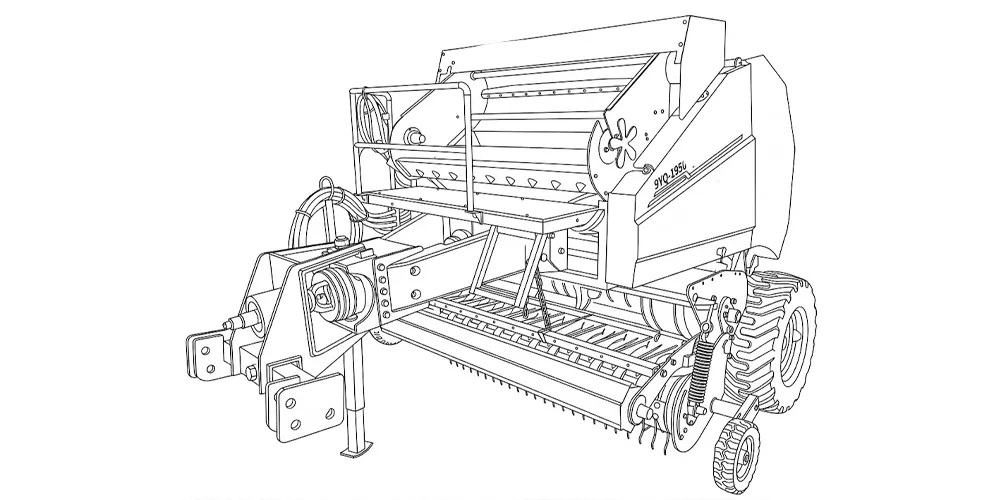
2. EP-9YQ-1950 Round Baler — Versatile, Reliable, Field-Ready
The EP-9YQ-1950 is a trailed-type mesin pengepak jerami bundar built around a roll-drum compression chamber with a 1,000 mm bale diameter and 1,250 mm compression room width. It is a genuine all-round machine — suited to the practical variety of crop types and field conditions that most farms deal with across a working season. Wheat straw, rice straw, alfalfa, fresh cut herbage, and a wide range of forage grasses all feed and bale reliably through this machine's spring-tooth pickup and the dual-stage feeder structure combining shift-fork and screw continuous feeding. Where a specialist machine might excel on one material type, this round hay baler earns its place on mixed-crop operations by adapting to whatever material is on the field that day.
The power compatibility range of 36.7 to 110.3 kW covers an unusually wide bracket — from a 50 HP compact utility tractor at the lower end to a 150 HP field tractor at the upper limit. This breadth means operators do not need to assess whether their current tractor qualifies before purchasing. For South Korean farms where average tractor horsepower tends to fall in the 60–90 HP range, the lower end of this power window is particularly relevant: this agricultural round baler works with the tractors that are already on the ground, without requiring a new equipment purchase alongside the baler. The same advantage applies to smaller farm operations in the Netherlands and New Zealand.
At 2,385 kg operating weight and overall dimensions of 3,200 × 2,500 × 2,010 mm (L×W×H), the EP-9YQ-1950 is a mid-weight commercial round baler machine that can be transported between properties on a standard flatbed trailer in most jurisdictions without oversize permits. The automatic net wrapping bundling system eliminates the need for manual twine tying — a meaningful labor-saving feature on operations where bale count per day runs into the hundreds. Net-wrapped bal jerami bundar also shed rain more effectively than twine-tied bales in outdoor paddock storage, reducing weather-related spoilage in markets like Australia and the UK where bales often sit exposed between harvest and use.
3. Five Key Advantages of the EP-9YQ-1950
① Exceptionally Wide Power Range
A 36.7–110.3 kW compatibility window is wider than most machines in this category and reflects a deliberate design choice to serve a broad market. Whether the operator is running a 50 HP compact tractor on a smaller paddock or a full 150 HP field unit on a large commercial farm, this mesin pengepak jerami bundar works within that power range without requiring gearbox reconfiguration. This makes it one of the most versatile small-to-mid-scale baling platforms currently available for farms in South Korea, Australia, and the Netherlands where tractor fleets vary considerably in power class.
② Dual Feeding Mechanism — Shift Fork + Screw Continuous
The feeder structure combines a shift-fork mechanism and a screw continuous feeding mechanism in a single unit. This dual-stage approach handles both the initial grabbing action on loose windrow material and the controlled, metered feeding into the chamber that produces consistent bale density. On crops with variable windrow density — common in mixed-grass paddocks or post-combine cereal stubble — the combination of these two feeder types maintains a more uniform chamber fill rate than a single-mechanism feeder achieves, which contributes to rounder, more evenly shaped bal jerami bundar at the output end.
③ Automatic Net Wrapping — No Manual Tying
Automatic net wrapping replaces the manual twine-tying step with a fully mechanical wrapping cycle that runs without operator input between bales. Each completed bale receives a secure net wrap before ejection, and the net cut-and-start sequence for the following bale is automatic. Net-wrapped round bales are more weather-resistant than twine-tied bales in outdoor paddock storage — the continuous net layer over the bale surface sheds rain more effectively and reduces UV-driven forage oxidation on the exposed outer layer. This matters in outdoor-storage systems common in Australian and Korean paddock management.
④ Roll-Drum Compression Chamber — 18 Rollers
The roll-drum bale-forming chamber uses 18 roll-pressing working components — each with a Φ190 mm diameter roller — arranged around the Φ1,000 mm bale forming zone. The drum-roller design creates a consistent inward pressure around the entire bale circumference as material accumulates, producing bales with a uniform density profile from the core outward. This is the configuration that delivers the reliable bale shape and density consistency that makes bal jerami bundar from this machine stackable and predictable in weight — important for feed budgeting on large livestock operations.
⑤ Compact Transport Footprint
At 3,200 × 2,500 × 2,010 mm overall, the EP-9YQ-1950 sits within the road transport dimensions that most jurisdictions allow for agricultural vehicles without special permits. The 2,500 mm transport width is within Korean and Australian agricultural vehicle width limits for road movement between paddocks, and the 2,010 mm transport height is well within standard undercroft clearances. This compactness makes it straightforward to move between client properties for contractors, or between paddocks on farms that span multiple road-accessed fields — without the logistics overhead that larger round baler platforms impose.
4. How Does This Round Baler Work?
The operating cycle begins as the tractor moves forward along a windrow of cut and dried crop material. The 1,950 mm spring-tooth pickup reel lifts material from the ground and transfers it rearward into the feeder channel. The dual-mechanism feeder takes the material in two stages: the shift-fork mechanism initially grabs and propels the incoming crop flow, while the screw continuous feeding mechanism provides a steady metered supply into the bale-forming chamber. Together, these two systems smooth out the variations in windrow density that cause single-mechanism feeders to produce uneven bale cores — the most common cause of misshapen bal jerami bundar on variable windrow crops.
Inside the roll-drum bale chamber, 18 Φ190 mm roll-pressing rollers arranged around the Φ1,000 mm forming zone rotate continuously, drawing incoming material inward and building up the bale from the center outward. As the bale grows, the outward pressure against the rollers increases, and the machine's hydraulic or mechanical tension system maintains consistent compression force on the outer bale surface. The result is a bale with a uniform density profile — denser than loosely stacked hay but not so compressed that the outer layers split or shed material when the bale is ejected. This roll-drum configuration is the standard for mid-scale agricultural mesin pengepak jerami bundar designs because it balances bale density with reliable bale shape across a wide range of crop types and moisture levels.
When the bale reaches the target diameter — Φ1,000 mm in this case — the automatic net wrapping system activates. A net roll feeds across the full 1,250 mm bale width, wrapping the bale circumference in the specified number of layers before a mechanical cutter severs the net and the tail is tucked under the final wrap layer. The rear gate of the machine then opens, and the completed bale rolls out onto the field behind the machine. The gate closes, the net wrapping system reloads for the next bale, and the machine is ready to begin the next bale-forming cycle within seconds of ejection — a complete cycle from bale-full signal to ready-to-receive is one of the fastest in its category. Unlike square baler designs that continue forming during the knot cycle, a mesin pengepak jerami bundar pauses field travel briefly at this ejection moment — a characteristic operating practice that drivers adjust to quickly.
5. Materials & Construction of Round Baler
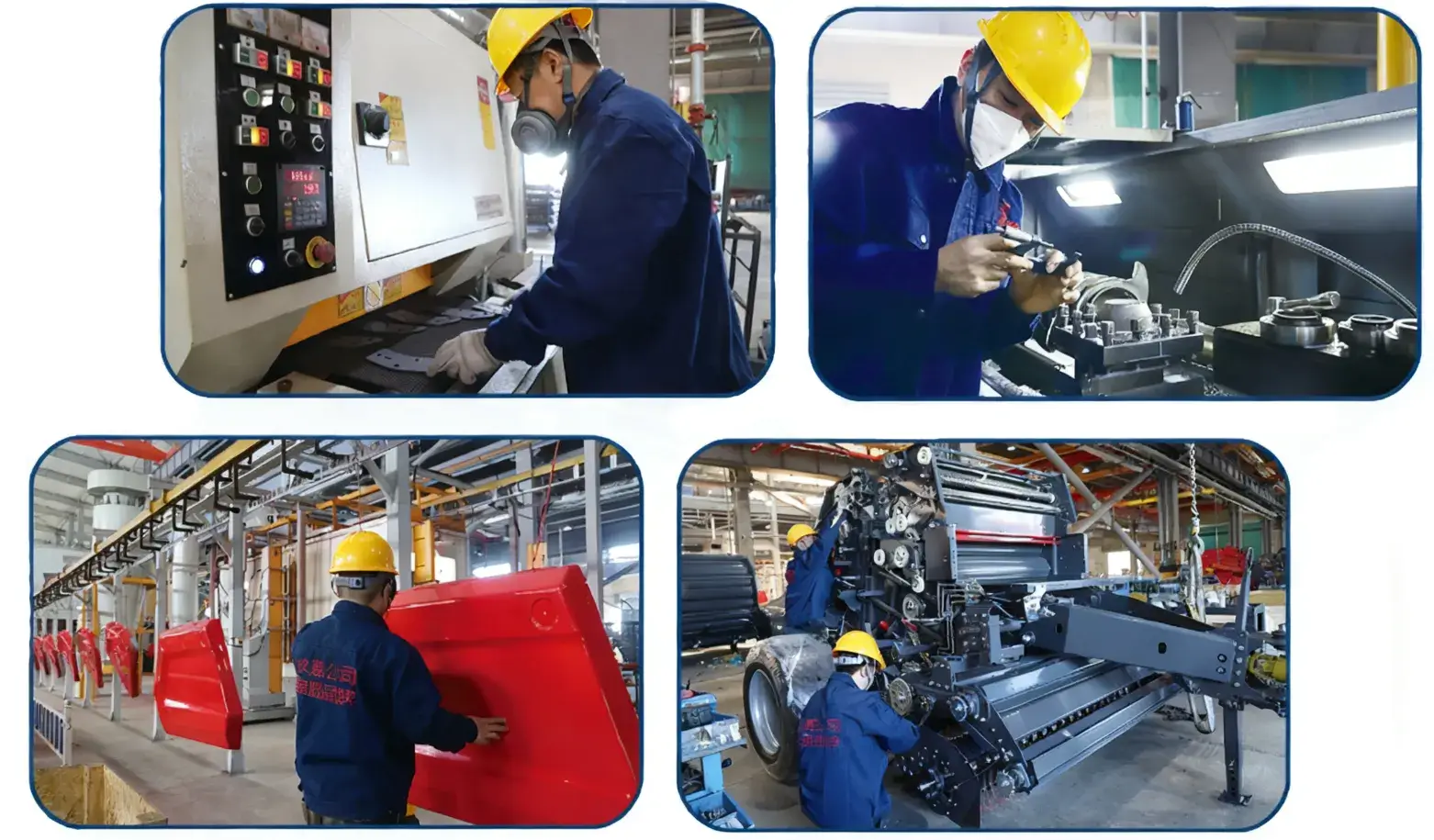
The structural frame of the EP-9YQ-1950 is fabricated from high-tensile structural steel, welded under controlled production conditions and finished with a multi-stage corrosion protection system — shot-blasting followed by agricultural-grade powder coating. The frame is engineered to withstand the cyclic loading generated by the roll-drum compression system under sustained operation, with main longitudinal members sized for the combined static and dynamic forces from the 18-roller chamber and the hydraulic rear gate mechanism. Weld inspection is performed on each unit before finishing as part of standard quality assurance.
The 18 roll-pressing rollers are each fabricated from structural steel tube, with shaft ends machined to bearing-fit tolerances. Roller surfaces are either plain steel or textured with a pattern that assists material draw-in at the chamber circumference. Bearings are sealed and grease-packed, with external grease zerks accessible for periodic replenishment without disassembling the roller assembly. The pickup tines are spring steel, heat-treated to a controlled hardness profile for flex-and-return performance across the full 1,950 mm working width. Individual tines are replaceable without bar removal.
The net wrapping mechanism uses precision-machined components for the net feed roller, the tension brake, and the net cutter. The cutter blade is a replaceable service item, as net cutting is a repetitive impact action that causes gradual edge wear over time. Net roll holders are standardized to accept commonly available agricultural net wrap rolls in 1.23–1.28 m width, making it straightforward to source compatible wrapping material from local agricultural supply retailers in Korea, Australia, Germany, or Canada. All external hardware is Grade 8.8 metric specification throughout, and the machine's lubrication schedule is designed around accessible 50-hour service intervals during the baling season.
6. Application Scenarios
The purpose of a round baler is to convert loose, field-spread crop material into a manageable, storable, and transportable cylindrical bale. The EP-9YQ-1950 is designed to fulfill this purpose across a wider-than-average range of crop types and farm scales. Below are the primary contexts where this machine delivers clear operational value.
🌾 Pasture Hay — Dairy & Beef Farms in Australia and Korea
Ryegrass, clover, timothy, and mixed pasture hay baling represents the core use case for most mesin pengepak jerami bundar machines on commercial livestock farms. The EP-9YQ-1950's automatic net wrapping produces bales that are ready for paddock storage without additional covering on well-drained sites, and the 1,000 mm bale diameter falls within the size range most widely used in Korean and Australian ring-feeder systems. The wide power range means farms with smaller tractors can operate this machine without upgrading their tractor first.
🌿 Alfalfa & Leguminous Hay — Export and Feed Markets
Alfalfa round bales are a significant traded commodity in international hay markets, particularly in Korea and Japan where domestic production is limited and import volumes are substantial. The EP-9YQ-1950's consistent bale diameter and automatic net wrap produce a bale format that meets the dimensional and density expectations of export market buyers. Alfalfa at the recommended harvest moisture range bales cleanly through the dual-stage feeder, and the roll-drum chamber maintains good core density on the relatively light, leafy material.
🌾 Rice Straw Recovery — Korean Paddy Regions
Rice straw baling after paddy harvest is increasingly important in South Korea as open-field burning regulations tighten. Round hay bales of rice straw are used for mushroom cultivation substrate, livestock bedding, bioenergy feedstock, and organic mulch. The spring-tooth pickup on this machine handles the short-stemmed, relatively fine character of rice straw on flat paddy terrain, and the 1,950 mm pickup width sweeps the field efficiently on the wide paddy row spacings common in Gyeonggi, Chungcheong, and Jeolla provinces.
🌱 Wheat & Barley Straw — Arable Cereal Farms
In the Netherlands, Germany, the UK, and Canada, straw from cereal grain harvest is routinely baled and sold as a commercial product for bedding, bioenergy, and building applications. Round baling is preferred on many large arable farms because the bales can be left in the field for several weeks awaiting collection without significant spoilage — the net-wrapped cylindrical form sheds rain effectively and the bale body is resistant to ground moisture absorption on well-drained arable soils. This machine's field speed and bale output capacity suits the large field areas typical of Netherlands and Canadian grain farms.
🚜 Agricultural Contracting — Multi-Client Operations
Agricultural contractors offering baling services across multiple farm clients benefit specifically from the EP-9YQ-1950's wide tractor compatibility range. Being able to hook up to whatever tractor is at the client's property — within the 36.7–110.3 kW window — removes the logistical burden of transporting a dedicated tractor alongside the baler. In South Korea's highly fragmented farm plot landscape, where contractors move between small paddocks and clients frequently, this flexibility directly reduces time lost to equipment coordination between jobs.
7. Regulatory Compliance by Market
Agricultural machinery — including mesin pengepak jerami bundar equipment — must meet safety and import standards that vary by country. The following covers the key regulatory frameworks relevant to the EP-9YQ-1950's primary markets. We recommend buyers engage with a local certification agent or customs broker for the most current requirements at time of purchase.
South Korea
Under the Agricultural Mechanization Promotion Act, all trailed PTO-powered implements must meet the Rural Development Administration's (RDA) safety and performance standards. Round baler gearbox and PTO shaft guarding must conform to KS-standard shielding requirements. The machine's 2,500 mm transport width falls within standard Korean agricultural vehicle road movement limits, but operators should confirm local regulations before moving between road-separated fields. Rice straw baling operations in paddy areas may also be subject to municipal open-burning restriction compliance requirements that make mechanical baling legally necessary in certain periods.
European Union
CE marking under EU Machinery Directive 2006/42/EC (transitioning to Machinery Regulation (EU) 2023/1230) is required for machinery placed on the EU market. EN ISO 4254-7 covers agricultural baler safety requirements, and EN ISO 5673-1 applies to PTO driveline shielding. For the net wrapping system — which involves an automatically actuated cutting mechanism — additional guarding requirements under the Directive's safety-of-machinery provisions apply. Buyers in Germany, Netherlands, and France should request CE documentation before import. BG Agrar (German agricultural professional association) safety guidelines are also advisory in German farm operation contexts.
Australia & New Zealand
The Work Health and Safety (WHS) Act and state-level farm safety codes govern agricultural machinery in Australia. AS 2671 and the AS/NZS 4024 series cover PTO guarding and machinery safety standards that apply to round balers. In New Zealand, the Health and Safety at Work Act 2015 and WorkSafe NZ guidelines are the governing frameworks. Net wrapping systems with automatic cutters are subject to guarding requirements covering inadvertent access to the cutting zone during operation. The machine's 2,010 mm transport height and 2,500 mm width fall within standard agricultural vehicle limits in most states.
Canada
ASABE standard S361 provides the recognized North American technical benchmark for agricultural baler design and safety. Canadian provincial occupational health and safety codes apply on-farm, with Manitoba, Ontario, and Saskatchewan having specific agricultural machinery safety requirements. The round baler gearbox and PTO shaft must meet ASABE/ISO compatibility standards for safe tractor-implement connection. Net wrap film disposal is subject to provincial agricultural plastic recycling regulations in several Canadian provinces — buyers should check local recycling program requirements for agricultural net wrap material.
Brazil & Colombia
In Brazil, INMETRO certification and ABNT standards govern agricultural machinery. Round baler net wrap plastic waste is subject to Brazil's National Solid Waste Policy (Lei nº 12.305/2010), which requires manufacturers and importers to participate in reverse logistics schemes for agricultural plastic waste. In Colombia, ICONTEC standards and MADR guidelines apply to mechanized harvesting and baling equipment.
8. Compatible Components — One-Source System Supply
A mesin pengepak jerami bundar performs best when paired with drivetrain components matched to its specific power and load requirements. We manufacture and supply the full system — baler, gearbox, and shaft — eliminating the compatibility uncertainty that comes from sourcing these items from separate suppliers.
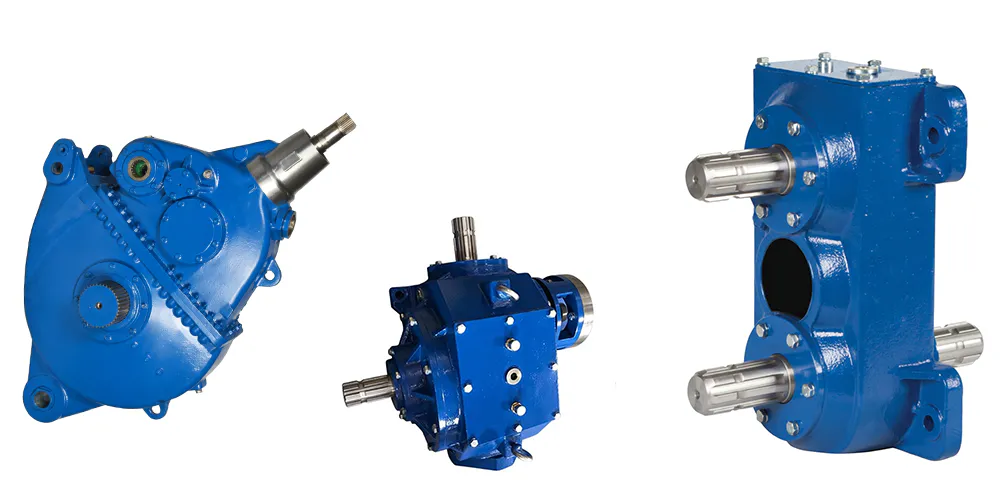
Square Baler Gearbox
Whether you operate a round baler or a square baler across different seasons or fields, having a correctly rated square baler gearbox for your square baling equipment is equally important. We supply matched gearbox units for both round and square baler applications — each specified to the torque, input speed, and load cycle of the corresponding machine. For operations that run both baler types across the year, sourcing gearboxes from a single supplier simplifies spare parts stocking and maintenance scheduling. Our gearbox range includes models compatible with the full power range of mid-to-large field tractors, and oil specifications and servicing intervals are provided with each unit.
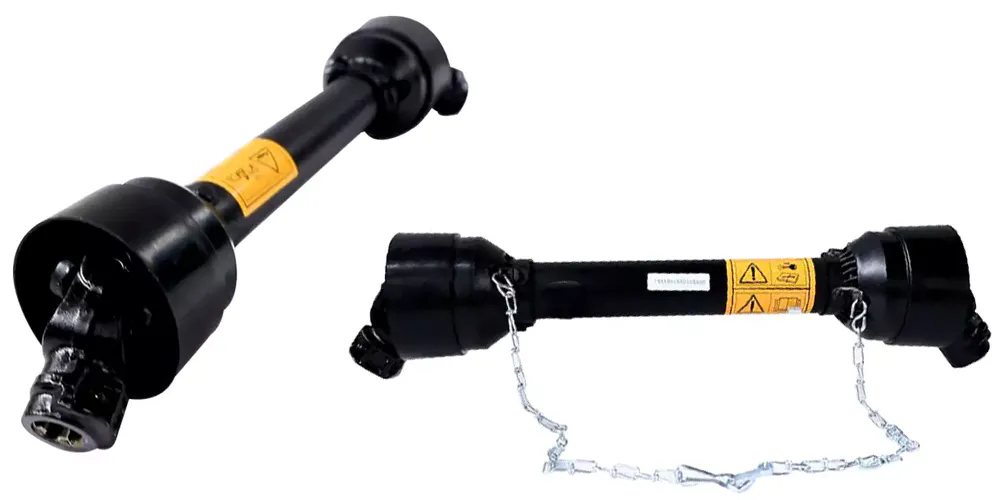
PTO Drive Shaft
The PTO shaft connecting the tractor to the mesin pengepak jerami bundar input gearbox must be rated for the peak torque demands of the roll-drum compression system — which can spike significantly when the chamber first receives a dense crop charge. Our PTO shaft range includes shafts with friction-clutch or overrunning clutch overload protection, which prevents tractor transmission shock loads during sudden chamber blockages or dense-material start-up events. Each shaft is supplied with a full-length plastic tube guard compliant with EN ISO 5673-1 requirements — mandatory for EU and UK market operation, and best practice elsewhere. Shaft length is specified to the hitch distance of the EP-9YQ-1950's trailed configuration for a direct, modification-free installation.
9. About Us - Round Baler Manufacturer
We are a dedicated manufacturer and global exporter of agricultural baling equipment covering both round and square baler product categories. Our range addresses the full market spectrum — from compact mesin pengepak jerami bundar mini units suited to small family farms and hobby livestock operations, through to mid-scale commercial machines like the EP-9YQ-1950 for paddock-scale hay and straw production, and on to high-output systems for large commercial operations. All machines are manufactured under the same engineering and quality control standards, and our export team has direct experience supporting buyers across South Korea, Australia, the Netherlands, Germany, the UK, Canada, New Zealand, Brazil, and Colombia.
We understand that buyers often have questions beyond the product specification — questions about what is a round baler suited to versus a square baler for their specific storage and feeding system, how many square bales are equivalent to a round bale when comparing bale format costs, or how much does a round bale of hay weigh at the moisture content typical of their climate.
WorkShop


Frequently Asked Questions
Q1. What is a round baler and how does it differ from a square baler for a livestock farm operation in South Korea?
A mesin pengepak jerami bundar forms cylindrical bales by rotating incoming crop material inside a drum-roller chamber until the target diameter is reached, then wraps the bale with net or twine before ejection. A square baler uses a reciprocating plunger to compress crop into a rectangular channel, producing stackable rectangular bales. For South Korean livestock farms, the key differences are storage and handling: round bales can be stored outdoors in paddocks with minimal spoilage when net-wrapped, while square bales stack more efficiently in covered barns and integrate better with rectangular bale feeders. The right choice depends on whether your storage is covered or paddock-based, and whether your feeding system is designed for round or square bale formats.
Q2. What is the purpose of a round baler on a mixed-crop farm in Australia, and which crop types can it handle?
The purpose of a mesin pengepak jerami bundar is to convert loose cut-and-dried crop material into a compact, sealed cylindrical bale suitable for outdoor storage, transport, and mechanized feeding. On a mixed-crop Australian farm, the EP-9YQ-1950 handles pasture grass, alfalfa, ryegrass, wheat straw, and barley straw through the same mechanical setup without modification. The spring-tooth pickup and dual-stage feeder adapt to the varying density and fiber characteristics of each material. This multi-crop capability is what makes a single machine like this practical across the full year's baling calendar on farms that grow both cereals and pasture.
Q3. How many horsepower do you need to run this round baler, and will it work with a compact tractor on a small Korean farm?
The EP-9YQ-1950 round baler requires 36.7 to 110.3 kW at the PTO, which covers approximately 50 to 150 HP at the tractor engine. At the lower end, a 50–60 HP compact tractor will run this machine on light to medium windrow crops like grass hay and rice straw. For heavier crops such as dense alfalfa or wet-season forage, a tractor in the 70–90 HP range provides better sustained throughput. For small Korean farms in Gyeonggi or Chungcheongnam provinces typically running 60–80 HP tractors, this machine is a practical fit without requiring a tractor upgrade.
Q4. Where can I find a reliable round hay baler for sale with global export capability and full technical support after delivery?
We export the EP-9YQ-1950 round baler and our full round hay baler range to South Korea, Australia, the Netherlands, Germany, Canada, New Zealand, Brazil, Colombia, and more than 25 additional countries. Export documentation, spare parts supply, and post-delivery technical support are all coordinated by our dedicated export team. To receive a formal quotation with CIF or FOB pricing to your destination port, submit your inquiry through the product page contact form — we respond within one business day with full pricing, lead time, and shipping options.
Q5. What type of round bale net wrap is compatible with this machine, and where can I source it in Australia?
The EP-9YQ-1950 round baler uses standard agricultural net wrap rolls in 1.23–1.28 m width — the industry-standard width for this bale chamber size, compatible with net wrap products from major manufacturers including Tama, RKW, and Berry. In Australia, compatible net wrap is stocked by major rural and agricultural supply retailers including Elders, Landmark, and CRT Rural branches across all states. Standard roll lengths run 2,000–3,000 m per roll, giving approximately 200–400 bale wraps per roll depending on the number of wrap layers set for each bale. Choose UV-stabilized net for bales stored outdoors for extended periods.
Q6. What is a round baler gearbox, and how does it need to be maintained for a long operating life on a Korean rice straw operation?
The round baler gearbox transfers tractor PTO rotation to the machine's internal drivetrain — roll-pressing drum, feeder mechanisms, and net wrap system. For a Korean rice straw operation running 4–6 weeks of intensive seasonal baling, check gearbox oil level daily before operation, as oil level drops due to thermal expansion and minor seal weep during initial run-in. Drain and refill with fresh GL-4 or GL-5 90W gear oil every 150–200 operating hours. Clean the breather vent of packed rice dust every 50 hours — paddy field dust is particularly fine and blocks vents quickly, causing internal pressure build-up that accelerates seal failure.
Q7. Which round baler model is best for a small alfalfa operation in Canada that needs to minimize equipment cost while maintaining reliable output?
For a Canadian alfalfa operation focused on cost efficiency with reliable daily output, the EP-9YQ-1950 is a strong candidate in the mid-weight commercial category. Its wide power range (36.7–110.3 kW) avoids the need for a dedicated tractor, automatic net wrapping removes manual labor from the bale-finishing step, and the 1,000 mm bale diameter produces bales that fit standard ring feeders and front-loader handling equipment common on Canadian livestock properties. The machine's transport dimensions are within most provincial agricultural vehicle road limits without oversize permits, keeping inter-field logistics simple.
Editor: PXY