
Operating a mesin pengepak jerami bundar efficiently is the backbone of high-quality forage production. However, many farmers in regions like Gangwon-do or Jeju Island often encounter a frustrating issue: valuable hay or silage leaking out the back of the chamber during operation. This “tailing” or crop loss not only reduces the total tonnage of your harvest but also affects the density and fermentation quality of the final bale. Understanding the mechanical nuances of your round hay baler is essential to troubleshooting these losses. Whether you are using a mesin pengepak jerami bundar mini for smaller plots or a high-capacity round baler machine for industrial-scale operations, the physics of crop retention remains the same. Crop loss is typically a symptom of improper belt tension, misaligned pick-up timing, or environmental factors like extreme dry matter content. By addressing these technical gaps, you ensure that every blade of grass is captured, resulting in premium feed for your livestock and better ROI for your farm investments.
1. Technical Breakdown: Why Tailing Occurs
In the context of round baler application, tailing—or the loss of crop from the rear of the chamber—often points to a failure in the material flow synchronization. When the pick-up speed is too high relative to the tractor’s ground speed, the round baler machine may “flick” the crop before it enters the compression rollers. Furthermore, for those searching for a small round baler for 40 hp tractor, horsepower mismatch can lead to inconsistent PTO speeds, causing the chamber to struggle with maintaining the necessary centrifugal force to hold the bale together. In South Korea, where environmental regulations (KAMICO standards) emphasize machinery efficiency and noise reduction, maintaining a well-tuned round baler gearbox is critical. If the internal gears are worn, the rollers might slip, allowing the outer layers of the bale to disintegrate and leak out. This is particularly common when baling very dry rice straw, where the lack of moisture makes the fibers brittle and prone to shattering under high compression.
Baler Configuration & Maintenance Matrix
| Feature | Technical Specification |
|---|---|
| Action Mode | Trailed / Towed (Tractor PTO Driven) |
| Jenis Struktur | Fixed Chamber Roller Type (16-18 Rollers) |
| Manufacturing Structure | Reinforced dual-side chain drive (16A/20A Heavy Duty) |
| Material System | High-strength alloy steel (Q345B) and heat-treated tines |
| Surface Treatment | Electrostatic powder coating (UV resistant) |
| Environmental Rating | IP65 for electronic sensors; All-weather operation |
| Working Conditions | 5-35 Km/h operating speed; 540-1000 RPM PTO |
| Failure Modes | Chain elongation, hydraulic seal wear, sensor drift |
| Recommended Setup | 75-120 HP tractor; Dual-channel hydraulic output |
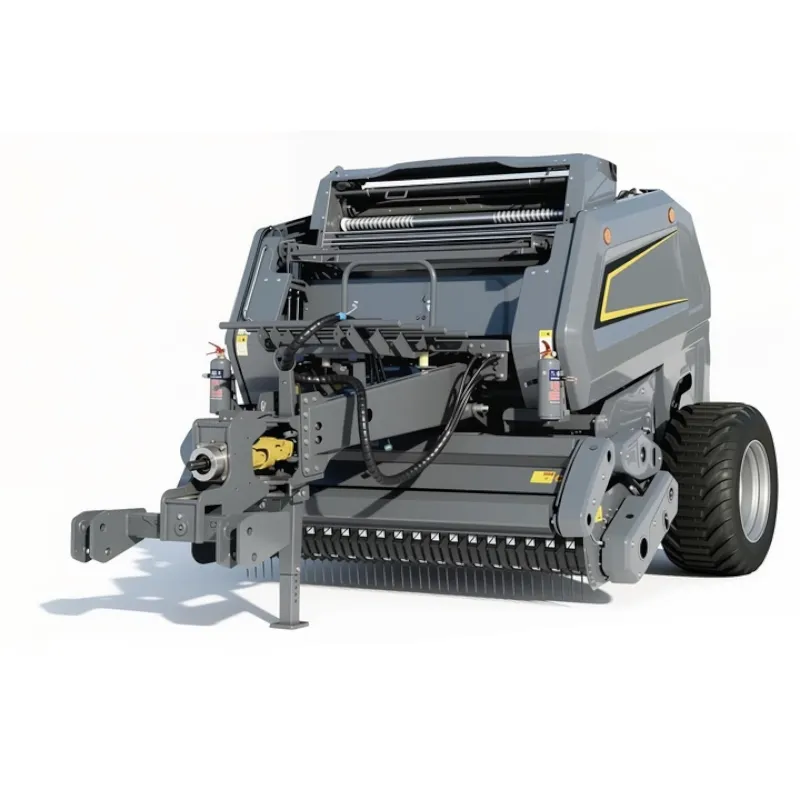
2. Five Key Advantages of Our Premium Round Baler Series
- 1. High-Efficiency Axial Feed Mechanism: Our mesin pengepak jerami bundar utilizes a self-developed “axial” semi-forced feeding system that reduces power consumption while doubling intake capacity.
- 2. Dual-Joint PTO Shaft Protection: Equipped with a dual-cross joint transmission shaft and safety torque protection to prevent mechanical damage during sharp turns in small fields.
- 3. Precision Sensor Density Control: Real-time monitoring of bale density (100-200 Kg/m³) ensures consistent round hay baler performance across different crop types.
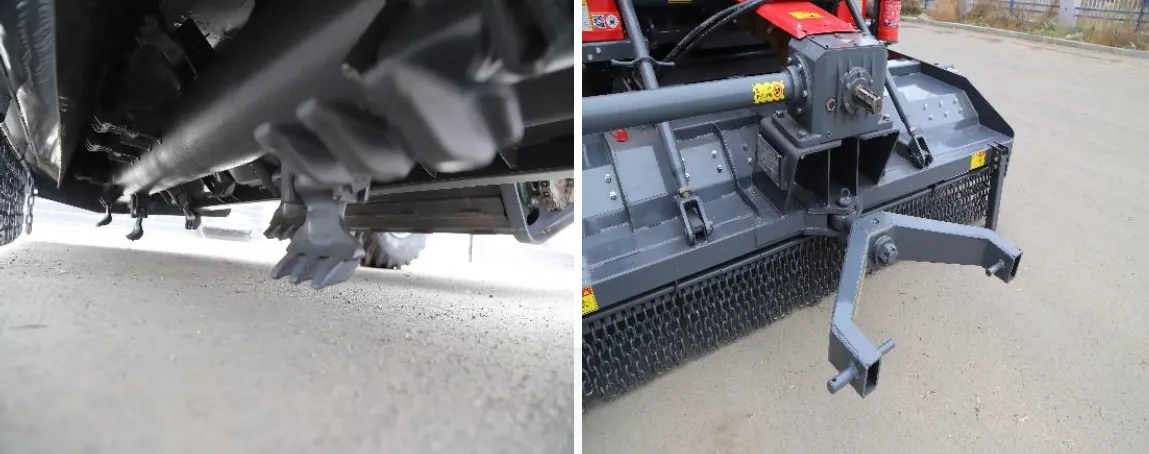
- 4. Camless Pickup Technology: A simplified design that minimizes maintenance and reduces the risk of grass clogging, leading to smoother mini hay baler operations.
- 5. Rapid Net Wrapping System: Automatic net binding reduces the cycle time per bale, significantly increasing the hourly production rate of the round baler machine.
3. How a Round Baler Works
The working principle of a modern mesin pengepak jerami bundar involves four distinct stages. First, the pickup tines gather the windrowed crop from the field. Second, the material is fed into the chamber via an axial feed rotor or “拨齿辊”. Third, as more material enters, the rollers (usually 18 in a small round baler) rotate the crop, forming a core and expanding it until it reaches the set density detected by the sensors. Finally, once the chamber is full, the wrapping mechanism (net or twine) secures the bale before the rear tailgate opens to eject it. Understanding what is round baler mechanics helps in identifying that tailing often happens during the transition between the core-forming and full-compression stages. If the chamber’s “tongue” or floor rollers are not properly aligned, a gap is created where small, fragmented crop particles can escape.
4. Versatile Round Baler Application Scenarios
Rice Straw Harvesting
Perfect for the post-harvest season in the Honam Plain. Our round baler machine handles the high-silica rice straw with ease, producing high-density bales for local cattle feedlots.
Corn Stover Silage
Equipped with specialized hammers, the mini round baler for sale can pick up standing corn stalks, saving the extra step of raking and significantly reducing labor costs.
Upland Forage Collection
Designed for the sloping terrains of Gangwon-do. The low center of gravity and wider wheelbase of the round hay baler provide unmatched stability on hillsides.
5. Technical Specifications: S9000 Transcendence Series
Itu EP-9YG-2.24D Round Baler (S9000 Transcendence) is our flagship model, engineered for professional contractors who demand zero-loss performance.
| Parameter | Value |
|---|---|
| Lebar Pengambilan | 2240 mm |
| Jenis Kamar | Fixed Roller (18 units) |
| Bale Dimension | Φ 1300 × 1400 mm |
| Matched Power | 75 – 135 HP |
| Production Rate | 40 – 100 Bales/h |
| Operating Speed | 5 – 35 Km/h |
| Binding Material | 2000m x 1.4m Bale Net |
Explore the full potential of this model here: View EP-9YG-2.24D Details
6. Global & Regional Compliance Standards
In South Korea, agricultural machinery must comply with the KAMICO (Korea Agricultural Machinery Industry Cooperative) safety and performance standards. This includes specific noise level limits and hydraulic safety valves to prevent accidental tailgate closure. Furthermore, our round baler gearbox designs meet the EU Machinery Directive (CE) and ISO 9001:2015 quality management systems. In the United States, we adhere to ASABE standards for PTO shielding and safety labeling. Ensuring your mini hay baler for sale is compliant with local laws is not just about safety—it is also a requirement for accessing government agricultural subsidies in many countries.

7. Total System Compatibility
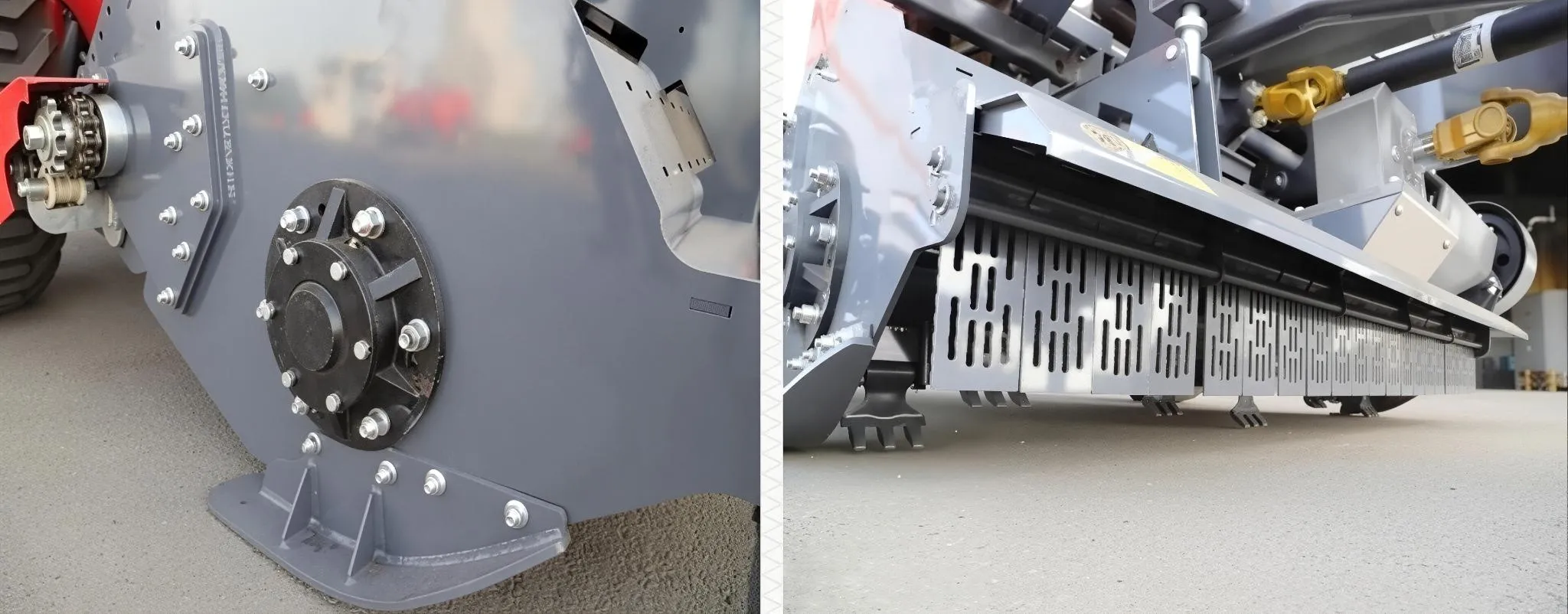
We manufacture high-performance PTO Shafts and specialized gearboxes that are perfectly synced with our baler series. Our one-stop supply advantage ensures that every component—from the round baler gearbox to the transmission—works in harmony to prevent downtime and mechanical failure.

Frequently Asked Questions
Q1: How can a local supplier reduce the total round baler cost for my livestock farm in South Korea?
Q2: What is round baler pickup speed and how does it prevent losing crop out the back?
Q3: Which mini round baler for sale is best for small-scale dairy farms in mountainous regions?
Q4: What specific intent triggers the need for a heavy-duty round baler machine in high-yield corn zones?
Q5: When should I check my round baler gearbox oil to ensure long-term reliability in humid climates?
Q6: Why is my round hay baler for sale producing soft cores that leak material during transport?
Q7: How does a mini hay baler for lawn mower work for small estate grass maintenance?
Q8: Which round balers for sale near me offer the best wet-silage fermentation capabilities?
Editor: PXY