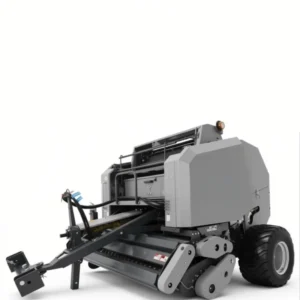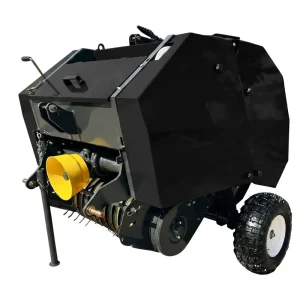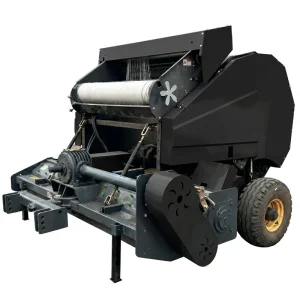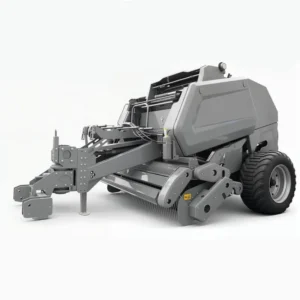
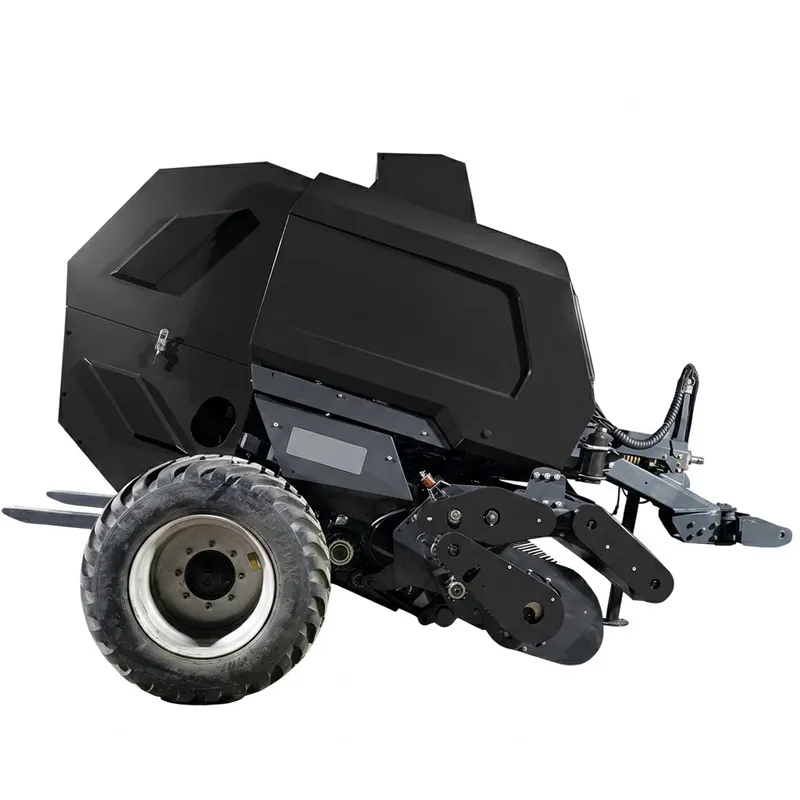
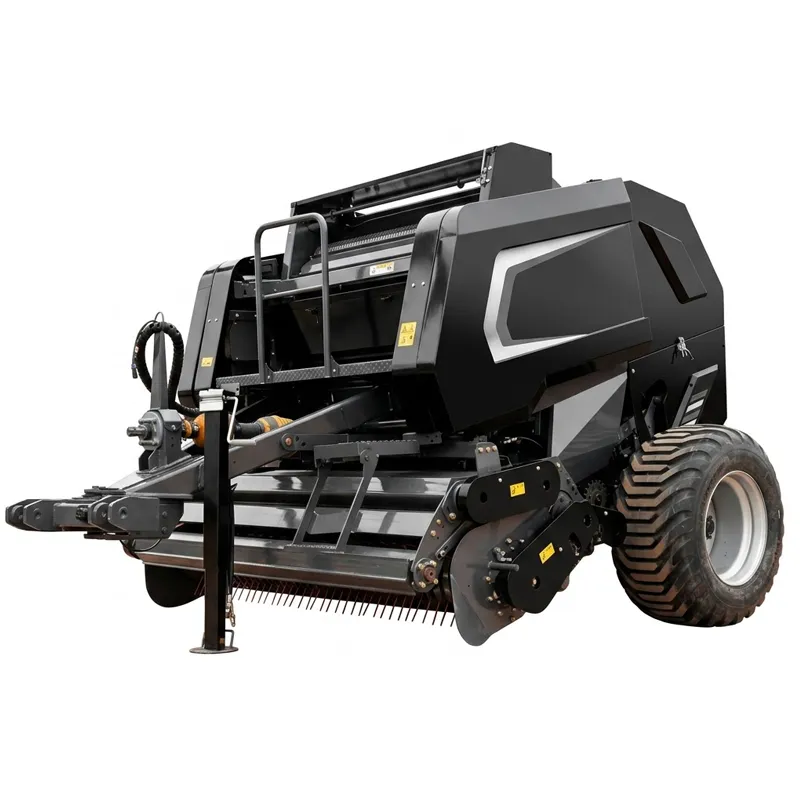
EP-9YG-2.2 · 2200mm Picker Width Round Baler
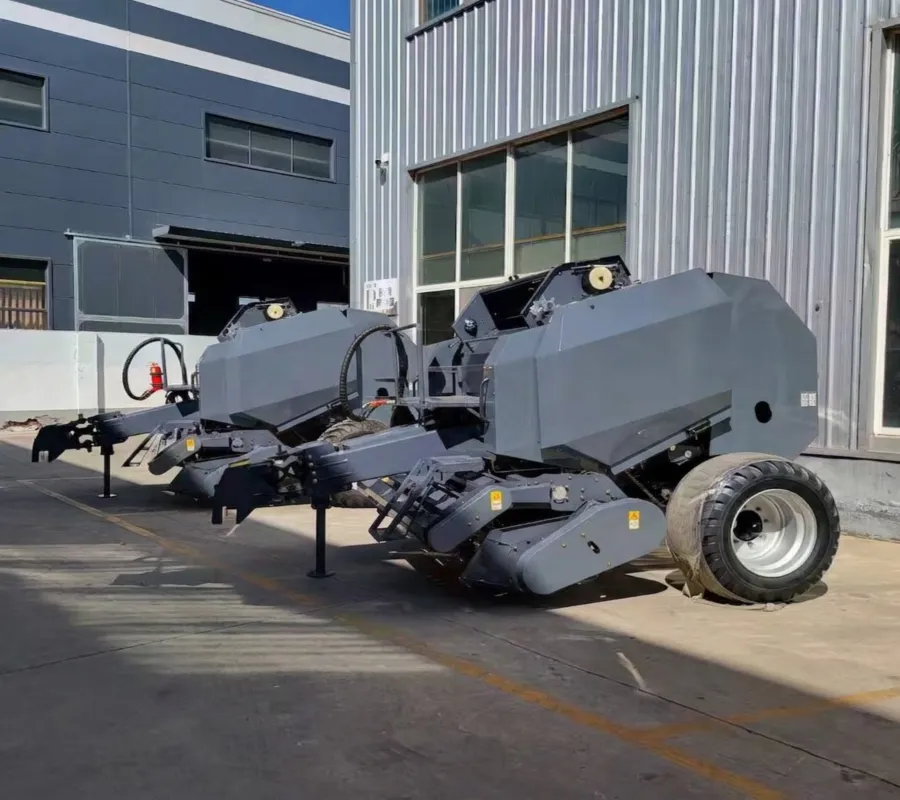
The EP-9YG-2.2 is a large-capacity towed round baler engineered for professional-scale harvesting operations. Built around a roll drum baling chamber with a 1400 mm compression room width and Φ1220 mm diameter of compression, this machine produces dense, consistent round hay bales from wheat straw, rice straw, cotton straw, corn stover, and a wide range of forage grasses.
Powered by tractors in the 110–150 kW range, the EP-9YG-2.2 sits firmly in the high-performance segment of the round baler machine market. Its 18 pressing working components and Φ222 mm diameter pressing rollers deliver the compression force needed for consistently dense bales across varying crop densities and moisture conditions.
Agricultural Baling Equipment · Large Round Baler Series
EP-9YG-2.2 · 2200mm Picker Width
گول بیلر
A high-capacity towed گول بیلر with a 2200 mm picking width, roll drum baling chamber, and automatic net wrapping — designed for large-scale wheat straw, rice straw, corn stover, and forage grass operations across South Korea, Australia, Canada, and global agricultural markets.
1. Technical Specifications
The complete factory-standard parameters for the EP-9YG-2.2 round baler machine are listed below. Tractor compatibility should be confirmed against the 110–150 kW matching power range, and buyers should verify local road transport regulations for the stated overall dimensions before delivery planning.
| Serial No. | آئٹم | یونٹ | تفصیلات |
|---|---|---|---|
| 1 | ماڈل کا نام | — | EP-9YG-2.2 Round Baler |
| 2 | Hitching Method | — | Towed-type |
| 3 | Picking Width | ملی میٹر | 2200 |
| 4 | Feed Inlet Width | ملی میٹر | — |
| 5 | Picker Structure | — | Spring Tooth Type |
| 6 | Feeder Structure | — | Continuous Screw Feeding Mechanism |
| 7 | Type of Compressing Bale Chamber | — | Roll Drum Type |
| 8 | Width of Compressing Room | ملی میٹر | 1400 |
| 9 | Diameter of Compression | ملی میٹر | Φ1220 |
| 10 | Quantity of Roll-Pressing Working Components | pc | 18 |
| 11 | Diameter of Roll-Pressing Roller | ملی میٹر | Φ222 |
| 12 | Bundling Type | — | Automatic Net Wrapping |
| 13 | مماثل پاور رینج | کلو واٹ | 110 – 150 |
| 14 | Overall Dimension (L×W×H) | ملی میٹر | 4100 × 2900 × 2400 |
| 15 | مشین کا وزن | کلو | 3800 |
2. Five Key Advantages
Handheld Color Touch Screen + High-Precision Sensor
The integration of a handheld color touch screen with a high-precision displacement sensor is a standout feature on this گول بیلر. The sensor precisely counts net-wrapping loops and tracks bale formation progress, feeding live data to the touch screen display. Operators can monitor bale weight, machine status, and cycle progress at a glance — eliminating the guesswork that leads to inconsistent bale weights and bale rejection at the buyer's yard. Both automatic and manual operating modes are supported, providing operational flexibility that experienced contractors and first-time users alike find practical.
Full-Automatic Thin Oil Lubrication System
The EP-9YG-2.2 incorporates a fully automatic thin oil lubrication system that continuously maintains the chain drive system across the entire machine. This centralized supply approach eliminates the need for individual manual greasing of each chain link and sprocket during operation — a task that on older machines could require the operator to stop and spend 20–30 minutes on routine lubrication every few hours. Extended service life of the chain drive and pressing roller components is a direct result, reducing the total cost of ownership over the machine's operating lifespan.
Hydraulic Floating Pickup System
The hydraulic system on this agricultural round baler provides adjustable pickup height with a built-in floating capability that automatically adapts to ground surface variations as the machine moves forward. On uneven terrain — common in paddy field post-harvest environments and hilly pasture land — the pickup head follows the ground profile without requiring operator adjustment, maintaining consistent crop lift across the full 2200 mm working width. The hydraulic design also facilitates simple cleaning and maintenance access to the pickup assembly between operating shifts.
Internationally Sourced Key Components
Drive shafts, bearings, clutches, chain drives, and the electronic control system on this round baler machine are sourced from globally recognized brands. This component sourcing policy delivers two practical benefits: consistent performance specifications across production batches, and simplified spare parts procurement for operators in export markets where locally sourced replacements may not be available. Buyers in South Korea, the Netherlands, Australia, and Canada can source compatible replacement bearings and chain components from established local industrial suppliers without waiting for overseas shipments.
Automatic Net Wrapping — Uninterrupted Throughput
The automatic net wrapping bundling system on the EP-9YG-2.2 secures each completed گول گھاس کی گٹھری without requiring the operator to exit the cab or manually feed wrapping material. Once the bale reaches its target diameter, the system initiates the net wrap cycle, applies the configured number of wraps, cuts the net, and signals the operator for ejection — all while the tractor holds position. This level of automation is what enables sustained high-throughput operation during the narrow harvest windows that define performance in large-scale cereal and forage farming operations.
3. How Does a Round Baler Work?
Understanding the operating sequence of a گول بیلر helps operators optimize forward speed, manage crop conditions, and troubleshoot feed issues before they become costly stoppages. The EP-9YG-2.2 follows a continuous-belt/roll-drum cycle:
Stage 1 — Pickup: The spring tooth pickup, spanning 2200 mm, lifts windrowed crop material from the ground surface. The spring teeth follow ground contour variations through the hydraulic floating system, maintaining consistent lift height across the full pickup width. Material is fed upward and rearward into the baling chamber entrance continuously as the machine moves forward.
Stage 2 — Chamber Feeding: The continuous screw feeding mechanism (嵊螺连续喂入机构) transfers crop from the pickup to the roll drum baling chamber with a controlled, even flow. The screw feeder prevents slug feeding — where too large a charge enters the chamber at once — which is the primary cause of bale shape irregularities and chain overload events on conventional pickup-and-auger systems.
Stage 3 — Bale Formation: Inside the roll drum baling chamber, the 18 pressing working components — Φ222 mm diameter rollers — rotate and compact the incoming crop material into a cylindrical form. The compression room is 1400 mm wide, producing a bale with a final diameter of Φ1220 mm. As the bale grows, the rollers maintain contact and continue applying compression force to the outer layers, building density from the core outward.
Stage 4 — Weight Sensing and Net Wrap: The high-precision displacement sensor monitors bale formation and communicates in real time with the touch screen controller. When the bale reaches the target diameter, the automatic net wrapping system activates. The high-precision sensor also counts net wrapping loops accurately, applying the programmed number of wraps to secure the bale before cutting — a function that directly controls how much a round bale of hay weighs and how securely it holds its shape during handling and storage.
Stage 5 — Ejection: The rear gate opens hydraulically and the completed گول گھاس کی گٹھری rolls out onto the field. The gate closes, the system resets, and the next bale cycle begins as the tractor resumes forward travel. The entire bale ejection sequence takes approximately 30–60 seconds, during which the operator repositions the tractor to the next section of the windrow.
4. Materials & Build Specification
The EP-9YG-2.2 گول بیلر is built to sustain continuous high-load operation across multi-day harvest campaigns. At 3800 kg, this is a heavy-duty machine, and the structural engineering reflects that weight class. The main frame uses thick-wall rectangular steel section profiles welded at all primary joints with full-penetration welds, inspected against dimensional tolerance specifications before progressing to sub-assembly. Gusset plates are added internally at the compression chamber mounting points — the highest sustained-load location on the entire machine during pressing operations.
The 18 pressing rollers are manufactured from precision-turned steel tube with a defined wall thickness that balances weight, torsional stiffness, and crush resistance. Each roller surface is hardened to resist the abrasive contact with crop material and the compression chamber inner wall during the bale formation cycle. Roller shafts carry spherical roller bearings at each end — selected for their capacity to handle combined radial and axial loads generated by the bale as it grows and presses outward against the roller array.
The spring tooth pickup tines are made from high-carbon spring steel, heat-treated after forming to achieve the correct elasticity/hardness balance for field conditions. The continuous screw feeder components are case-hardened on their working faces to resist the sliding abrasion generated by crop material passing through the feed channel at speed. Chain drive components across the machine use high-tensile agricultural chain with a specified breaking load well above the maximum operating tension calculated for 150 kW input power scenarios.
Key drive components — shaft couplings, bearings, clutch assembly, and the electronic control unit — are sourced from internationally recognized suppliers. This is a deliberate design decision that simplifies long-term parts sourcing for operators in export markets, where access to locally stocked replacements of standard industrial bearing and chain specifications is far more reliable than sourcing custom proprietary parts.

5. Application Scenarios
Large-Scale Wheat Straw Baling — Cereal Farming Regions
In major wheat-producing regions including the Canadian prairies, Australian wheat belt, and the cereal plains of Eastern Europe and Central Asia, post-harvest straw baling is conducted under time pressure due to narrow weather windows between grain harvest and the next field operation. The EP-9YG-2.2 round hay baler's 2200 mm pickup and 110–150 kW power requirement position it to keep pace with high-output combine operations on farms of 500 hectares and above. The automatic net wrapping system eliminates manual tying time, keeping throughput continuous across long operating days.
Rice Straw Recycling in Paddy Field Regions
Open-field burning of rice straw is increasingly prohibited across South Korea, Japan, and Vietnam due to air quality regulations — creating strong demand for mechanical baling solutions that convert straw into a manageable form for composting, biomass energy, or livestock bedding applications. The hydraulic floating pickup on this agricultural round baler handles the soft paddy field surface conditions that typically challenge towed pickup equipment, maintaining consistent crop lift without embedding the pickup head into saturated soil during the post-harvest window.
Forage Grass Baling for Livestock Operations
Beef cattle, horse, and sheep operations that rely on large-volume stored forage use گول گھاس کی گانٹھیں as the most economical storage format for high-acreage hay production. The EP-9YG-2.2 produces dense Φ1220 mm diameter bales from ryegrass, alfalfa, timothy, and mixed pasture species. The high-precision sensor and touch screen controls allow operators to set target bale weights that suit their ring feeder equipment and storage pad requirements — ensuring each bale is consistently sized for the mechanized handling systems used in large commercial livestock facilities.
Corn Stover Collection for Biomass Industry
Corn stover — the stalks, leaves, and husks remaining after grain corn harvest — is a growing feedstock for bio-energy plants, bioethanol facilities, and compost manufacturers across Brazil, Colombia, and the eastern United States. The continuous screw feeding mechanism on this round baler machine handles the bulky, irregular-length material of corn stover without the slug-feeding problems common on conventional auger-type feeders. Dense net-wrapped bales are easy to stack and transport by flatbed to processing sites, and the automatic net wrapping ensures each bale leaves the field fully secured against weather and transport damage.
Custom Baling Contracting Services
Agricultural contractors who offer baling services across multiple large-scale farms benefit from the EP-9YG-2.2's combination of touch screen operating intelligence and robust chain drive reliability. The fully automatic lubrication system minimizes the daily service time required between client farm visits, and the machine's operating data — bale count, net wrap consumption, and cycle time — is accessible from the touch screen for straightforward job costing and invoicing. The towed configuration allows the machine to be matched with different client tractors in the 110–150 kW range without special adaptation.
6. Regulatory Compliance by Market
Before deploying or importing a گول بیلر commercially, buyers should review the applicable machinery safety, import certification, and road transport regulations in their target market. The following section outlines the primary compliance areas for the EP-9YG-2.2's key export destinations.
🇰🇷 South Korea
Under the Agricultural Mechanization Promotion Act, large imported machinery models must undergo performance testing through FACT (Foundation of Agri. Tech. Commercialization & Transfer) to qualify for government subsidy eligibility. The Ministry of Environment's regulations restricting open burning of crop residue (particularly rice straw) have significantly increased demand for mechanical baling solutions — making this گول بیلر relevant to both environmental compliance and post-harvest efficiency objectives. Road transport of towed balers must comply with the Road Traffic Act slow-moving vehicle requirements.
🇪🇺 European Union
CE marking under the EU Machinery Directive 2006/42/EC (transitioning to EU Machinery Regulation 2023/1230 by January 2027) is required for agricultural machinery placed on EU markets. PTO guarding must comply with EN ISO 5674. Towed machines over a defined width may require special road transport permits in some member states — the EP-9YG-2.2's 2900 mm overall width falls into a category that requires verification against national road traffic width limits in the Netherlands, Germany, and France before road movement planning. Noise emission levels must also conform to Directive 2000/14/EC.
🇦🇺 Australia
WHS (Work Health and Safety) Regulations under Safe Work Australia apply to all PTO-driven agricultural machinery. AS/NZS 4024 machinery guarding standards govern PTO shielding requirements. Biosecurity Act 2015 import conditions enforced by DAFF require thorough cleaning and inspection of imported used machinery at the border. The EP-9YG-2.2's 2900 mm transport width may also trigger overwidth load permit requirements under state transport authority regulations in Queensland, New South Wales, and Western Australia for road movement to and from farms.
🇧🇷 Brazil & 🇨🇴 Colombia
In Brazil, MAPA registration and INMETRO component certification requirements apply to commercially imported agricultural machinery. ABNT NBR technical standards for noise and vibration are referenced for compliance documentation. In Colombia, DIAN import classification under the Andean Community Common External Tariff (CET) determines applicable import duty rates for agricultural balers — buyers should confirm the current HS code classification for towed round balers before finalizing procurement and freight cost calculations.
🇨🇦 Canada
Provincial farm safety legislation — including Ontario's Occupational Health and Safety Act and Saskatchewan's Farm Safety Act — governs PTO guarding and operator safety requirements for large towed machinery. Transport Canada SMV (Slow Moving Vehicle) regulations apply during road travel. CFIA (Canadian Food Inspection Agency) phytosanitary import conditions for used agricultural machinery apply if the machine has been operated on soil prior to export — new machines shipped directly from the factory are typically exempt from these requirements.
🌏 ISO & Global Standards
ISO 8210 (safety requirements for harvesting machinery) and ISO 11684 (safety signs on agricultural machinery) serve as the baseline reference standards for markets without specific national certification frameworks. Our export documentation package includes a technical data sheet referencing these ISO standards, as well as a component sourcing declaration covering the key drive and electronic control components — supporting customs clearance and local procurement compliance in markets across Southeast Asia, the Middle East, and East Africa.
7. Round Bale Reference: Weight, Yield & Equivalency
Buyers and operators new to round hay baler equipment often have practical questions about bale weight, field yield, and how round bales compare to conventional square bales in terms of feed volume. The following reference information is based on typical operating conditions for the EP-9YG-2.2.
How much does a round bale of hay weigh? For the EP-9YG-2.2, producing Φ1220 mm diameter bales at 1400 mm width: dry wheat straw bales typically weigh 280–380 kg; dry forage grass and alfalfa bales, depending on density setting, fall in the 350–500 kg range; silage-wrapped bales containing wetter material can reach 600 kg or more. The high-precision displacement sensor allows operators to target a consistent weight within this range across the day's production.
How many square bales are in a round bale? This is a common question when buyers are comparing feed planning for livestock operations. A typical large round hay bale in the 350–450 kg range is roughly equivalent to 20–30 conventional small square bales weighing 15–20 kg each. The exact equivalency depends on the density of both bale types and the moisture content at baling time.
For large commercial livestock operations where گول گھاس کی گانٹھیں are fed using ring feeders or unrolled mechanically, the per-bale handling efficiency advantage over small square bales is substantial — a single round bale that replaces 25 small squares requires one forklift or tractor bucket handling operation instead of 25 manual or mechanical lifts. This labor efficiency is why large-scale beef cattle and sheep operations across Australia, Canada, and Kazakhstan have widely adopted large agricultural round balers over the past two decades.
8. Compatible Accessories & One-Stop Supply
To maximize reliability and minimize lead time on replacement parts, we supply the matched drivetrain accessories for the EP-9YG-2.2 گول بیلر as part of a complete one-stop baling system package.
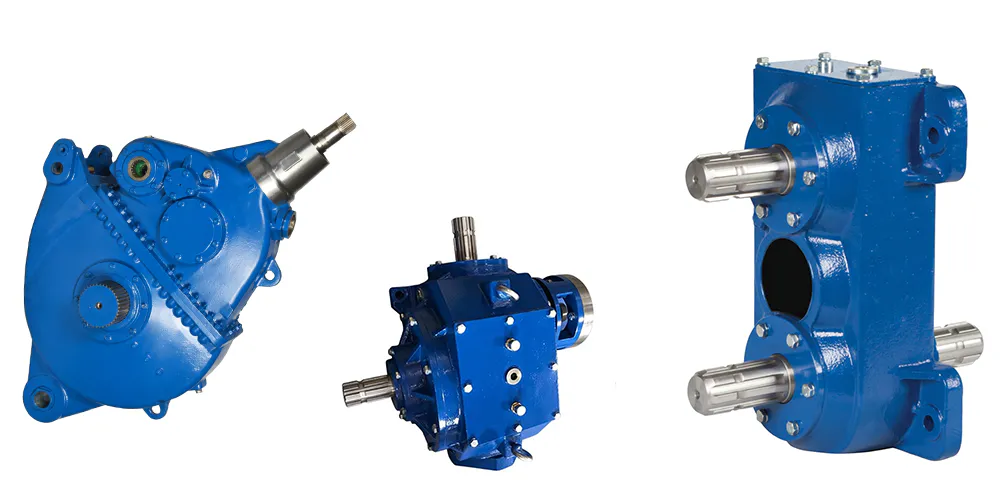
Round Baler Gearbox
The gearbox distributes PTO input power from the tractor to the pickup drive, screw feeder, pressing roller drive, and net wrap mechanism simultaneously. Using a mismatched or undersized gearbox is a leading cause of premature drive component failure on high-power round baler machines. Our matched round baler gearbox is engineered to the EP-9YG-2.2's specific gear ratio and torque requirements, with oil-bath lubrication and sealed bearing sets that match the machine's expected continuous operating duty cycle. System compatibility is designed in from the start — no adapters, no ratio compromises.
PTO Drive Shaft
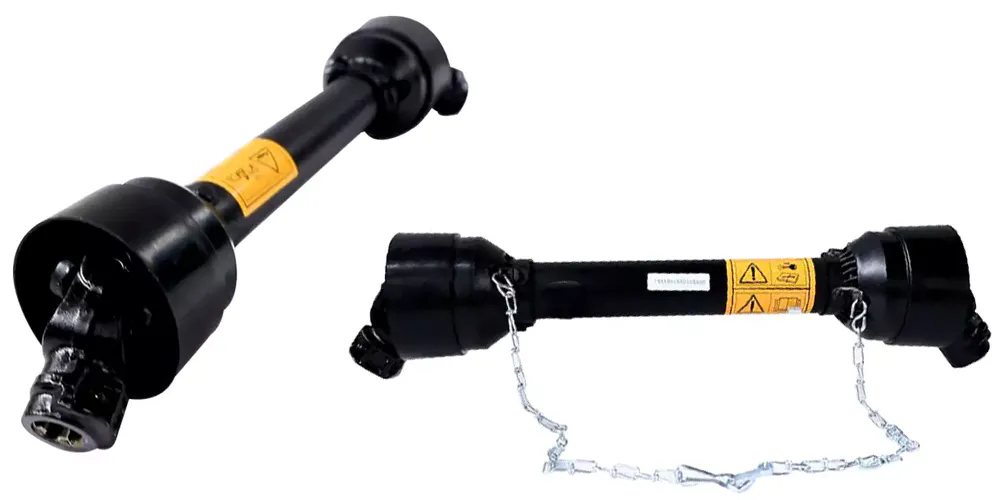
A 110–150 kW گول بیلر places high and variable torque demands on the PTO shaft throughout the baling cycle — from the low-resistance startup phase through to peak compression loads at full bale diameter. An undersized or worn PTO shaft is a safety risk as well as a reliability issue. Our PTO Shaft range includes models rated for the EP-9YG-2.2's maximum input torque, with full ISO 5674-compliant guarding for CE-market operators and heavy-duty universal joints selected for sustained angular deflection under load.
9. About Us
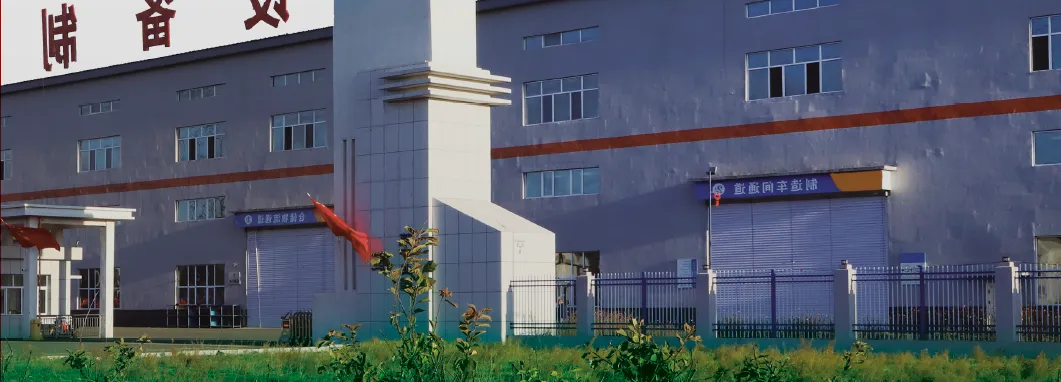
We manufacture and export agricultural baling machinery across a product range that covers small round balers, large-capacity round baler machines like the EP-9YG-2.2, and a full line of square balers for operations of varying scale. Our engineering and production team has hands-on experience with the practical demands of field baling across rice-paddy regions in East Asia, large cereal farms in the southern hemisphere, and mixed livestock operations across Europe and North America.
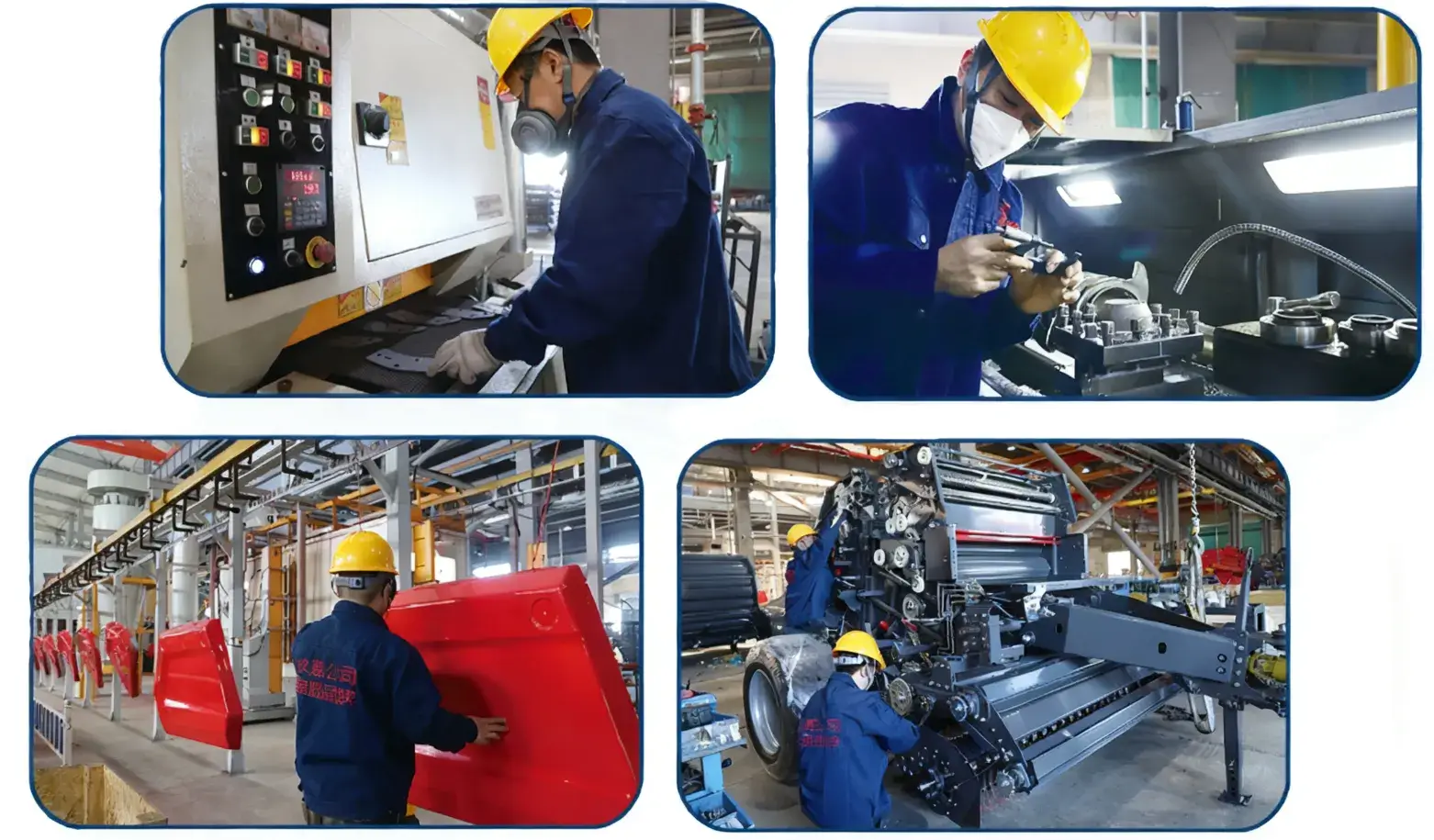
Quality control at our facility covers the full production cycle: incoming raw material inspection, in-process weld quality monitoring, sub-assembly functional testing, and final machine verification before shipment. We do not release machines on scheduled production deadlines that have not passed all inspection stages — a policy that has supported a low warranty claim rate across our export customer base.
WorkShop

Frequently Asked Questions
Q1. What is a round baler, and how is it different from a square baler for large-scale forage operations in Australia?
A گول بیلر compresses windrowed crop material into a cylindrical bale shape, secured with net wrap or twine after formation. Unlike square balers that produce rectangular bales handled manually or with small conveyors, round bales are designed for mechanical handling — moved by tractor buckets, bale forks, or round bale trailers. For large-scale forage operations in Australia, round bales offer a lower labor cost per tonne of hay stored, making large agricultural round balers the dominant choice for beef cattle and sheep stations managing 1000 hectares or more.
Q2. What is the purpose of a round baler, and is it the best choice for rice straw recycling operations in South Korea?
The purpose of a گول بیلر is to collect, compress, and secure windrowed crop residue or forage into a form that is easy to store, transport, and feed. For rice straw recycling in South Korea — where open burning is increasingly restricted under the Ministry of Environment's air quality regulations — a round hay baler converts straw from a disposal problem into a saleable commodity for livestock bedding, mushroom substrate, or biomass energy applications. The EP-9YG-2.2's hydraulic floating pickup is particularly well suited to the soft paddy field surfaces common in post-harvest Korean rice paddies.
Q3. How many HP do you need to run a round baler like the EP-9YG-2.2, and what happens if the tractor is underpowered?
The EP-9YG-2.2 requires a tractor with a PTO output of 110–150 kW, equivalent to approximately 148–201 HP. Running this round baler machine with an underpowered tractor — particularly below 110 kW — creates several problems: insufficient PTO speed causes pressing roller slip, resulting in poorly formed bales; the gearbox and chain drive operate under sustained overload conditions, accelerating wear on bearings and chain links; and net wrap timing can be disrupted if PTO speed drops during peak compression load. Always confirm your tractor's rated PTO output before coupling.
Q4. How much does a round bale of hay weigh when produced by the EP-9YG-2.2, and how does moisture content affect bale weight?
At the EP-9YG-2.2's compression diameter of Φ1220 mm and chamber width of 1400 mm, dry wheat straw bales typically weigh 280–380 kg, while alfalfa or mixed pasture hay bales reach 350–500 kg depending on density settings. Moisture content at baling time is the single largest variable affecting bale weight — baling at 20–25% moisture versus 12–15% moisture can increase bale weight by 30–40%. The high-precision displacement sensor on this machine allows operators to track bale weight in real time and adjust forward speed or compression settings to keep weights within a target range.
Q5. How many square bales are in a round bale, and how does this comparison help with feed planning for livestock farms in Canada?
A typical large round hay bale in the 350–450 kg range is broadly equivalent to 20–30 conventional small square bales weighing 15–20 kg each. For Canadian livestock operations managing daily feed rationing, knowing this equivalency helps when transitioning between bale types or purchasing hay from suppliers who offer both formats. The labor efficiency advantage of round bales — one mechanical handling operation per bale versus 20–30 for the equivalent small square volume — is the primary reason large-scale beef and dairy operations in Saskatchewan and Alberta have largely shifted to round hay baler systems over the past generation.
Q6. What is round bale net wrap, and how does the automatic net wrapping system on this machine reduce operator workload?
Round bale net wrap is a plastic mesh material applied around the circumference of a completed گول گھاس کی گٹھری to hold its shape during ejection, field storage, and transport. Unlike twine-tied bales, net-wrapped bales maintain their cylindrical shape on uneven ground and resist weather penetration from the outer layers more effectively. The EP-9YG-2.2's automatic net wrapping system initiates, applies, cuts, and terminates the wrap cycle without operator intervention — the driver remains in the tractor cab throughout. The high-precision sensor controls the number of wrapping loops, ensuring consistent wrap coverage every cycle.
Q7. Where can I find a reliable agricultural round baler supplier that offers full after-sales spare parts support for buyers in Southeast Asia?
When sourcing a round hay baler for sale for markets in Vietnam, Indonesia, Thailand, or the Philippines, look for a supplier that provides a detailed spare parts catalogue with individual part numbers for wear items — particularly pickup tines, pressing roller bearings, chain links, and net wrap knife assemblies. We maintain standing inventory of the key wear and service parts for the EP-9YG-2.2 and can dispatch to Southeast Asian ports through standard freight channels within agreed lead times. Contact our export team for a parts list alongside your machine inquiry.
Q8. What makes a mini round baler different from a large round baler, and how do I decide which capacity suits my farm in Brazil?
A منی راؤنڈ بیلر typically requires 20–40 kW tractor power and produces bales in the 400–600 mm diameter range, suited to small to medium farms with limited mechanized handling equipment. A large round baler machine like the EP-9YG-2.2 produces Φ1220 mm bales requiring tractor buckets or bale spears for handling — appropriate for operations with mechanized feed distribution systems. For Brazilian farms in the 50–200 hectare range, the key deciding factor is usually tractor availability: if your largest available tractor produces 110 kW or above, the EP-9YG-2.2 delivers far better throughput per hour than a smaller unit.
Ready to Upgrade Your Baling Operation?
Contact our export team for a technical consultation, tractor compatibility check, and formal export quotation on the EP-9YG-2.2 گول بیلر. Complete system supply including matched gearbox and PTO shaft available.
ایڈیٹر: PXY