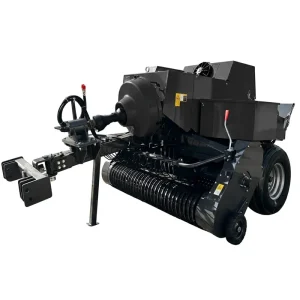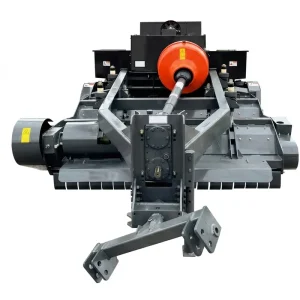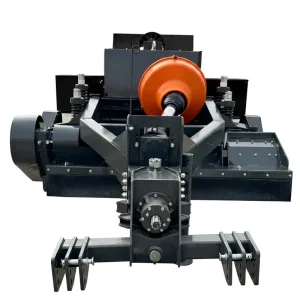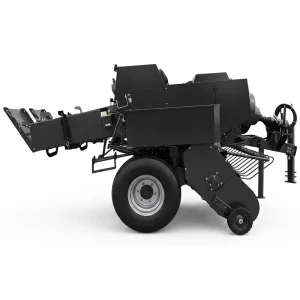
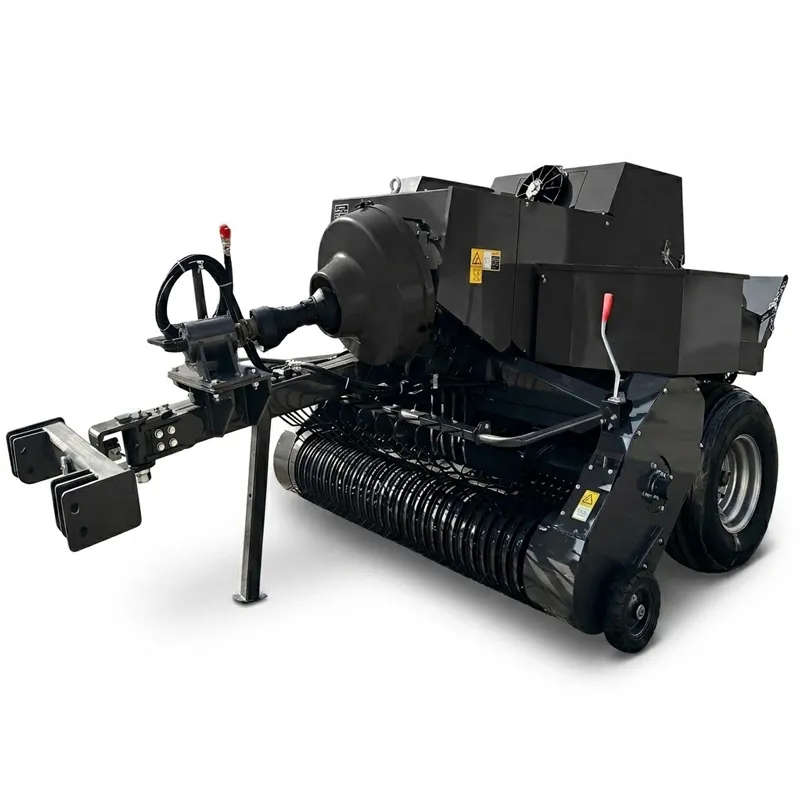
EP-9YF-1700mm Picker Width Square Hay Baler
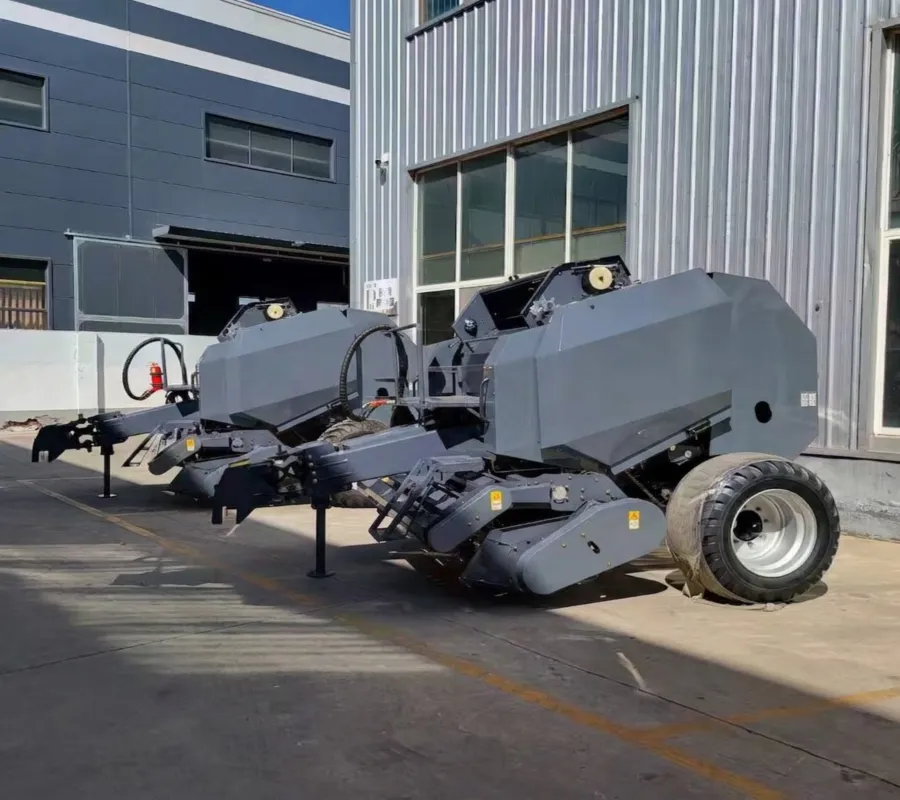
The EP-9YF-1700mm Picker Width Square Hay Baler is a mid-mounted trailed machine built specifically for efficient collection and compression of agricultural residues and forage materials. With a 1700 mm picking width that covers a practical swath on each pass, this model occupies a well-balanced position between compact mini square balers and full-size large square balers.
Powered by a tractor PTO with a flexible matching power range of 29.5–73.5 kW, the EP-9YF-1700 is compatible with a wide variety of utility tractors commonly found on farms across South Korea, the Netherlands, Brazil, and Australia.
The machine handles wheat straw, rice straw, cotton straw, corn straw, and all main categories of pasture and forage grass with equal competence. It performs well on both paddy field terrain and dry arable land, as long as the ground is relatively flat and clear of large rocks or hardpan obstructions. The resulting square bales of hay feature high internal density — a quality that reduces transport volumes, extends storage life, and satisfies the dimensional requirements of buyers in the commercial hay and straw trade.
Agricultural Baling Equipment · Mid-Mounted Trailed Series
EP-9YF-1700mm Picker Width
Square Hay Baler
A versatile mid-mounted trailed square hay baler with a 1700 mm pickup width, designed for wheat straw, rice straw, cotton straw, corn straw, and a broad range of forage grasses — trusted by farmers and contractors across South Korea, Australia, Canada, and global markets. As a reliable square hay baler in the mid-power class, the EP-9YF-1700 delivers consistent performance from the first bale of the day to the last, with minimal operator intervention required once the machine is correctly adjusted for the crop type.
1. EP-9YF-1700 Square Hay Baler — Technical Specifications
The table below provides the complete factory-standard technical parameters for the EP-9YF-1700mm square baler machine. This square hay baler specification covers all dimensions, power requirements, and functional features relevant to buyer evaluation. Buyers should confirm their tractor's rated PTO output falls within the matching power range before finalizing the purchase, and verify local road transport regulations for towed agricultural equipment at the stated overall dimensions.
| Serial No. | Item | Eenheid | Specificatie |
|---|---|---|---|
| 1 | Modelnaam | — | EP-9YF-1700 Square Hay Baler |
| 2 | Hitching Method | — | Towed-type |
| 3 | Picking Width | mm | 1700 |
| 4 | Feeding Inlet Width | mm | — |
| 5 | Picker Structure | — | Spring Tooth Type |
| 6 | Feeder Structure | — | Fork Feeding Mechanism |
| 7 | Knotter Type | — | D-Type |
| 8 | Number of Knotters | pc | 2 |
| 9 | Compression Chamber Section Size (W×H) | mm | 460 × 360 |
| 10 | Baling Method | — | Automatic Rope Baling |
| 11 | Overeenkomend vermogensbereik | kW | 29.5 – 73.5 |
| 12 | Overall Dimension (L×W×H) | mm | 4965 × 2500 × 1750 |
| 13 | Machinegewicht | kg | 1750 |
2. Five Key Advantages
Broad Power Range Compatibility
With a matching power range of 29.5–73.5 kW, the EP-9YF-1700 works across an unusually wide tractor range — from mid-range 40 HP machines to larger 100 HP utility tractors. This flexibility is particularly valued by contractors who run mixed tractor fleets and need a single square hay baler that can be coupled to whichever machine is available without compromising output. Whether the tractor changes between paddocks or between clients, this square hay baler keeps pace with the operation.
Spring Tooth Pickup Reliability
The spring tooth picker structure collects crop material gently but completely from the windrow. Unlike rigid tine systems that can miss material on uneven ground, spring teeth flex to follow minor surface variations — reducing crop loss per pass and maintaining consistent feed density into the compression chamber. This translates directly into more uniform small square hay bales across the full workday.
Automatic Rope Baling — Zero Manual Tying
The integrated automatic rope baling system and D-type dual knotter mechanism eliminate the need for any manual intervention in the tying cycle. Each square bale of hay exits the machine already secured with two rope ties, applied simultaneously by the twin knotters. This removes the bottleneck that manual tying creates during peak harvest periods and ensures bale integrity even at sustained forward speeds. The automatic tying system is one of the most valued features of this square hay baler among operators who have previously used equipment requiring manual tying steps.
Compact Overall Dimensions for Easy Transport
At 4965 × 2500 × 1750 mm overall, the EP-9YF-1700 is significantly more maneuverable than big square balers in its output class. Road transport between fields is straightforward without requiring escort vehicles or special transport permits in most jurisdictions, and the machine fits standard agricultural trailer configurations used across South Korea, Southeast Asia, and Eastern Europe. For operations that move the square hay baler between multiple sites in a single season, this compact footprint is a genuine logistical asset.
Dual-Field Suitability
This square hay baler is certified for operation on both paddy (wet) fields and conventional dry arable land. For East Asian farming regions — where rice and wheat rotations on the same field are standard practice — this removes the need to source separate equipment for each crop type, delivering a meaningful reduction in per-season machinery investment and maintenance cost.
3. How Does a Square Hay Baler Work?
For new operators and buyers considering their first square baler machine purchase, understanding the mechanical sequence helps with correct setup, operation, and preventive maintenance planning. A well-understood square hay baler is far easier to troubleshoot in the field and keeps downtime to a minimum during critical harvest windows. The EP-9YF-1700 follows a five-stage cycle that repeats continuously as the machine moves down the windrow.
Stage 1 — Windrow Pickup: The spring tooth picker, spanning the full 1700 mm width, sweeps along the ground surface and lifts cut crop material into the elevator channel. The spring tines are designed to conform to minor ground contour changes, maintaining contact with the windrow without gouging the soil or missing material on one side of the pickup head. Efficient pickup is the first critical step in the square hay baler cycle — losses at this stage reduce bale yield per hectare regardless of how well the rest of the machine is adjusted.
Stage 2 — Feed Transfer: Crop lifted by the pickup is transferred laterally into the compression chamber entrance by the fork feeding mechanism. The feed fork moves in a timed cycle controlled by the drive train — each fork cycle pushes a measured charge of material across the inlet, synchronizing with the plunger to avoid overfeeding or starving the compression cycle. Feed timing is one of the most important setup variables on a square hay baler: getting it right for your specific crop and windrow density is the key to uniform bale weight throughout the day.
Stage 3 — Compression: The plunger reciprocates inside the 460 × 360 mm compression chamber, compacting each successive charge of material against the growing bale. The resistance of the bale door or density control mechanism determines how much force the plunger applies, which ultimately controls how much a square bale of hay will weigh when complete.
Stage 4 — Bale Measurement and Knotting: A star-wheel counter tracks the length of the forming bale. When the target length is reached, the D-type dual knotter mechanism activates — both knotters fire simultaneously, tying rope around the bale cross-section, cutting the rope ends, and releasing the tied bale into the ejection channel. This is the most mechanically complex stage and the one that benefits most from regular cleaning and lubrication. Across the square hay baler market, the D-type knotter is one of the most proven designs in service, with a long field history across diverse global crop conditions.
Stage 5 — Ejection: The finished bale is pushed rearward out of the machine by the following bale cycle. It drops to the field, or can be directed onto an attached bale accumulator or wagon. The machine does not pause during ejection — the plunger and feed fork continue operating, beginning the next bale cycle immediately upon ejection of the previous one. This continuous-cycle design makes the EP-9YF-1700 square hay baler more productive per field hour than stop-and-wrap alternatives at comparable tractor power levels.
4. Materials & Construction Quality
A square hay baler is a mechanically demanding machine — it endures thousands of reciprocating plunger cycles, continuous chain and gear loading, and persistent abrasion from crop material throughout each operating day. The EP-9YF-1700 is built to absorb this stress across multiple harvest seasons without structural degradation that would compromise bale quality or operator safety. Durability in a square hay baler at this price point is not a given — it depends on material selection decisions made during design, and the quality controls applied during manufacture.
The main frame of the EP-9YF-1700 square hay baler is constructed from structural steel profiles, welded at load-bearing junctions using MIG welding processes and inspected for weld integrity before sub-assembly begins. Box-section crossmembers at the compression chamber carry the peak impact loads generated by each plunger stroke and are reinforced with internal gussets at the corners where stress concentration is highest during repeated high-load cycles.
On this square hay baler, spring tine pickup components are made from high-carbon spring steel with a defined elasticity that allows field deflection without permanent set. This material choice outlasts mild steel tines significantly in abrasive crop environments such as dry wheat straw fields in hot summer conditions. The fork feeding mechanism uses case-hardened alloy steel elements that are heat-treated after machining to achieve the surface hardness needed to resist the sliding wear generated by crop material passing through the feeder cycle at speed.
Knotter components are precision-machined from alloy steel and individually inspected for dimensional accuracy before assembly. Since knotter timing and geometry are the most failure-sensitive factors in any square baler knotter system, dimensional consistency in manufacture is the most reliable predictor of long service life. External surfaces carry an anti-rust primer coat followed by a UV-stable polyurethane finish — suitable for the range of climatic conditions encountered across the machine's target markets from humid subtropical South Korea to arid-summer Australian wheat belts. Buyers evaluating the best square hay baler for their operation will find that knotter build quality — more than any other single specification — separates machines that deliver full-season reliability from those that cause repeated mid-harvest stoppages.
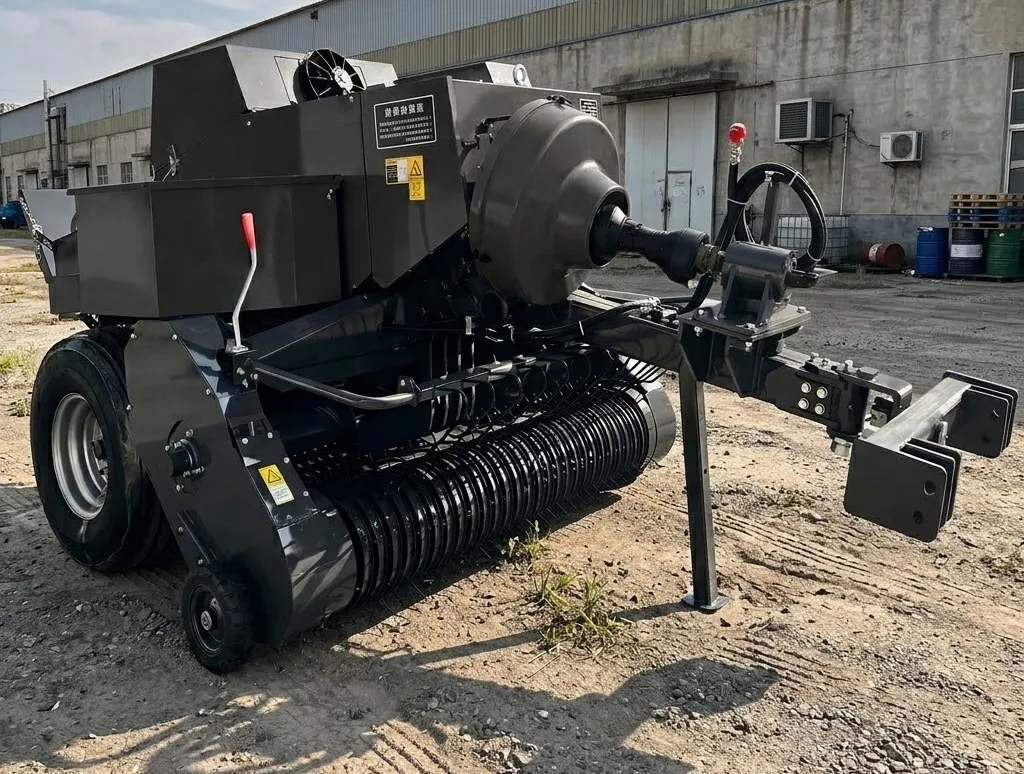
5. Square Hay Baler Application Scenarios
Rice Paddy Field Straw Collection
After rice combine harvest, the remaining straw windrows present a processing challenge — the material is short, wet-season harvested, and often contains high moisture. The spring tooth pickup on this small square hay baler handles rice straw effectively on wet paddy field surfaces, collecting material without embedding tines into the soft soil. This makes the EP-9YF-1700 the most appropriate square bale hay baler for paddy field post-harvest operations across South Korea, Japan, and rice-growing regions of Southeast Asia and West Africa. For Korean producers comparing options, this square hay baler is specifically validated for the soft-ground paddy conditions common in the country's main rice-growing provinces, where heavier machines can cause excessive soil compaction.
Wheat Straw Harvesting — Cereal Belt Operations
In temperate cereal farming regions including the Netherlands, Canada, and the grain plains of Eastern Europe, wheat straw baling is a seasonal cash crop in its own right. Straw buyers from mushroom cultivation, livestock bedding, and bio-energy sectors purchase square bales of hay and straw in large volumes during the narrow post-harvest window. The 1700 mm pickup width on this machine covers enough ground per pass to keep pace with typical combine output on mid-size cereal operations without requiring the larger tractor commitments of a full-width large square baler. When the harvest window is measured in days rather than weeks, having a square hay baler that can sustain consistent throughput on variable windrow density is the operational factor that most affects total seasonal output.
Livestock Forage Production
Dairy farms, equine operations, and sheep producers across Australia and the UK source small square bales hay in volume for daily feeding systems. The EP-9YF-1700 square hay baler produces bales with uniform dimensions and rope-tied integrity that meet the handling requirements of standard barn rack systems and robotic feeding equipment. Consistent bale weight — controlled by the compression chamber settings — is critical for automatic feeding systems that portion by bale count rather than weight measurement.
Cotton & Corn Stover Biomass Recovery
Cotton straw and corn stover are increasingly valuable as raw inputs for biomass energy, compost manufacturing, and building material production. The EP-9YF-1700 square hay baler compresses these longer-stemmed materials into dense, transport-ready square hay bales that suit container loading for export or direct delivery to processing facilities. Operators running this square hay baler on cotton straw should set the plunger density slightly lower than for wheat straw, as cotton stalk compression behaviour differs significantly from cereal stems. Buyers in Brazil, Colombia, and Central Asian growing regions have found this square hay baler model suitable for both crop types without modification to the picker or feeder settings.
Custom Baling Contractor Services
Agricultural contractors who offer baling services across multiple farms benefit from this machine's broad tractor compatibility and manageable road dimensions. A contractor running the EP-9YF-1700 square hay baler can couple it to different client tractors across the day's work schedule without significant setup time, and transport it between farm sites without the wide-load complications that larger big square balers often involve. This operational flexibility is a direct financial advantage in markets where contractor pricing is driven by daily productivity and fuel cost per bale.
6. Square Hay Baler — Regulatory & Compliance Considerations by Region
When importing or operating a square hay baler commercially, buyers should be aware of the regulatory frameworks that govern agricultural machinery in their target market. The following section outlines the key compliance areas for the EP-9YF-1700 square hay baler's primary export markets. Compliance requirements vary significantly between regions, and obtaining the correct documentation before shipment avoids costly delays at customs inspection and registration stages.
🇰🇷 South Korea
The Wet ter bevordering van landbouwmechanisatie (농업기계화 촉진법) under MAFRA regulates performance standards for agricultural machinery eligible for government subsidy programs. Imported square balers intended for subsidy registration must pass FACT (Foundation of Agri. Tech. Commercialization & Transfer) evaluation. Road movement of towed implements also falls under the Road Traffic Act, requiring slow-moving vehicle (SMV) marking and defined lighting during road transport between fields. We recommend Korean buyers request the FACT evaluation documentation for the EP-9YF-1700 square hay baler at the point of inquiry to streamline subsidy registration on arrival.
🇪🇺 European Union
Any square hay baler sold in the EU — including in the Netherlands, Germany, and France — must carry CE marking under the Machinery Directive 2006/42/EC (transitioning to EU Machinery Regulation 2023/1230 from January 2027). A Declaration of Conformity (DoC) must accompany each unit, and PTO connection guarding must comply with EN ISO 5674. The towed machine also falls under Directive 2006/26/EC for noise limits and must meet road type approval under national laws when moved on public roads.
🇦🇺 Australia
Farm machinery importers and operators in Australia must comply with Safe Work Australia's WHS Regulations on guarding for PTO-driven equipment, referencing the AS/NZS 4024 machinery safety series. Biosecurity Act 2015 import conditions administered by DAFF require that all used machinery arriving from overseas is cleaned, treated, and inspected at the border for soil, plant material, and weed seed contamination before release into Australia. For new-unit purchases of the EP-9YF-1700 square hay baler, biosecurity inspection is typically straightforward as factory-new machines have not been exposed to foreign soil or plant material.
🇧🇷 Brazil & 🇨🇴 Colombia
In Brazil, MAPA (Ministry of Agriculture, Livestock and Food Supply) registration is required before agricultural machinery can be commercially distributed. INMETRO certification may be required for specific safety-critical components. In Colombia, Ministerio de Agricultura y Desarrollo Rural sets import and registration requirements for agricultural equipment, and buyers should verify current DIAN import tariff classifications under the Andean Community Common External Tariff before finalizing procurement.
🇨🇦 Canada
Provincial farm safety acts — including Ontario's Occupational Health and Safety Act and Saskatchewan's Farm Safety Act — govern PTO and guarding requirements for tractor-coupled equipment. Transport Canada SMV regulations apply when towing the square hay baler on public roads. Agricultural machinery importers should also verify current CFIA (Canadian Food Inspection Agency) requirements around used equipment imports to prevent introduction of foreign pests and plant diseases.
🌏 ISO Reference Standards
For buyers in markets without specific national agricultural machinery certification, ISO 8210 (safety requirements for harvesting machinery) and ISO 11684 (safety signs and hazard pictorials on agricultural machinery) serve as the baseline reference framework. Our export documentation package includes a technical data sheet with reference to applicable ISO standards, which is typically accepted as supporting documentation for customs clearance and local government procurement in these markets.
7. Square Hay Baler — Matched Accessories & System Compatibility
A reliable square hay baler is only as dependable as the drivetrain components connecting it to the tractor. We supply a complete range of matched accessories for the EP-9YF-1700 — enabling one-stop procurement of the entire baling system from a single verified source. Sourcing these components separately from different suppliers introduces dimensional and ratio mismatch risks that can reduce the performance of an otherwise well-specified square hay baler.
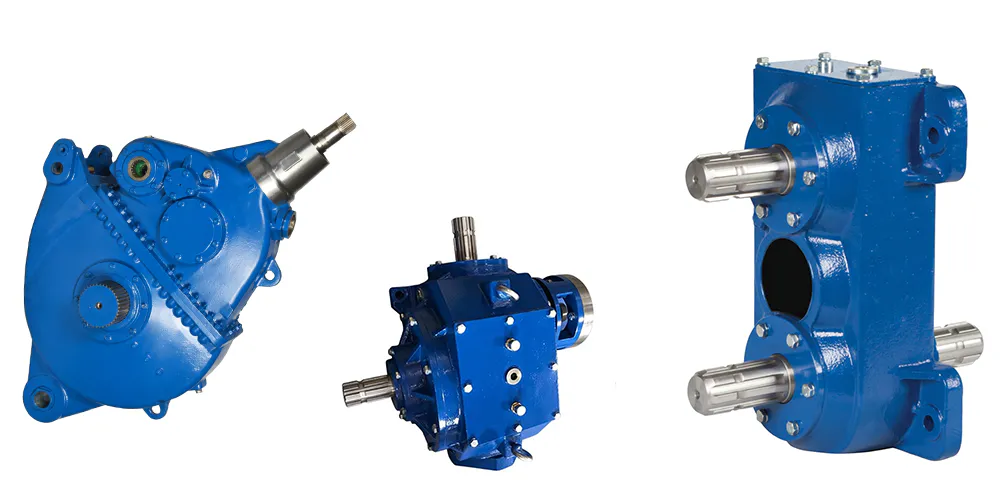
Square Baler Gearbox
The gearbox is the central power distribution point on any square baler machine, routing PTO input torque to the plunger crankshaft, feeder drive, pickup drive, and knotter cam simultaneously. Selecting a correctly matched gearbox for this square hay baler is not optional — an incorrect ratio degrades bale density and places irregular loading on the knotter timing cycle. Our matched square baler gearbox is designed to interface directly with the EP-9YF-1700 drivetrain — matching shaft dimensions, gear ratios, and oil-fill volumes to the machine's operating requirements. Sealed bearing sets and oil-bath lubrication minimize service frequency, while the housing is designed for field access to the oil fill and drain points without removing surrounding components. System compatibility means no adapters, no guesswork, and no risk of ratio mismatch degrading bale quality or overloading the tractor PTO.
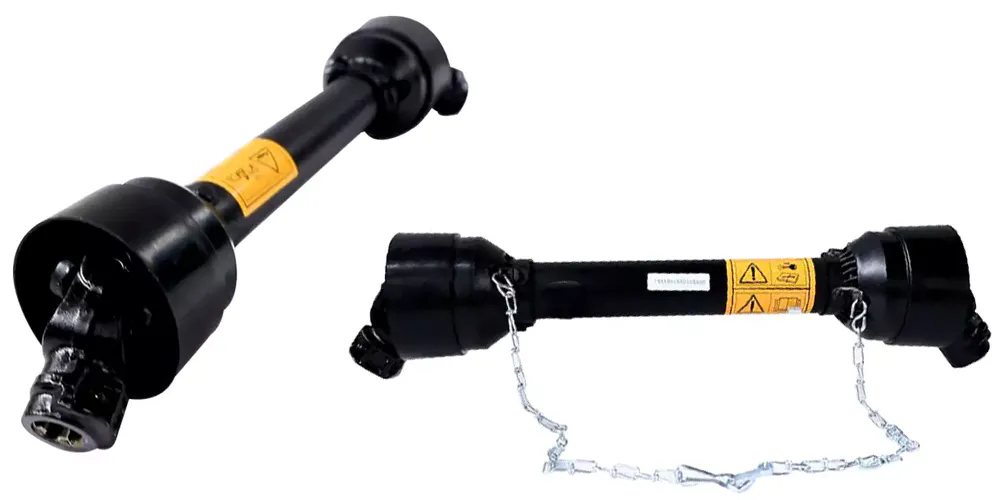
PTO Drive Shaft
The PTO shaft transfers rotational power from the tractor output shaft to the baler input yoke — handling continuous torque, angular variation as the tractor turns, and vibration from the plunger impact cycle. Using an incorrect or unmatched shaft is one of the most common causes of drivetrain damage on square balers in the field. Our PTO Shaft range includes models engineered for the EP-9YF-1700's power input requirements, with full shielding that complies with ISO 5674 and CE safety standards for EU market operators.
How to Choose a Square Hay Baler — Practical Guidance for First-Time Buyers
Selecting the right square hay baler for your operation involves balancing several interrelated factors: available tractor power, crop types handled, expected seasonal workload, bale handling infrastructure, and budget. This section outlines the key decision points to work through when comparing square hay baler models, using the EP-9YF-1700 as a reference point throughout.
Match Tractor Power to Baler Requirements
Every square hay baler has a minimum and maximum PTO power requirement. Operating below the minimum causes underdense bales and knotter misfires; running above the maximum risks structural overloading of the feeder and gearbox. Before shortlisting any square hay baler, confirm your tractor's rated PTO output — not engine horsepower — and ensure it falls comfortably within the machine's stated range. The EP-9YF-1700's 29.5–73.5 kW range is one of the widest in its class, covering a broad range of tractor options.
Understand the Difference Between Round and Square Hay Bales
The difference between round and square hay bales goes beyond shape — it affects storage efficiency, feeding logistics, and handling equipment requirements. A square hay baler like the EP-9YF-1700 produces bales that can be stacked four to six high in a conventional barn without any specialized bale-handling equipment, whereas round bales require either a flat concrete apron or a specialised storage yard. If your operation uses automated or rack-based feeding systems, a square hay baler is almost always the more compatible format.
Consider Pickup Width for Your Field Conditions
The pickup width of a square hay baler determines how much windrow it can collect per forward pass. Narrower machines require more passes to clear a field; wider machines collect more per pass but need more tractor power and are harder to transport on narrow rural roads. At 1700 mm, the EP-9YF-1700 square hay baler covers a practical working width for most mid-size paddy and dryland operations — wide enough for efficient field clearance, compact enough for standard road transport across the markets where it is sold.
Evaluate After-Sales Support and Spare Parts Availability
A square hay baler that breaks down during harvest and cannot be repaired within 24–48 hours will cost more in lost production value than was saved by choosing a lower-specification machine. When evaluating a square hay baler supplier, ask specifically about parts availability for knotters, spring tines, and gearbox seals — the items that fail most frequently in field conditions. We supply spare parts for the EP-9YF-1700 through our international export network, with standard shipping options to South Korea, Australia, Canada, and the Netherlands.
8. About Us
We are a dedicated manufacturer and global exporter of agricultural baling machinery, with a product range spanning small square balers, mid-range square hay baler models like the EP-9YF-1700, and high-capacity units for large commercial operations. Our technical team draws on deep practical experience in field baling across diverse agricultural systems — from paddy rice rotations in East Asia to dryland wheat production in Southern Hemisphere markets.
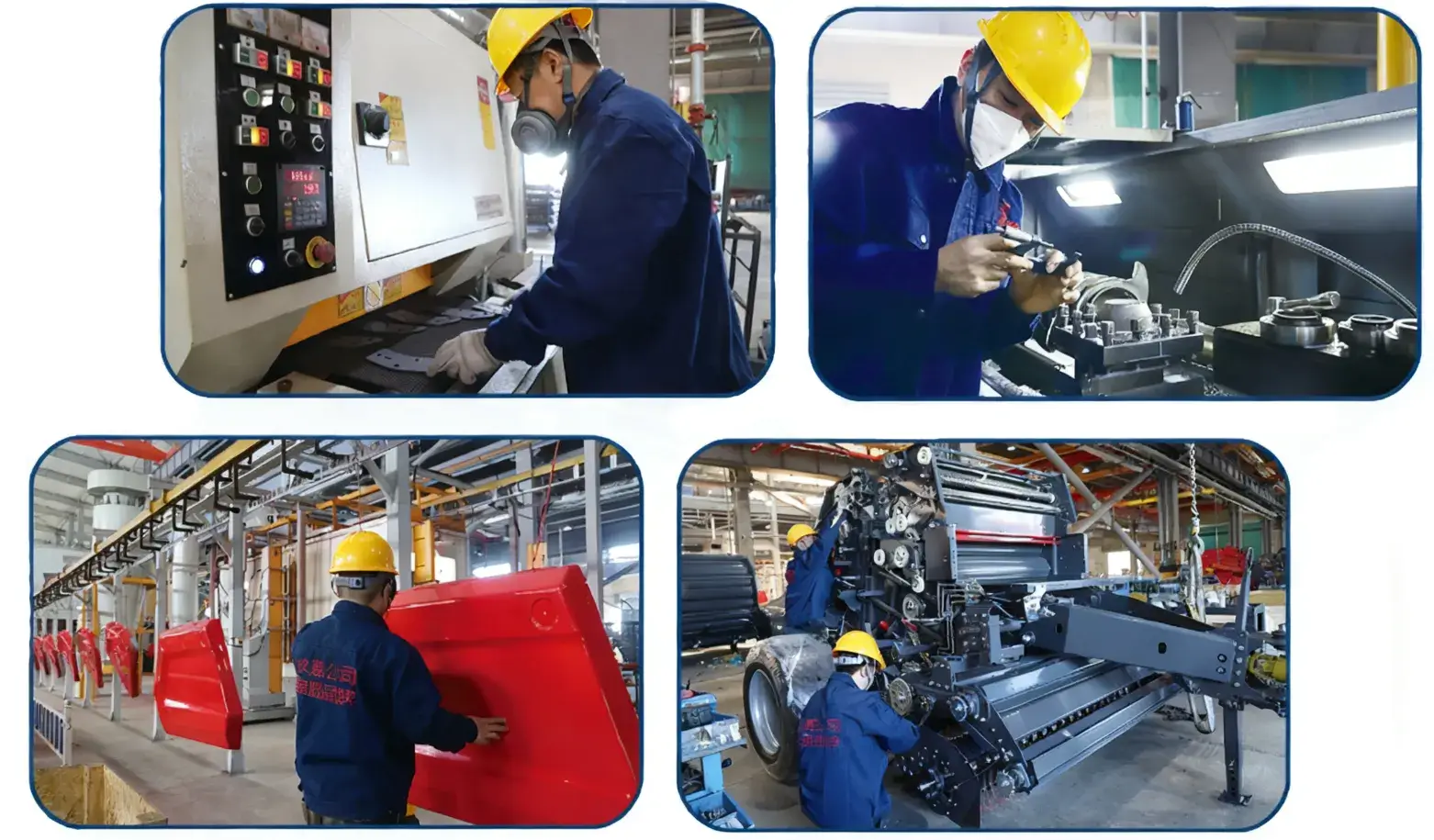
Our approach to product development prioritizes field reliability over specification sheet performance. Every model goes through multi-stage quality verification: raw material incoming inspection, weld quality assessment during sub-assembly, mechanical function testing before machine completion, and final pre-shipment inspection against buyer-specific requirements where applicable. We believe the best square hay baler is one that starts, runs, and bales correctly on the first morning of harvest — with minimal setup time and no surprises. That standard is built into the EP-9YF-1700 through manufacturing discipline rather than feature complexity. A square hay baler that is straightforward to set up, maintain, and repair delivers more seasonal value than a feature-heavy machine that demands specialist technicians for routine servicing.
WorkShop


Square Hay Baler — Frequently Asked Questions
Q1. What is the difference between round and square hay bales, and which type suits livestock feeding operations in South Korea better?
Round bales are typically suited to large open-lot feeding systems using ring feeders and are harder to move by hand. The difference between round and square hay bales matters most in storage and daily feeding logistics: square hay bales stack efficiently in enclosed barn storage, can be portioned manually, and fit standard feeding equipment used in dairy, horse, and sheep operations. For South Korean livestock producers with limited yard space and enclosed barn facilities, small square hay bales produced by a square hay baler like the EP-9YF-1700 are generally the more practical choice for day-to-day feeding management. Producers evaluating which format to invest in should consider not just the field cost of baling but the total handling cost of moving and feeding each bale type — the economics of a square hay baler often look stronger when the full handling chain is included in the calculation.
Q2. How many horsepower does a tractor need to run the EP-9YF-1700 square baler efficiently in a wheat straw field in Australia?
The EP-9YF-1700 square hay baler accepts tractors with PTO output from 29.5 kW (approximately 40 HP) up to 73.5 kW (approximately 100 HP). For Australian wheat straw operations where windrow density can vary significantly due to variable yield across the paddock, a tractor in the 55–80 HP range is recommended to maintain consistent PTO speed when the baler encounters dense sections of the windrow. Running below the minimum power threshold risks knotter misfires caused by insufficient drive speed.
Q3. How much does a square bale of hay typically weigh when produced by this model, and does moisture content affect the final weight?
Bale weight from the EP-9YF-1700 square hay baler depends on crop type, windrow density, compression setting, and moisture content at the time of baling. Dry wheat or rice straw bales typically weigh 15–25 kg, while moist or freshly cut forage grass bales can reach 30–45 kg. Baling at excessive moisture content risks mold development in storage — most agronomists recommend baling straw below 15% moisture and hay below 18% for safe long-term barn storage.
Q4. Do manufacturers still produce small square balers for mid-size farm operations, or is the market shifting entirely to large round balers?
Square balers, including small square balers and mid-range square hay baler models like the EP-9YF-1700, remain in active production and growing global demand. The shift toward round baling has been most pronounced in large-scale silage operations, but the commercial hay trade, livestock feeding market, and straw processing industries continue to drive sustained demand for small square baler for sale options across Asia, Europe, and South America. This machine category is far from obsolete.
Q5. What are square hay bales called in commercial trade, and how are they typically sized for livestock export markets in the Netherlands?
In commercial and export trade, bales produced by a square hay baler are frequently referred to as "conventional bales," "two-tie bales," or simply "rectangulars" — distinguishing them from large high-density "big square bales" that require bale clamps and forklifts to handle. In the Netherlands' hay export market, conventional square bales in the 460 × 360 mm cross-section range are commonly traded for horse and small ruminant feeding both domestically and into Germany and Belgium.
Q6. How many square bales of hay can I expect to produce per acre when baling rice straw in paddy fields in Southeast Asia?
Bale yield per acre varies with rice variety, crop yield, and bale length setting. For a typical rice paddy producing 4–6 tonnes of straw per hectare (approximately 1.6–2.4 tonnes per acre), you can expect 80–150 bales per acre at standard bale weight settings on the EP-9YF-1700 square hay baler. Denser straw from high-yield varieties will push bale count lower as each bale reaches its length trigger with more material per stroke. Field forward speed of 4–6 km/h is appropriate for paddy field surfaces.
Q7. Which square hay baler model is best for a compact tractor under 50 HP, and is the EP-9YF-1700 suitable for that power range?
The EP-9YF-1700 square hay baler has a lower power boundary of 29.5 kW (approximately 40 HP), making it compatible with compact tractors at the upper end of that segment. However, for tractors firmly in the sub-40 HP range, a mini square baler or smaller model from our range is a safer match — ensuring the tractor is not running at continuous near-maximum load, which shortens engine life and increases fuel burn per bale. We recommend providing your exact tractor make and PTO HP when requesting a quote for the right square hay baler model match.
Q10. What makes a square hay baler suitable for both paddy fields and dry arable fields, and how does the EP-9YF-1700 manage both terrain types?
Dual-habitat suitability in a square hay baler comes down to ground clearance, wheel configuration, and pickup flexibility. The EP-9YF-1700 square hay baler's towed design keeps the machine weight on its own axle rather than the tractor's rear linkage, distributing load in a way that reduces tractor sinkage on soft paddy soil. The spring tooth pickup adapts to minor ground undulation without gouging, which is critical on paddy field surfaces where soil is soft post-harvest. On dry fields, the same spring compliance prevents tine breakage on hard furrow edges.
Ready to Streamline Your Baling Operation?
Contact our export team for a technical consultation, compatibility check, and formal quotation on the EP-9YF-1700 square hay baler. One-stop supply including matched gearbox and PTO shaft. Our team has helped buyers across South Korea, Australia, Canada, and the Netherlands select and import the right square hay baler for their operation — reach out to get the process started.
Redacteur: PXY