
Round Baler Guide 2026: What Farmers Are Actually Paying (By Model & Size)
Welcome to the definitive Round Baler Guide 2026. As global agricultural operations scale up, and particularly within dynamic and geographically complex markets like South Korea, the demand for highly efficient, robust, and reliable harvesting equipment has reached unprecedented levels. Modern farmers are continuously analyzing their return on investment when selecting a round baler machine for their expansive fields and challenging topographies. Navigating the agricultural machinery market requires a profound understanding of not just the initial acquisition cost, but the long-term operational efficiencies that a premium round hay baler can provide to a commercial farm. South Korean agricultural sectors, heavily characterized by undulating hilly terrains and intensive post-harvest rice straw harvesting seasons, demand equipment that withstands rigorous daily usage without compromising on bale density or operational safety. Whether you are actively searching for a specialized mini round baler for smaller residential plots, investigating a mini hay baler for lawn mower integration, or sourcing a massive industrial-grade unit for commercial forage processing, understanding the nuanced differences in engineering, capacity, and terrain adaptability is paramount. We have meticulously compiled this knowledge-based guide to illuminate the critical mechanical factors influencing equipment valuation today, empowering agricultural engineers and farm managers to make data-driven purchasing decisions that align perfectly with their operational demands and strict budgetary frameworks in 2026.
1. Comprehensive Technical Parameters & Specifications
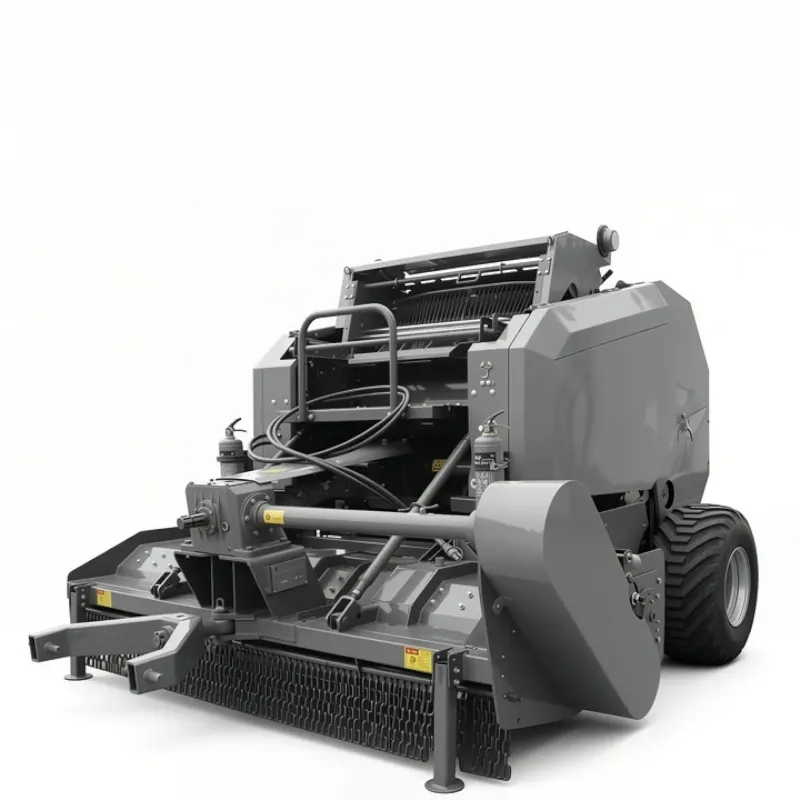
| Product Link | Explore the 9YG-2.24D Round Baler (S9000 Transcendence) |
| Lebar Pengambilan | 2240 mm |
| Bale Chamber Dimensions | Diameter: 1200 mm | Width: 1400 mm |
| Roller Quantity | 18 Heavy-Duty Steel Rollers |
| Power Requirement | 55 – 100 kW |
| PTO Speed | 720 r/min |
| Structural Mass | 4570 kg |
| Productivity Rate | 40 to 100 bales per hour |
2. The Core Mechanics: Understanding What is Round Baler Technology
To fully appreciate the investment value, one must first explore exactly what is round baler technology and examine its sophisticated mechanical working principles, which have evolved significantly to meet the heavy demands of modern agriculture. The operational sequence begins when the wide-span spring-tine pickup mechanism actively lifts the windrowed crop from the field surface, ensuring minimal leaf loss and maximizing forage yield even in remarkably sparse conditions. Once elevated, the harvested crop is smoothly transitioned into the core compression chamber via an advanced auger and dial tooth roller feeding system, which proactively prevents blockages and maintains a continuous, high-volume material flow. Inside this heavy-duty roller-type compression chamber, a meticulously engineered sequence of eighteen hardened steel rollers continuously rotates, systematically compressing the incoming forage into a tight, weather-resistant cylindrical shape. As the bale reaches the precise pre-calibrated density—constantly monitored by highly sensitive electronic sensors—the automated netting system engages instantly, wrapping the bale securely to preserve nutritional value and structural integrity during subsequent transport. The rear tailgate then opens rapidly, powered by high-capacity hydraulic cylinders featuring buffered endpoints, to discharge the finished bale onto the field. This seamless integration of mechanical feeding, continuous rolling compression, and automated binding ensures that each bale produced meets strict agricultural standards for density and shape, effectively reducing storage requirements and optimizing logistical handling for end-users across diverse farming environments.
3. Mandatory Engineering Specifications & Performance Ratings
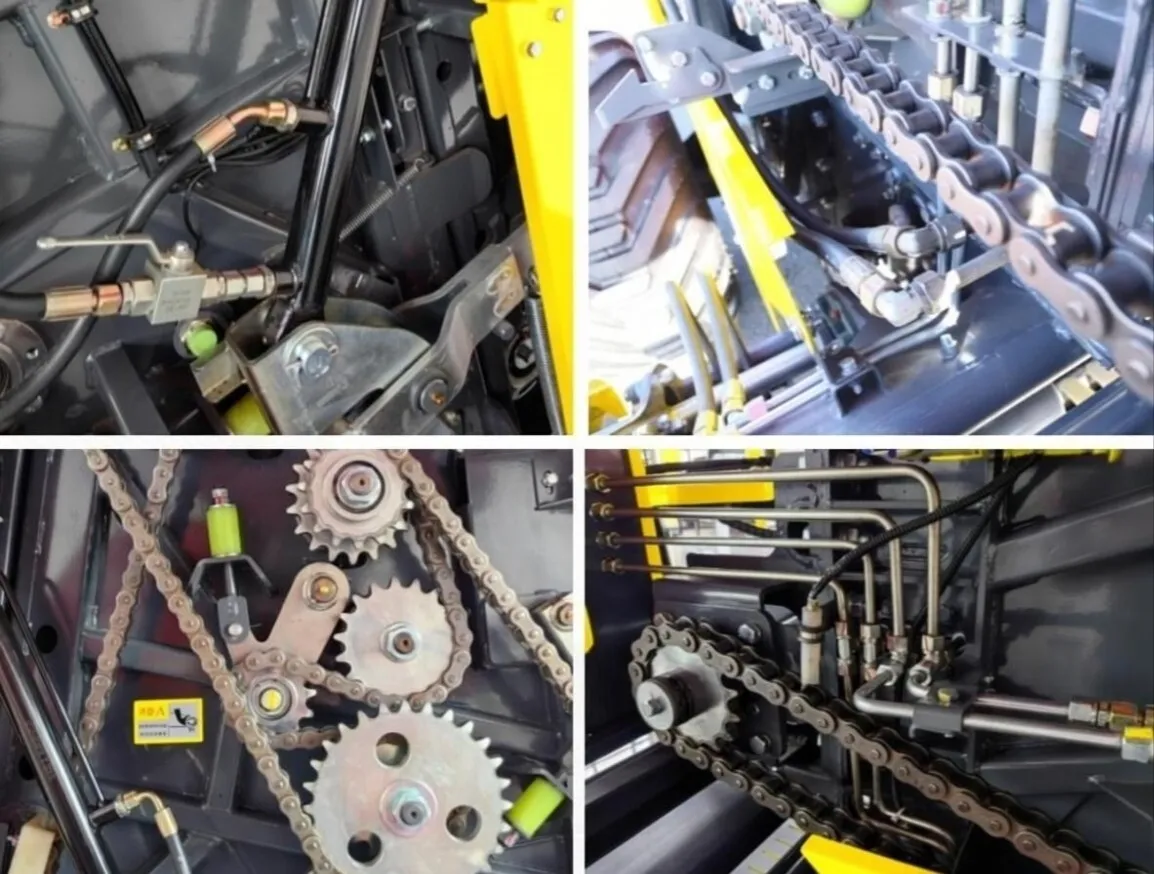
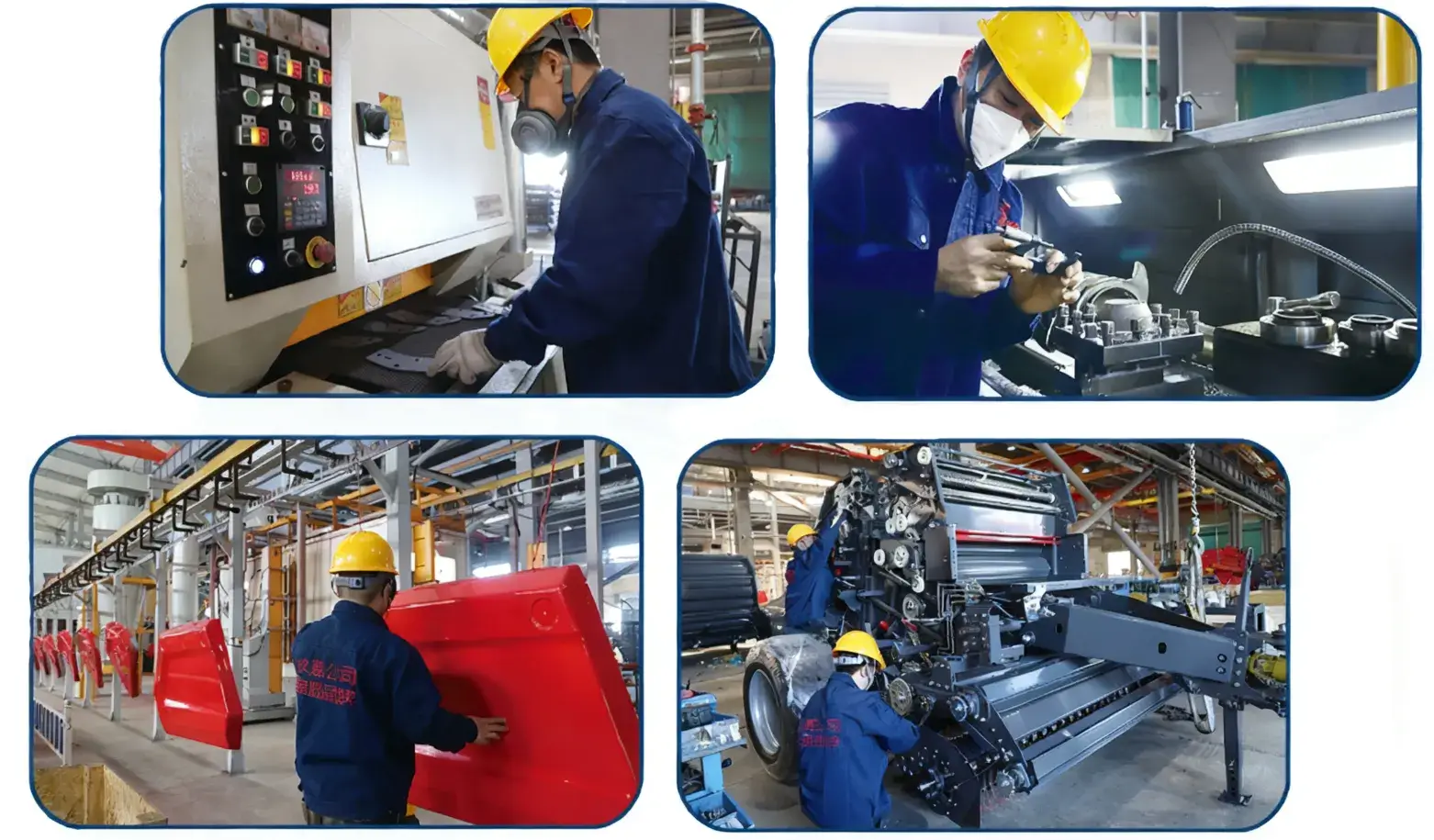
Delving significantly deeper into the engineering architecture, we must comprehensively analyze the structural and operational frameworks that define this premier round baler machine series. The Action Mode is fundamentally designed as a tractor-trailed, PTO-driven mechanism, requiring a substantial and consistent power input to manage heavy-duty continuous baling tasks efficiently across vast acreage. The Structure Type utilizes an advanced fixed-chamber, multi-roller compression design, which is globally recognized for producing highly consistent, geometrically perfect, dense bales that are particularly suited for both dry hay storage and high-moisture silage fermentation. Regarding the Manufacturing Structure, the chassis is constructed from heavy-gauge, laser-cut alloy steel, fully welded through automated robotic systems to guarantee uncompromising rigidity and alignment precision under extreme torsional loads in the field. This robust foundation is complemented entirely by the Material System, which heavily features high-strength, wear-resistant steel for the compression rollers, and incorporates upgraded double 20A heavy-duty transmission chains capable of handling immense torque transfer without premature stretching or snapping. The Surface Treatment employs a rigorous multi-stage electrostatic powder coating process, meticulously applied to ensure superior long-term resistance against corrosive agricultural chemicals, prolonged UV exposure, and abrasive field debris. In terms of Environmental Rating, these machines are exceptionally engineered to operate flawlessly in diverse climates, thriving in high-humidity environments typical of South Korean rice paddies while simultaneously demonstrating exceptional thermal stability during the intense, sweltering summer harvesting seasons, proving their rugged versatility.
To fully grasp the operational capabilities of these machines, agricultural specialists must evaluate their performance under stress and the engineering countermeasures thoughtfully implemented. The Working Condition Characteristics prominently highlight the machine’s exceptional adaptability to highly uneven, undulating terrains, heavily supported by a uniquely designed articulating drawbar that permits a 100-degree horizontal turning radius and a 30-degree vertical tilt, completely preventing PTO shaft binding during notoriously tight headland turns. Despite this robust engineering focus, operators must remain continuously aware of Typical Failure Modes, which historically include shear bolt fractures when the pickup encounters massive hidden field obstacles like large stones, or hydraulic seal degradation over years of continuous high-pressure operation; however, our newly integrated advanced H-type hydraulic fittings significantly mitigate these exact risks. Consequently, our professional Recommended Configuration strongly advises pairing this heavy-duty baler with a reliable 55-100 kW tractor equipped with dual hydraulic remotes, utilizing the integrated safety torque PTO shaft to actively protect the main drivetrain, and employing the dual-gearbox setup for maximum power transfer efficiency. This optimized configuration ensures that whether you are operating a small round baler for 40 hp tractor setups on modest legacy farms or utilizing heavy commercial units, the system remains safeguarded against sudden overloads, drastically reducing unplanned downtime and maintaining a continuous, highly productive workflow.
4. International Laws & Regulatory Compliance for Agricultural Gearboxes
Navigating the increasingly complex landscape of international agricultural machinery compliance is absolutely critical for global operators, particularly when importing and utilizing advanced heavy equipment like a new holland round baler, a john deere round baler, or our proprietary high-output models. In South Korea, agricultural gearboxes and PTO-driven harvesting machinery are strictly governed by the Korean Agency for Technology and Standards (KATS) under the localized KS standard framework, which explicitly mandates rigorous shielding protocols for all high-speed rotating shafts to completely prevent catastrophic entanglement accidents during field operations. Furthermore, the European Union enforces the stringent Machinery Directive 2006/42/EC, demanding that every single round hay baler for sale within its jurisdiction feature comprehensive CE marking, encompassing fail-safe hydraulic lockouts, clearly defined emergency stop mechanisms, and acoustically insulated gearboxes to fully comply with strict occupational noise emission limits. North American agricultural markets, regulated heavily by OSHA and ANSI technical standards, similarly require non-removable master shields securely positioned over the PTO input connection and the integration of automated slip clutches to prevent mechanical fires caused by sustained friction during severe crop blockages. Compliance with these diverse international legal frameworks is not merely a bureaucratic formality; it fundamentally drives the ongoing engineering evolution of round baler parts, ensuring that every internal gear, transmission chain, and hydraulic cylinder meets the absolute highest global safety standards while delivering uncompromising harvesting performance across vastly different geographical terrains and regulatory environments.
5. Five Key Advantages of Our Advanced Baling Systems
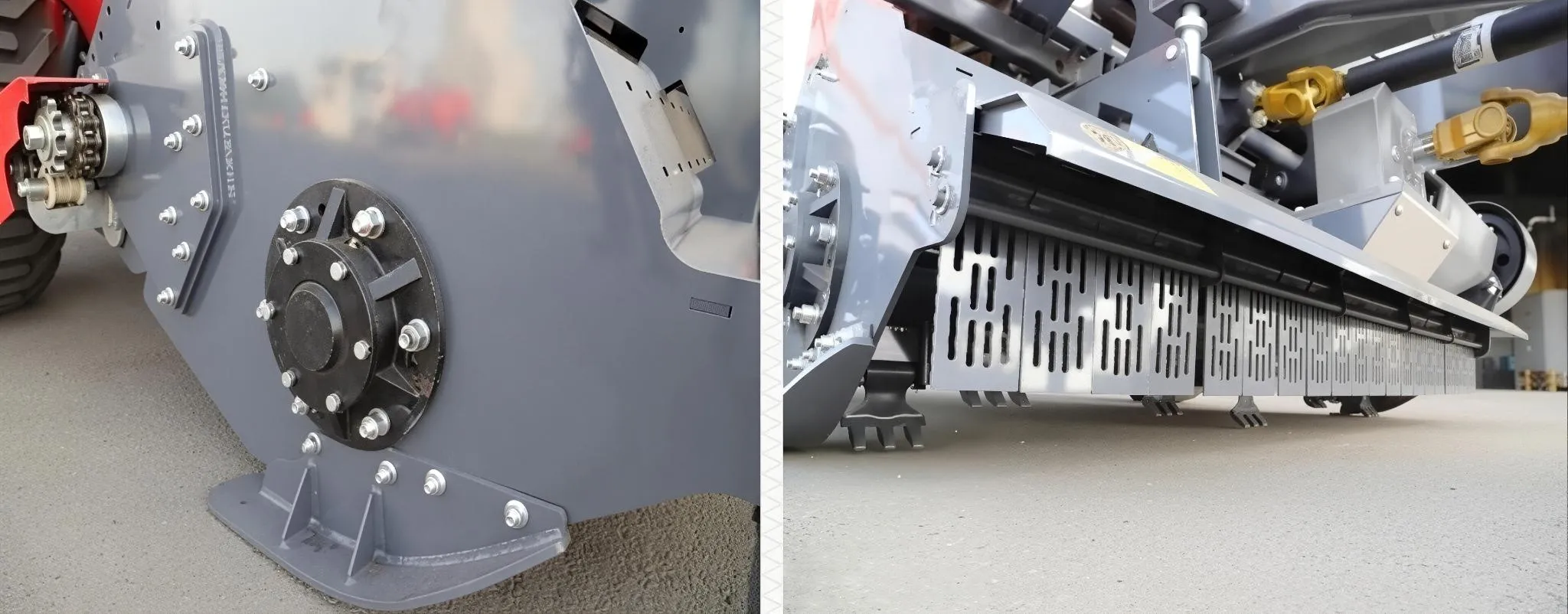
When rigorously evaluating the highly competitive landscape of agricultural harvesting equipment, our specialized series presents five definitive key advantages that vastly distinguish it from conventional legacy machinery currently flooding the market. First and foremost, the innovative dual-gearbox transmission system drastically minimizes the required turning radius, allowing the tractor and the baler to fluidly navigate tight corners and small, irregularly shaped South Korean fields without ever interrupting the continuous power take-off drive, effectively eliminating non-productive maneuvering time. Second, the incredibly heavy-duty articulated towing mechanism boasts a maximum torque capacity of 1000 Nm and actively permits multidirectional articulation, absorbing immense shock loads from uneven ground and completely preventing structural chassis fatigue over decades of use. Third, the core compression chamber is heavily fortified with reinforced dual 20A drive chains positioned on both sides, significantly increasing the internal compaction force to effortlessly achieve ultra-dense bales weighing between 500 to 1000 pounds, which brilliantly optimizes transport logistics and minimizes your storage footprint. Fourth, the highly adaptable crop pickup system features a rapid interchangeable design, allowing operators to seamlessly switch between standard spring tines for delicate grass and heavy-duty flail hammers specifically engineered for aggressively processing standing corn stalks directly into bales without pre-cutting. Fifth, the cutting-edge electronic density control system utilizes pinpoint precision sensors to actively monitor bale formation in real-time, automatically triggering the protective net wrapping cycle precisely when optimal compaction is achieved, ensuring absolute geometric consistency and structural integrity across thousands of high-speed operational cycles.
6. Superior Material Composition & Longevity
The fundamental material composition of a commercial-grade round baler machine is the absolute cornerstone dictating its operational longevity, mechanical reliability, and sustained resale value within the highly active secondary agricultural equipment market. The primary chassis framework and all critical load-bearing structural members are meticulously fabricated from premium high-yield-strength carbon steel, systematically engineered to continuously absorb the relentless torsional vibrations generated by sustained high-speed PTO operation and rugged uneven field traversal. The eighteen dense compression rollers, which form the beating heart of the baling chamber, are exclusively manufactured from specialized hardened alloy steel that undergoes a painstaking multi-step heat-treatment process to achieve exceptional surface hardness, effectively resisting the highly abrasive, continuous friction caused by dry, dusty crop material. Furthermore, the active pickup mechanism utilizes heavy-duty, fatigue-resistant spring steel tines that miraculously retain their precise structural memory even after millions of repetitive flexing cycles while aggressively gathering heavy, wet swaths of forage from the soil surface. The hydraulic actuation system relies entirely on premium-grade, burst-resistant synthetic rubber hoses paired securely with high-tensile steel H-type compression fittings, guaranteeing absolute leak-proof fluid transfer under immense operational pressures frequently reaching up to 3000 PSI. This uncompromising, obsessive dedication to utilizing superior metallurgical alloys and highly advanced synthetic polymers ensures that every single integrated component, from the massive cast gearbox housings down to the smallest retaining pins, delivers unmatched durability and operational excellence in the absolute harshest global farming environments.
7. Diverse Round Baler Application Scenarios
The unparalleled versatility of the modern round hay baler makes it an absolutely indispensable capital asset across a remarkably diverse array of global agricultural applications and highly specialized farming environments. From expertly managing vast, rolling pastures of nutrient-dense alfalfa to efficiently clearing heavy post-harvest crop residues in confined, terraced paddies, the profound engineering flexibility of these machines allows professional farm operators to maximize their land’s total productivity and overall operational profitability. As we analyze the specific round baler application contexts below, it becomes starkly evident that the machine’s inherent ability to seamlessly transition between entirely different crop types and varying moisture levels—without requiring extensive, time-consuming mechanical reconfiguration—is a critical, unparalleled operational advantage. In agriculturally dense regions like South Korea, where maximizing every square meter of arable land usage is vital, the equipment swiftly adapts to the unique mechanical challenges posed by the dense, incredibly fibrous nature of rice straw, cleanly gathering and tightly compressing the material to prevent rapid unwanted decomposition. By creatively utilizing targeted attachments, such as the heavy interchangeable hammer-claw pickup, the exact same machine can be deployed later in the autumn season to tackle thick, notoriously stubborn standing corn stalks, conclusively proving its immense intrinsic value as a multi-seasonal, multi-crop harvesting solution that fundamentally transforms how agricultural residues are collected, safely stored, and ultimately utilized in booming secondary markets like biomass energy generation or premium livestock bedding.
Rice Straw Harvesting in South Korean Paddies
Specifically optimized for the high-moisture, abrasive nature of post-harvest rice straw in Asian topographies, delivering densely packed bales that resist rot and transport easily from terraced fields.
Hilly Pasture Forage Collection
Leveraging the 30-degree tilt capability of the articulating drawbar, these units conquer steep inclines and uneven pasture land without straining the tractor’s PTO shaft or risking tipping.
Large-Scale Alfalfa & Hay Operations
Providing high-throughput baling (up to 100 bales/hour) for commercial hay producers, ensuring rapid field clearance before weather systems can damage the nutritional profile of the cut crop.
8. About Us: Excellence in Agricultural Manufacturing
WorkShop

9. System Compatibility: Related Products & Components
To achieve absolute maximum operational efficiency and safeguard your heavy machinery investments, we strongly emphasize total system compatibility and the immense strategic advantages of our comprehensive one-stop supply chain. Beyond manufacturing world-class balers, we also produce an elite full series of agricultural transmission components explicitly engineered to integrate flawlessly with our baling systems. This holistic approach ensures that every joule of power generated by your tractor is efficiently, safely, and reliably transferred directly to the baler’s compression chamber, massively reducing energy loss and eliminating the frustrating mechanical incompatibilities often found when mixing aftermarket parts.
High-Torque Agricultural Gearboxes
Our heavy-duty gearboxes are the undisputed operational core of our baling transmission systems, featuring precision-cut helical gears housed in ruggedized cast-iron casings. Designed specifically to withstand the brutal, continuous shock loads generated during high-density baling. Explore our complete range of highly durable Gearboxes to upgrade your harvesting fleet’s reliability today.
Safety-Enhanced PTO Shafts
Power transfer is only as reliable as its weakest link. Our agricultural PTO shafts are meticulously engineered with integrated friction slip clutches and robust wide-angle constant velocity joints, ensuring smooth power delivery even during the sharpest headland turns. Discover how our premium PTO Shaft series can protect your tractor and implement from catastrophic overload damage.

Frequently Asked Questions (FAQs)
1. When looking for a dependable supplier in South Korea, what is the quote process for a heavy-duty round baler gearbox?
To receive an accurate quote for our heavy-duty round baler gearbox in South Korea, simply contact our international sales engineering team through our portal with your tractor’s PTO horsepower and your specific commercial harvesting requirements, and we will formulate a comprehensive B2B proposal within 24 hours.
2. Which specific small round baler for 40 hp tractor setups offers the best operational cost efficiency for hilly terrains?
For challenging hilly environments demanding high maneuverability, our specially optimized mini hay baler models, which demand lower PTO power while maintaining a lightweight footprint, consistently offer the absolute best operational cost efficiency and exceptional slope stability for standard 40 hp utility tractors.
3. How does the maintenance cost of a caeb mini round baler compare directly to your heavy-duty commercial round hay baler?
While a smaller consumer-grade unit might feature a lower initial acquisition cost, our heavy-duty commercial round hay baler utilizes incredibly durable 20A chains and hardened steel rollers, radically reducing the long-term frequency of costly parts replacements and overall seasonal maintenance expenditures.
4. What exactly makes your mini round baler for sale superior for handling high-moisture rice straw in Asian agricultural markets?
Our specialized machinery is engineered with aggressive, anti-clogging dial tooth rollers and an incredibly robust fixed-chamber design, which aggressively prevents the wet, sticky Asian rice straw from wrapping around moving internal round baler parts, guaranteeing uninterrupted, high-throughput commercial baling.
5. Why should a commercial supplier heavily invest in a farm maxx mini round baler alternative for small-plot contract harvesting?
Investing in our premium compact alternatives grants commercial suppliers access to advanced electronic density sensors and heavy-duty articulation joints usually reserved for massive units, profoundly maximizing bale consistency, minimizing transport space, and ultimately driving up contract harvesting profitability on smaller plots.
6. How exactly does the dual-gearbox design dramatically improve the primary round baler application for commercial forage contractors?
The innovative dual-gearbox design fundamentally optimizes the primary round baler application by allowing commercial operators to execute incredibly tight, non-stop headland turns without ever stressing the tractor’s PTO driveline, massively boosting hourly field productivity during critical, time-sensitive harvesting windows.
7. When comparing a small hay baler to a larger commercial unit, what is the exact difference in operational setup cost?
The operational setup cost for a specialized small hay baler is significantly lower because it requires a much smaller utility tractor (typically under 50 HP) to operate efficiently, drastically cutting initial capital expenditures and daily diesel fuel consumption for modest farming operations.
8. Which specific mini hay baler for lawn mower towing configurations is currently recognized as the safest by modern agricultural standards?
While we focus heavily on tractor-driven commercial models, the safest residential-grade mini hay baler for lawn mower towing configurations strictly feature fully enclosed mechanical drivelines, automated netting cutoff systems, and lightweight aluminum chassis structures to prevent dangerous rolling on steep residential inclines.
Editor: PXY