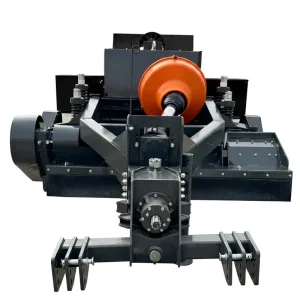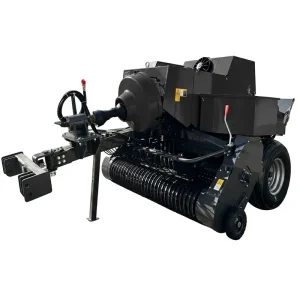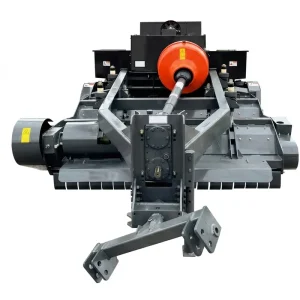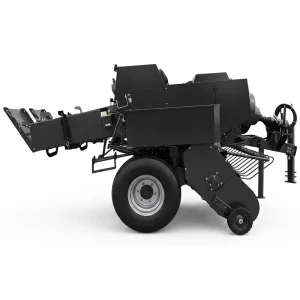
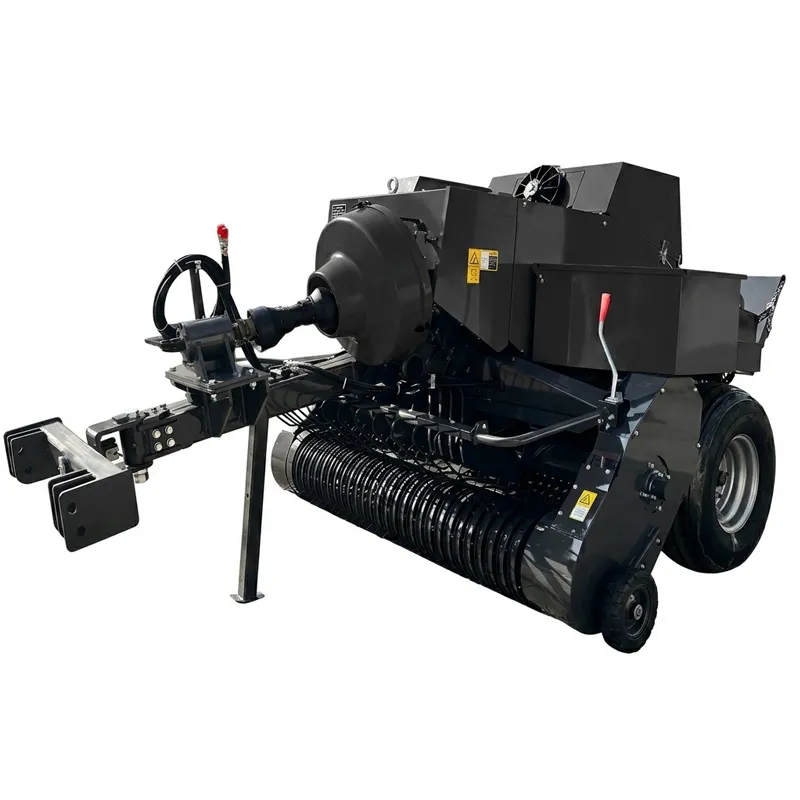
EP-9YF 1900MM PICKING WIDTH Square Hay Baler
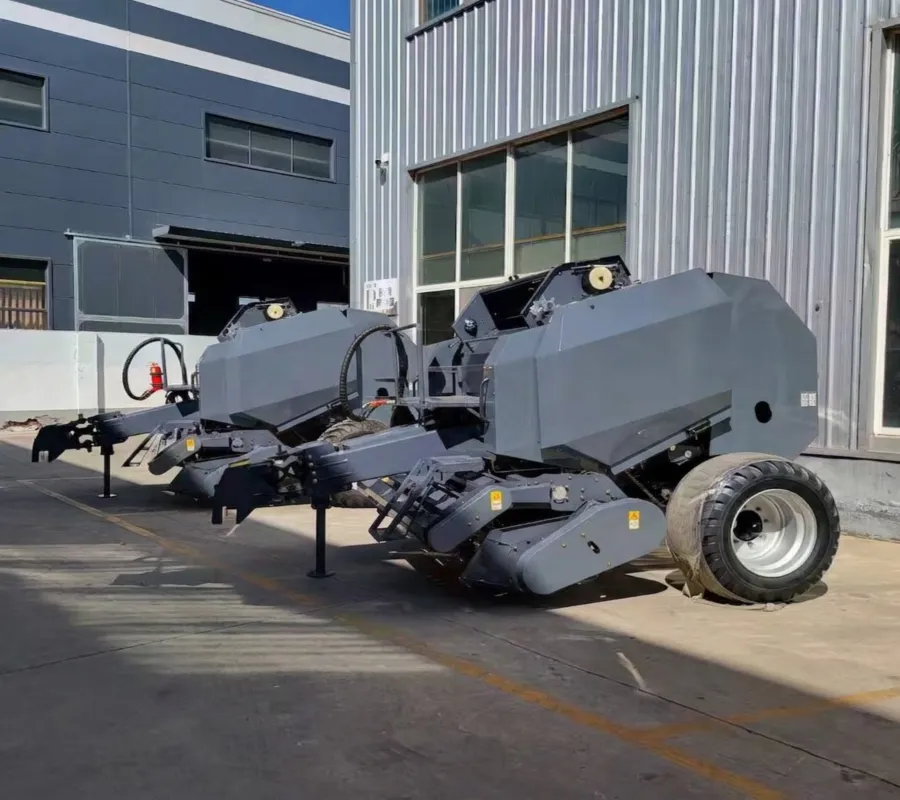
The EP-9YF 1900mm Picking Width Square Hay Baler is a mid-mounted trailed machine designed for efficient harvesting and baling of wheat straw, rice straw, cotton stalks, corn stalks, and various forage grasses. With a 1900mm picking width and spring tooth pickup, it ensures thorough crop collection even in paddy and dry fields with flat terrain. The baler features a fork feeding mechanism, D-type knotters (2 units), and automatic rope baling to produce dense 460×360mm bales ideal for storage and transport. Requiring 36.8–73.5 kW tractor power, it measures 4965×2640×1750mm and weighs 1850kg, making it suitable for large-scale farming operations aiming to reduce labor pressure during peak seasons.
EP-9YF-1900 · 1900mm Picking Width
Square Hay Baler
Mid-mounted trailed square hay baler design — versatile, compact, and built for reliable baling of wheat straw, rice straw, corn straw, cotton straw, and forage grass on farms across South Korea, Australia, and worldwide.
1. Technical Specifications
The parameter table below details the full specification of the EP-9YF-1900 square hay baler. Dimensional data follows the L×W×H convention in millimeters where applicable.
| # | Articolo | Unità | Specifica |
|---|---|---|---|
| 1 | Nome del modello | — | EP-9YF-1900 Square Hay Baler |
| 2 | Hitching Method | — | Towed-type (Mid-mounted Trailed) |
| 3 | Picking Width | mm | 1900 |
| 4 | Feeding Inlet Width | mm | — |
| 5 | Picker Structure | — | Spring Tooth Type |
| 6 | Feeder Structure | — | Fork Feeding Mechanism |
| 7 | Knotter Type | — | D-Type |
| 8 | Number of Knotters | pc | 2 |
| 9 | Compression Chamber Section Size (W×H) | mm | 460 × 360 |
| 10 | Baling Method | — | Automatic Rope Baling |
| 11 | Gamma di potenza corrispondente | kW | 36.8 – 73.5 |
| 12 | Overall Dimension (L×W×H) | mm | 4965 × 2640 × 1750 |
| 13 | Machine Weight | kg | 1850 |
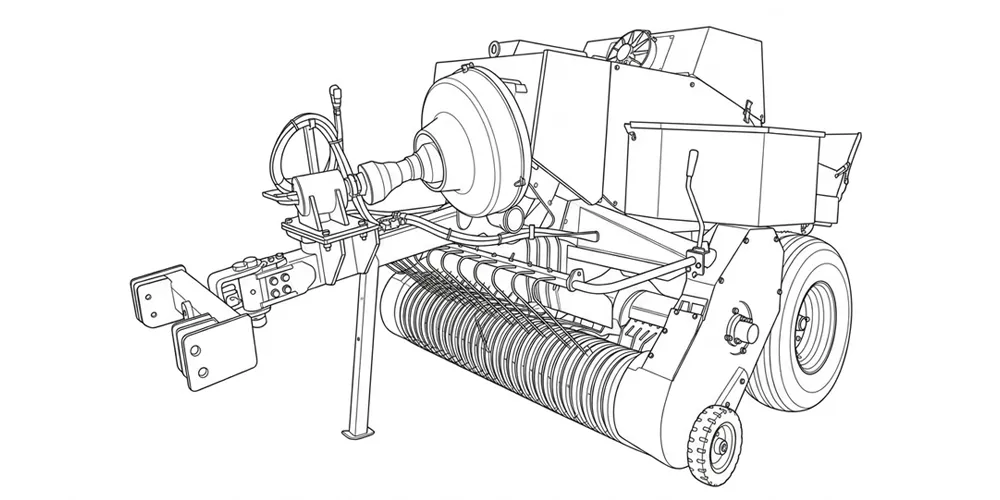
2. EP-9YF-1900 Square Hay Baler — Efficient Mid-Scale Baling for Modern Farms
The EP-9YF-1900 is a mid-mounted trailed square hay baler with a 1,900 mm picking width, purpose-built to handle the full range of crop residues and forage materials that farms deal with across growing seasons. Wheat straw, rice straw, cotton straw, corn straw, and most types of pasture grass all feed cleanly through this machine's spring-tooth pickup and fork feeding system. Where operations need a dependable, straightforward square baler that connects to a standard tractor and runs without complex operator procedures, the EP-9YF-1900 fits the brief precisely.
In terms of physical scale, the machine measures 4,965 × 2,640 × 1,750 mm (L×W×H) and weighs 1,850 kg — proportions that place it firmly in the mid-weight category between a true mini square baler and a heavy dual-chamber large square baler. Its matching power range of 36.8 to 73.5 kW covers a broad tractor bracket, from compact utility tractors in the 50 HP range right up to full-size 100 HP field tractors already at work on most commercial properties. This flexibility removes the need to purchase a dedicated tractor and lowers the total investment threshold for operations adding baling capability for the first time.
The 460 × 360 mm compression chamber cross-section produces well-proportioned small square hay bales with consistent density and shape. The D-Type knotter system with two knotters fires automatically on each bale cycle, securing every bale with a pair of twine ties before ejection from the rear of the machine. Automatic rope baling means the operator's only job is to drive — the machine handles the knot, the count, and the ejection without requiring manual stops between cycles. For Korean and Australian buyers comparing a square hay baler vs round baler setup, this level of automation at a mid-range price point is a meaningful operational advantage.
3. Five Key Advantages of the EP-9YF-1900
① Wide-Range Tractor Compatibility
A power requirement window of 36.8 to 73.5 kW means the EP-9YF-1900 can be connected to a much wider range of farm tractors than machines with narrower power bands. Whether you are running a compact tractor on a smaller paddock operation or a larger field tractor for full-season commercial runs, this square baler for compact tractor suitability removes a significant barrier to purchase and first-season operation. For any buyer whose current tractor already falls within this range, a square hay baler of this specification can be put to work in the first season without additional equipment investment.
② Multi-Crop Capability
The spring-tooth pickup and fork feeding mechanism handle the full spectrum of agricultural residues — wheat straw, rice straw, cotton straw, corn stover, and various forage grasses — without requiring mechanical reconfiguration between crop types. This makes the machine genuinely practical across mixed farming operations that rotate crops seasonally, rather than being optimized for only one material type. A square hay baler that handles multiple crop types without tine adjustment significantly reduces setup time between harvest campaigns and expands the machine's productive season beyond a single crop window.
③ Paddy Field & Dry Field Performance
The EP-9YF-1900 is rated for operation on both paddy field terrain and conventional dry farmland, provided surfaces are relatively flat and free of large stones or hard objects. This dual-terrain capability is particularly relevant for East Asian markets — including South Korea's rice-growing provinces — where the same machine needs to shift from paddy straw recovery to upland hay baling across a single season without modification. The ability to operate on both terrain types without mechanical changes makes this square hay baler especially cost-effective in regions where a single farm may include both paddy and dryland blocks within the same property boundary.
④ High-Density Bale Formation
The compression chamber geometry and plunger system produce dense, well-shaped square bales of hay that stack uniformly in barns and on transport wagons. High bale density reduces the number of vehicle loads needed to clear a field, lowering transport cost per tonne of material moved. Dense bales also store with lower airflow between layers, which contributes to reduced spoilage in covered storage environments. High bale density is a quality indicator that experienced hay buyers actively check when purchasing from contractors, making it a commercially important feature of any square hay baler used in hay sales rather than purely on-farm consumption.
⑤ Practical Mid-Weight Footprint
At 1,850 kg operating weight, the EP-9YF-1900 sits in a practical category between lightweight small square baler units and heavy commercial machines requiring specialist transport. It can be moved between properties on a standard flatbed trailer without permits in most jurisdictions, and its 4,965 mm transport length fits within common haulage regulations across South Korea, Australia, the Netherlands, and Canada. This transportability is a frequently underestimated factor when comparing a square hay baler at this size — machines that require a wide-load escort quickly accumulate permit costs that erode the economics of contractor work across multiple client sites in a single day.
4. How Does the EP-9YF-1900 Square Hay Baler Work?
The sequence begins as the tractor pulls the EP-9YF-1900 square hay baler forward along a crop windrow. The 1,900 mm spring-tooth pickup reel rotates continuously, lifting dry crop material from the ground and feeding it rearward along the intake channel. Spring steel tines conform to surface irregularities, maintaining contact with short-stemmed material like rice straw without the tines catching on soil or small surface stones. Understanding how a square hay baler processes material through its pickup, metering, and compression stages helps operators identify and resolve blockage events quickly and return to field productivity with minimal delay.
Once inside the feeder channel, the fork feeding mechanism takes over. A reciprocating fork assembly segments the incoming material into measured charges and pushes each charge upward into the compression chamber. This metering action is what controls bale density — a consistent charge per stroke produces a consistent bale weight and cross-section. Inside the chamber, a plunger driven by the tractor's PTO through the square baler gearbox compresses each new charge against the growing bale body, advancing the bale incrementally toward the ejection end of the chamber. The plunger mechanism is the mechanical heart of any square hay baler: its stroke rate, mass, and guidance system collectively determine how densely the bale is packed and how consistent the cross-section remains across a full operating day.
When the bale reaches the pre-set length, the D-Type knotting system engages. The two knotters simultaneously pass twine around the bale cross-section and tie a secure knot on each strand before cutting the twine free. The completed bale is then pushed out of the chamber rear by the next bale forming behind it, and falls onto the field or is captured by a trailing wagon. This push-and-eject cycle repeats continuously at field travel speed. Unlike round balers, which require the machine to stop momentarily to wrap and eject, the EP-9YF-1900 square hay baler operates in a continuous forward motion — a key productivity factor that matters on large fields where stopping time accumulates. In a full working day on clean straw ground, the continuous-feed design of this square hay baler can produce noticeably more bales per hour than an equivalent round-baler setup operating the same field at the same travel speed, simply because there are no mid-field wrapping pauses. Operators who have used both formats commonly remark on the fieldwork efficiency that a well-set-up square hay baler delivers on flat, high-windrow ground — the machine essentially dictates its own pace, and the operator's job is to keep up with it.
5. Square Hay Baler Materials & Build Construction
The main frame and structural members of the EP-9YF-1900 square hay baler are fabricated from high-tensile low-alloy structural steel, selected for its strength-to-weight ratio and resistance to the cyclic fatigue loads generated during baling operation. Welded joints are performed under controlled parameters and inspected before surface finishing. The frame is shot-blasted to remove mill scale and then finished with an agricultural-grade enamel coating system for corrosion resistance in outdoor field conditions — important for machines operating in humid Korean paddies, coastal Australian properties, and wet-season conditions in the Netherlands and Colombia. The structural integrity of a square hay baler frame is often tested hardest not during normal baling but during road transport and loading events, where dynamic loads differ in character from field loads — the EP-9YF-1900's frame is designed to handle both modes within standard agricultural equipment load cases.
The compression chamber interior surfaces are fitted with hardened wear liners that take the brunt of crop-on-metal abrasion during bale formation. These liners are designed as replaceable items, meaning that when wear reaches service limits after extended seasons, the liner is replaced rather than the entire chamber section. This approach substantially reduces long-term maintenance cost compared to machines where the chamber walls themselves must be replaced or rebuilt. Wear liner serviceability is a factor that long-term owners of a square hay baler pay close attention to after three or four seasons of heavy operation — being able to source and fit replacement liners without returning the machine to a workshop is a meaningful advantage for farms in regional Australia and South Korea where dealer access is limited.
Spring-tooth pickup tines are manufactured from spring steel with a controlled heat treatment profile that balances hardness with ductility. They flex over surface irregularities without permanent deformation and return to their operating position reliably across the full width of the pickup bar. All external hardware is Grade 8.8 metric specification throughout, matching the European and international standard that buyers in Germany, the UK, South Korea, and Australia expect from agricultural equipment. The knotter components are precision-machined from alloy steel to the dimensional tolerances required for consistent knot geometry across a full operating season. Knotter precision is the quality attribute that most distinguishes a well-made square hay baler from a cheaper alternative in the field — a machine that ties clean knots on the first cycle, every cycle, across a full harvest day is worth considerably more to an operation than one that requires frequent twine rethreading stops. The material quality underpinning the EP-9YF-1900's knotter components is a direct contributor to that reliability standard, and it is what buyers asking about square hay baler long-term durability should investigate first when comparing brands.
6. Where Is the EP-9YF-1900 Used?
From paddy fields in East Asia to dry-land grain farms in the southern hemisphere, the EP-9YF-1900 square hay baler covers a range of practical baling scenarios that a narrow-purpose machine cannot. Below are the main field contexts where this square hay baler creates clear operational value. Choosing the right square hay baler for a specific application scenario matters significantly — a machine well-matched to crop type, windrow volume, and terrain will outperform a nominally larger machine that is poorly matched to those same variables.
🌾 Rice Straw Recovery — Korean & East Asian Paddies
In South Korea, Japan, and parts of Southeast Asia, open burning of rice straw after paddy harvest has been progressively restricted under air quality legislation. This has driven demand for mechanical straw baling as an alternative. The EP-9YF-1900 square hay baler's spring-tooth pickup handles the fine, relatively short-stemmed character of rice straw on paddy surface conditions — flat, moist ground with minimal topographic variation. Baled rice straw finds application as livestock bedding, mushroom substrate, and biomass fuel. For Korean buyers specifically, the square hay baler format is particularly well-suited to paddy straw recovery because the rectangular bale shape is compatible with the standard storage sheds common on Korean rice farms — round bales would require different storage arrangements that most facilities are not set up to handle.
🌿 Wheat & Barley Straw — Arable Grain Farms
After combine harvesting of wheat and barley, straw residue can be baled and sold as bedding material, used as organic mulch, or processed for bioenergy applications. In the Netherlands, the UK, Canada, and Germany — all significant grain-producing nations — straw is a commercial secondary product. The EP-9YF-1900 square hay baler's 1,900 mm picking width covers standard combine cutting widths efficiently, reducing the pass count needed to clear a field following harvest. In grain-growing regions where straw has a direct cash market, a reliable square hay baler earns its keep not just in saved bedding cost but in revenue generated from the secondary crop — a fact that makes the payback calculation on a new machine considerably shorter than many buyers initially estimate.
🐄 Livestock Hay Production — Dairy & Beef Operations
Dairy and beef operations in Australia, New Zealand, and Brazil that grow their own hay supply use a small square baler like the EP-9YF-1900 to convert cut-and-dried pasture grass into a storable, transportable feed form. The 460 × 360 mm bale cross-section produces small square hay bales that work directly with common mechanical feeders and bale-handling equipment, eliminating manual breaking of bales before feeding. For Australian livestock producers deciding between formats, a square hay baler at this size produces bales that slot directly into existing hay feeders without modification — a practical advantage that a round baler does not provide in operations equipped with rectangular bale feeders.
🌱 Cotton Straw & Corn Stover Recovery
Cotton-growing regions in Colombia, Brazil, and parts of the Middle East generate large volumes of cotton straw after mechanical harvest. Similarly, corn stover — the leaves, stalks, and husks remaining after grain harvest — represents a large biomass volume that has feed, bedding, and fuel applications. The EP-9YF-1900 square hay baler's multi-crop pickup system handles both materials without tine modification, making it a useful post-harvest tool across crop-diversified farming systems. In regions where baling multiple crop types in a single season is the norm, specifying a versatile square hay baler rather than a single-crop machine significantly improves annual machine utilisation and shortens the payback period.
🚜 Custom Baling Contracting
Agricultural contractors who offer baling services across multiple client farms benefit from the EP-9YF-1900's wide tractor compatibility range. The ability to hook to different tractors at each client site — from a 50 HP compact to a 100 HP row-crop unit — without needing a dedicated machine-specific tractor makes logistics simpler and reduces dead-time on client changeovers. This advantage is particularly relevant for contracting businesses in South Korea, where farm plot fragmentation means contractors move between sites frequently. For a contractor investing in a square hay baler to offer as a fee-based service, this tractor flexibility means the machine can generate revenue across a wider client base than a fixed-power-requirement alternative — a direct improvement to return on investment from the first baling season. The EP-9YF-1900's reputation as a reliable square hay baler for contract work builds on exactly this principle: one machine, many tractors, consistent output.
7. Compliance & Regulatory Context by Region
When importing agricultural machinery across international markets, regulatory compliance is a practical necessity that affects both customs clearance and on-farm legal operation. Here is an overview of the key frameworks relevant to the EP-9YF-1900 square hay baler in its main target markets. The compliance requirements for a square hay baler vary significantly between jurisdictions — a machine fully compliant for sale in Australia does not automatically meet EU CE marking requirements, and Korean RDA registration has its own testing protocol. Buyers importing a square hay baler into any regulated market should request the applicable compliance documentation at the inquiry stage to avoid customs delays.
South Korea (대한민국)
Trailed agricultural implements in Korea fall under the Agricultural Mechanization Promotion Act (농업기계화촉진법), which sets safety and performance standards for imported and domestically produced equipment. KS (Korean Standards) technical specifications apply to PTO-driven implements connected to tractors. The Rural Development Administration (RDA) oversees compliance testing for certain equipment categories. Korean buyers importing a square hay baler should also verify that their tractor's PTO falls within the 36.8–73.5 kW compatibility range before ordering, and request the applicable RDA compliance documents from the supplier at the time of inquiry.
European Union
Machinery placed on the EU market must comply with the Machinery Directive 2006/42/EC — which is in the process of being superseded by Machinery Regulation (EU) 2023/1230. A CE Declaration of Conformity is required. Agricultural baling equipment is covered under EN ISO 4254-7 (agricultural machinery — safety — part 7: combine harvesters and balers). PTO drivelines must comply with EN ISO 5673 shielding requirements. Buyers in Germany, the Netherlands, and France should request CE documentation at point of inquiry.
Australia & New Zealand
In Australia, agricultural machinery must meet Work Health and Safety (WHS) Act obligations at both federal and state levels. Machinery with PTO connections is subject to AS 2671 requirements on shaft guarding. WorkSafe Victoria, SafeWork NSW, and equivalent state bodies enforce these on-farm. New Zealand's Health and Safety at Work Act 2015 applies similarly, with WorkSafe NZ providing guidance on trailed implement safety. Road transport between properties requires compliance with the relevant state or national vehicle dimension regulations (the EP-9YF-1900's 2,640 mm width falls within typical agricultural vehicle width allowances).
Canada
Canadian agricultural machinery imports must meet federal requirements under the Canada Agricultural Products Act and applicable provincial equipment safety codes. ASABE standard S361.4 provides the recognized benchmark for performance and safety of square balers in the North American context. Provincial jurisdictions — particularly Ontario, Saskatchewan, and Alberta — apply their own farm safety rules regarding PTO guarding and machine operation near workers. Buyers should obtain full compliance documents from the supplier before customs declaration.
Brazil & Colombia
In Brazil, INMETRO certification applies to agricultural machinery categories, and ABNT technical standards govern implement design and labeling. Road transport of trailed machines must comply with CONTRAN regulations on width, lighting, and flagging requirements for agricultural convoys. In Colombia, ICONTEC standards and Ministry of Agriculture guidelines cover mechanized harvest equipment. Local importers in both markets typically coordinate SASO-equivalent documentation and customs technical dossiers on behalf of international buyers.
7B. How to Choose a Square Hay Baler — A Practical Buying Guide
Selecting the right square hay baler for your farm or contracting operation involves more than comparing headline specifications. The following factors guide a structured evaluation when you are considering a square hay baler purchase for the first time or upgrading from an older model.
Match Power to Tractor, Not the Other Way Around
The first question when evaluating any square hay baler is whether your existing tractor's PTO output falls within the machine's specified power range. Running a square hay baler on a tractor at or above the upper power limit invites plunger and knotter stress — while running below the lower limit causes under-density and frequent blockages. The EP-9YF-1900's 36.8–73.5 kW window is intentionally wide to serve buyers across a broad tractor size range, including operators working with a small baler for compact tractor setups in the 50–60 HP category.
Crop Type and Windrow Volume
Different crop residues behave differently under compression. A square hay baler that handles dry wheat straw cleanly may struggle with wet rice straw or high-moisture alfalfa if the metering system is not designed for variable-density material. Before purchasing a square hay baler, describe your primary crop and typical windrow volume to the supplier and request confirmation that the machine has been tested on comparable material. The EP-9YF-1900 has been validated across wheat straw, rice straw, corn stover, cotton straw, and pasture grass.
Bale Handling and Storage Infrastructure
The output format of a square hay baler — the bale's cross-section dimensions and weight — must be compatible with your downstream handling and storage systems. The 460 × 360 mm bale cross-section produced by the EP-9YF-1900 fits standard barn feeders, wagons, and grab-fork attachments commonly used across Korean, Australian, and European farm equipment fleets. If your storage or feeding system is purpose-built for a different bale size, confirm dimensional compatibility before committing to any square hay baler model.
Spare Parts and Service Access
A square hay baler is at its most productive during the short harvest window — any mechanical delay during that period has a disproportionate impact on seasonal output. When comparing square hay baler suppliers, ask specifically about lead times for knotter components, pickup tines, and wear liners. We maintain a parts inventory for the EP-9YF-1900 and can ship to South Korea, Australia, and EU destinations within standard international freight timeframes — typically 7–14 days for sea freight and 3–5 days for air freight on urgent requirements.
8. System-Compatible Components
The EP-9YF-1900 is designed as part of a complete baling system. We manufacture and supply the drivetrain components that connect your tractor to this square hay baler — ensuring full mechanical compatibility and a single point of contact for technical support and spare parts. When specifying drivetrain components for a square hay baler at this power level, using matched components from the same supplier avoids the torque and speed mismatches that arise when mixing parts from different manufacturers. Each component below has been selected and tested specifically for use with the EP-9YF-1900 square hay baler.
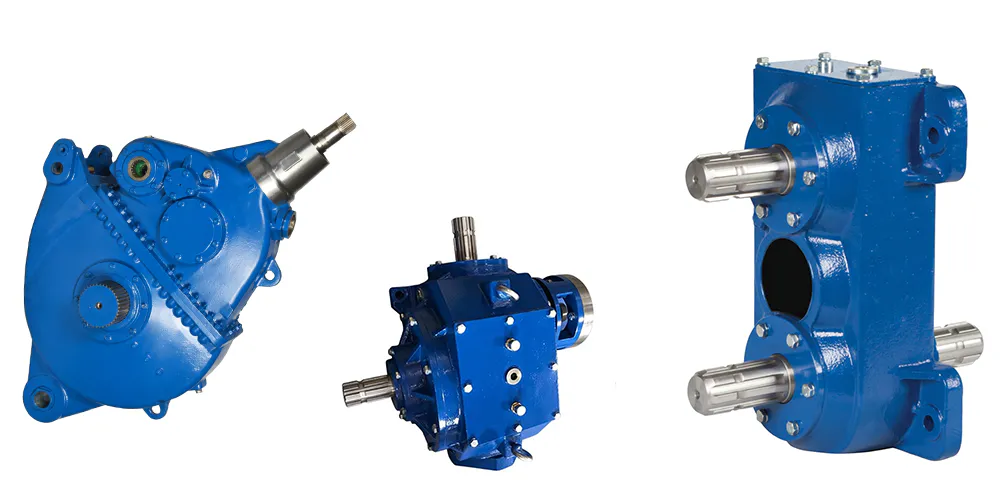
Square Baler Gearbox
The gearbox mounted at the baler input shaft converts the tractor PTO rotation into the drive motion for the plunger, knotter, and pickup systems of the square hay baler. A correctly specified square baler gearbox matched to the EP-9YF-1900's 36.8–73.5 kW power range ensures reliable torque transfer without over-stressing the machine's internal components. Our matched gearbox units are pre-tested to the input speed and load profile of this square hay baler model, giving buyers confidence that the drivetrain will operate within design limits across a full baling season. Mismatched gearbox ratios are one of the most common causes of premature knotter failure and plunger irregularity on baling equipment — selecting a compatible unit matters.
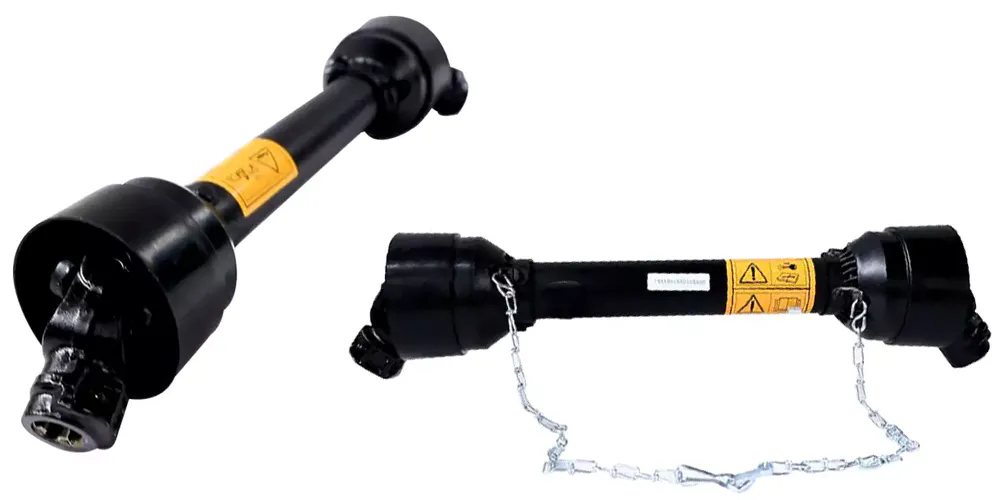
PTO Drive Shaft
The PTO shaft connects the tractor output flange to the baler gearbox input. For the EP-9YF-1900 square hay baler, the shaft must be rated for the speed range and torque demands of the baler's full-load operating cycle. Our PTO Shaft supply range includes shafts with integral friction-clutch overrun protection, which is required under EN ISO 5673-1 for PTO drivelines used on machinery sold into EU markets — and strongly recommended practice for all other markets as a means of protecting the tractor transmission from shock loads during crop blockage events. Each shaft is supplied with a full-length driveline guard as standard.
9. About Us
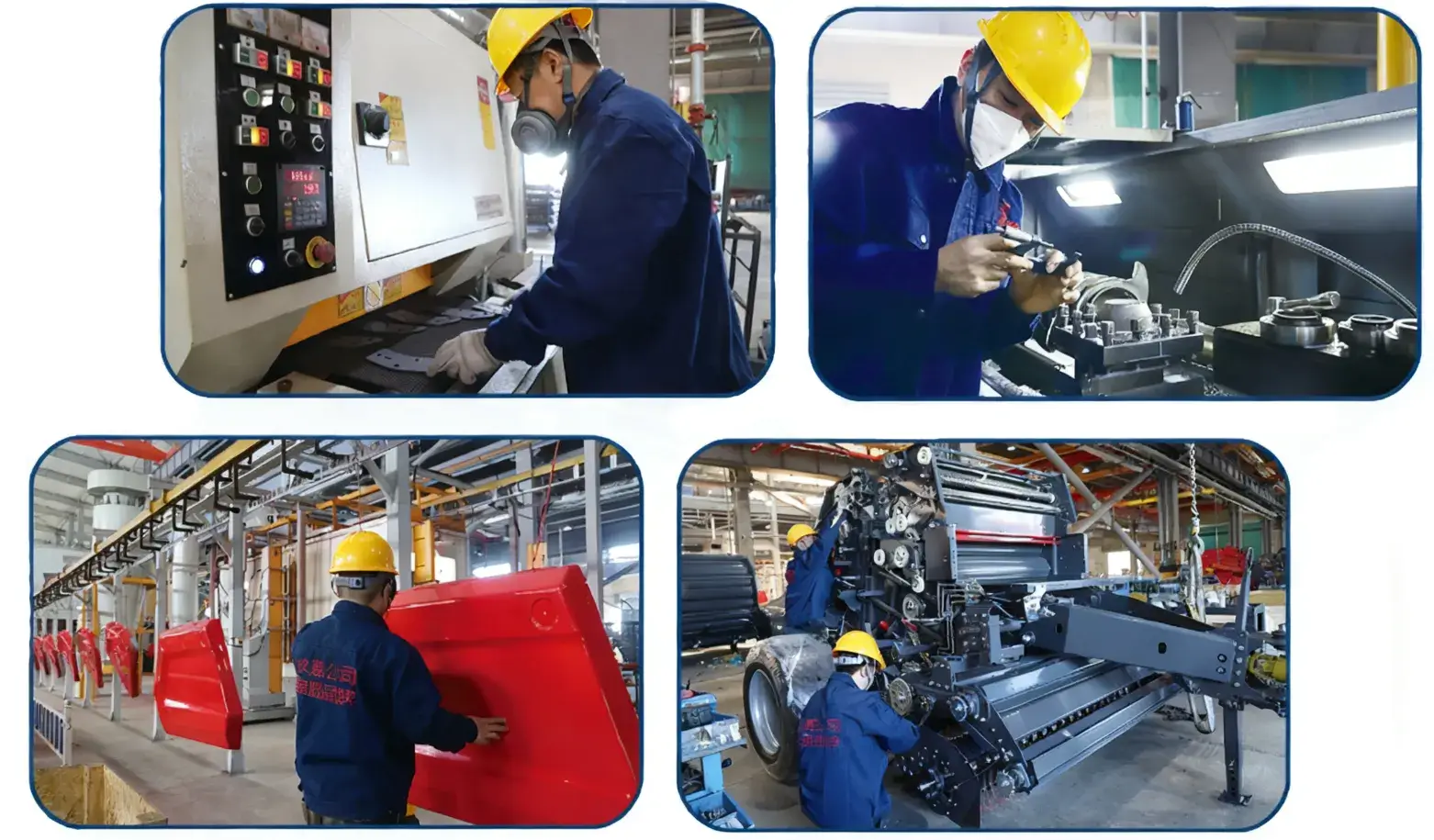
We are a specialized manufacturer and global exporter of agricultural baling equipment, with a product range covering the full spectrum from compact small baler for compact tractor applications up to high-output commercial machines for large farming operations. Our engineering and production facilities are dedicated entirely to baling machinery — this focused product scope means our design, testing, and quality control processes are built around a deep understanding of crop handling, knotter mechanics, and field durability requirements. Every square hay baler we produce undergoes a full assembly inspection and functional test before leaving our facility, and our after-sales team supports buyers across South Korea, Australia, the Netherlands, Canada, Brazil, and more than 25 other countries with technical guidance, parts supply, and warranty handling. If you are evaluating a square hay baler for the first time, our team can help you match the right model to your tractor, crop type, and seasonal workload — contact us through the inquiry form on this page to start that conversation.
WorkShop


Frequently Asked Questions
Q1. How does a square baler work compared to a round baler, and which is better for small farm operations in South Korea?
A square hay baler uses a reciprocating plunger to compress crop material into a rectangular chamber, producing stackable bales that eject continuously as the machine moves forward. A round baler forms bales inside a belt or roller chamber, which must periodically stop forward motion to wrap and eject. For small Korean farms with covered storage — where rectangular bales stack more efficiently than round ones — and for operations using mechanical feeders designed for square bales, a square hay baler generally offers better handling and storage integration. Round balers produce bales that shed rain better in outdoor storage, so the choice depends on your storage infrastructure and feeding system. A square hay baler is also the format of choice in markets where the bale needs to be sold directly to horse owners, petting zoos, or equestrian centres that handle bales individually by hand — the manageable weight and stackable shape make the square hay baler output far more practical for those buyers than a round bale that requires mechanical handling.
Q2. How many horsepower do you need to run the EP-9YF-1900 square hay baler on a typical Australian dry-land farm?
The EP-9YF-1900 square hay baler requires 36.8 to 73.5 kW at the PTO shaft, which translates to approximately 50 to 100 horsepower at the tractor engine. For Australian dry-land farms baling wheat or barley straw, a tractor in the 70–90 HP bracket will operate this square hay baler comfortably in normal field conditions. In heavy alfalfa or wet-season grass that compresses densely, running the upper end of the compatible power range — 80–100 HP — ensures consistent plunger performance and reduces the likelihood of mid-field blockages from underpowered operation.
Q3. What are square hay bales called in the livestock and agricultural industry, and what sizes do they commonly come in?
In the trade, they are most commonly called small square bales (for the classic two-tie bale in the 20–35 kg range) or large square bales (for the three-string or four-string bales produced by high-output commercial machines). Some regions use the term "conventional bales" to refer to the small square format. The EP-9YF-1900 square hay baler produces bales with a 460 × 360 mm cross-section — classified as a small square bale — which is the format most compatible with manual handling, standard barn feeders, and transport wagons designed for the two-tie style. If your operation requires the larger format, our square hay baler product range includes models producing larger cross-sections at higher output rates for commercial-scale farming operations.
Q4. Do manufacturers still make square balers, and is there ongoing demand for square hay baler machines in the Netherlands and Germany?
Yes — small square hay baler machines remain in active production and strong demand globally. In the Netherlands and Germany, small square bales are preferred for equestrian hay supply, direct-to-consumer hay sales, and specialized livestock operations where manual handling is part of daily routine. Large commercial farms in both countries increasingly use big square hay baler equipment for field-scale straw recovery, but the small square format retains a firm market position driven by the equestrian and specialty livestock sectors. We produce both sizes across our range.
Q5. How much does a square bale of hay weigh when produced by the EP-9YF-1900, and how does density affect feed value?
Bale weight from the EP-9YF-1900 square hay baler depends on crop type and moisture content. Dry alfalfa or ryegrass hay typically produces bales in the 22–32 kg range from a 460 × 360 mm chamber at standard length settings. Straw bales of the same dimensions are lighter — usually 15–22 kg. Higher compression density does not directly alter the nutritional value of the forage, but denser bales reduce storage volume per tonne, which can meaningfully lower the cost of shed space and transport. Buyers who are new to the square hay baler format often find that experimenting with the bale length setting during the first season helps identify the bale weight that best matches their handling and transport equipment.
Q6. Where can I find a reliable square hay baler supplier with export capability to South Korea and competitive lead times?
We export the EP-9YF-1900 and our broader square hay baler range to South Korea and more than 30 other countries. Sea freight from our production facility to Korean ports (Busan, Incheon) typically takes 12–16 days after dispatch. Our export team manages all shipping documentation and can provide CIF or FOB pricing based on your preferred trade terms. To get a formal quote for any square hay baler in our range, use the inquiry form on this page — response within one business day is standard.
Q7. How many square bales of hay per acre can this baler produce in a wheat straw operation across Canadian Prairie farms?
For wheat straw at typical Prairie yields of 1.5 to 2.5 tonnes per hectare, and with individual bale weights averaging 18–22 kg per bale, expect approximately 68–138 bales per hectare (28–56 bales per acre). Field throughput in bales per hour depends on windrow volume and field speed, but in well-organized windrows with consistent material flow, 80–120 bales per hour is a reasonable working estimate for the EP-9YF-1900 square hay baler on clean straw ground. These throughput figures are representative of what a well-maintained square hay baler of this size achieves in Canadian Prairie conditions — your actual results will depend on windrow consistency, operator experience, and field layout.
Q8. What type of twine should I use with the D-Type knotter on a square baler machine for high-humidity Korean paddy straw conditions?
In high-humidity environments like Korean paddy fields post-harvest, UV-stabilized polypropylene (PP) twine rated at 200–250 tex is recommended. PP twine resists moisture absorption better than natural fiber twine and maintains knot-holding strength in damp baling conditions. Avoid using twine that has been stored outdoors and degraded by UV exposure, as weakened twine causes knotter failures even when the machine is correctly set up. D-Type knotters on this square hay baler are compatible with standard PP and sisal twine across the 200–300 tex range. Using good-quality twine is one of the simplest steps an operator can take to maximize the reliability of a square hay baler in challenging field conditions — the twine cost per bale is small, and the downtime avoided by using appropriate twine is significant.
Q9. Which square baler model is best suited for a compact tractor on a small mixed farm in regional Australia with limited storage capacity?
For a compact tractor in the 50–70 HP range with limited storage, the EP-9YF-1900 square hay baler is an appropriate match — its lower end of the power range starts at 36.8 kW (50 HP), and its 1,850 kg weight is manageable with standard farm trailers. The 460 × 360 mm bale size is compact enough to handle without a front loader, making it practical for a small-team operation. If your tractor is below 50 HP or your field area is very small, consider our lighter-duty mini square hay baler models from the same product category. The EP-9YF-1900 square hay baler represents a good step-up point for farms that have outgrown a very small hobby baler but are not yet ready for a large commercial machine — it sits in the practical middle ground that suits a wide range of regional Australian and Korean farm scales.
Redattore: PXY